

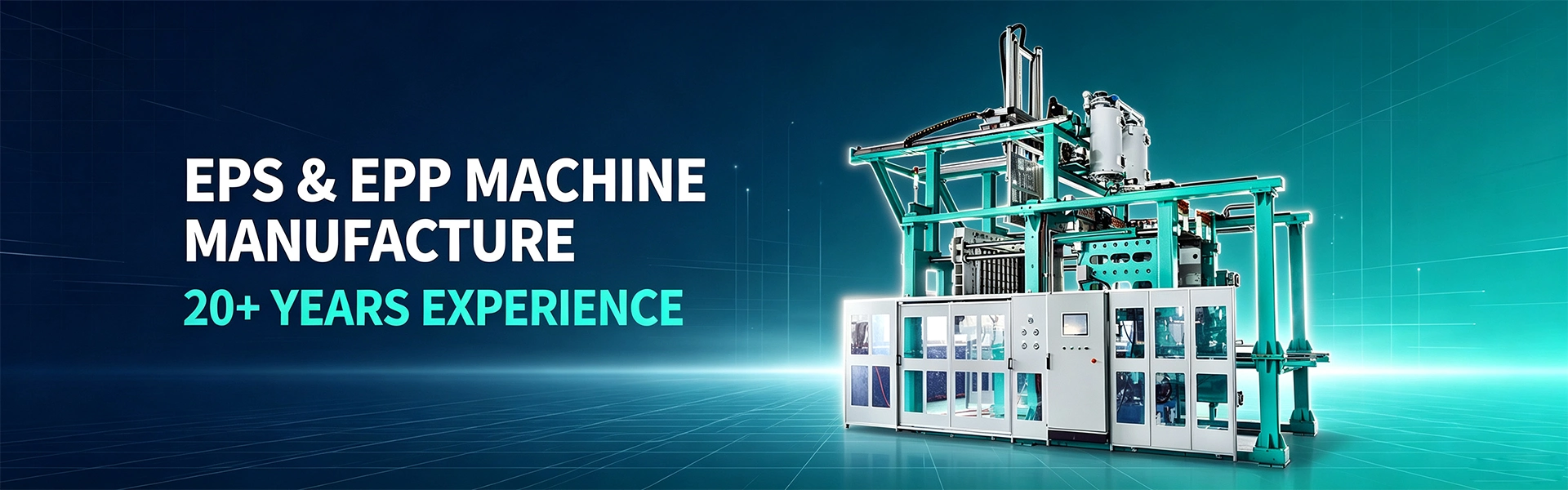


Hangzhou Epsole Machinery Co., Ltd. is one of the most reliable manufacturers and suppliers of eps pellitizer machine in China. We warmly welcome you to buy high quality eps pellitizer machine for sale here from our factory. Good service and reasonable price are available.
EPS Recycling & ICF Waste Processing Solution
A modular processing line for ICF cut-offs, EPS insulation-board trim and clean EPS production scrap. The system combines size reduction, controlled material transfer, dust collection, densifying and, where the material route requires it, melt filtration and pelletizing.
Each line begins with a material review. The proposal identifies incoming material type, contamination level, bulk density, expected daily volume, target output form and downstream buyer or reuse route. These inputs determine whether the project requires a crusher and compactor only, a hot densifier, or a complete extrusion and pelletizing section.

|
Incoming material |
Recommended route |
Output form |
Key project checks |
|
Clean EPS trim from ICF or insulation-board cutting |
Crusher → enclosed transfer → screw compactor or cold densifier |
Dense blocks/logs for transport or sale |
Trim dimensions, feed continuity, block density requirement, loading method |
|
Clean EPS production scrap requiring reusable PS feedstock |
Crusher → controlled feed → melt densifier/extruder → filtration → strand or pelletizing |
Filtered PS strand or pellets |
Material grade, color, moisture, contamination, filter mesh and downstream use |
|
ICF installation off-cuts with fastening residues, labels or mixed debris |
Sorting → metal/debris removal → crusher → dust control → selected densifying route |
Densified material after approved removal process |
Type and level of contamination; material trial before system selection |
|
EPS waste with heavy soil, cement, adhesive, wood or mineral contamination |
Pre-sorting and local disposal/recovery assessment before processing |
Project-specific |
Do not feed directly into pelletizing equipment without a material assessment |
|
EPE/XPS or mixed foamed plastics |
Separate trial and dedicated configuration review |
Project-specific |
Polymer type, melt behavior, additives, screen pack and permitted output route |
System modules and material flow
Receiving, sorting and controlled feeding
The receiving area is arranged around the way waste arrives at the site: loose bags, ICF cutting trim, baled material, production off-cuts or conveyor-fed scrap. The line layout can include a receiving hopper, manual sorting table, metal detection point and controlled feed conveyor. This section prevents oversized pieces and non-foam contaminants from entering the processing equipment.
Size reduction
The crusher reduces EPS trim to a size suitable for stable densifier or extruder feeding. Rotor type, screen opening, feed throat and discharge arrangement are selected from the incoming off-cut shape and daily material volume. The quotation should specify access for blade inspection, screen change, jam clearing and routine cleaning.
Enclosed transfer and dust collection interface
Light EPS particles require controlled transfer between the crusher and densifying section. The system can use enclosed screw transfer, pneumatic conveying or a configured collection hopper. Dust-control provisions should define the collection point, duct connection, airflow requirement, filter arrangement and the site party responsible for final exhaust treatment.
Densifying or hot compaction
A compaction route reduces transport and storage volume without necessarily creating saleable pellets. The equipment form-mechanical screw compactor, cold densifier or thermal densifier-is selected according to the required output density, the available floor space and the planned downstream recycler. The buyer should state the preferred block/log dimensions and handling method.
Melt filtration and pelletizing
Where recovered PS is to be supplied as strand or pellets, the line adds controlled melting, filtration, screen change, pelletizing and cooling. The screw/barrel, temperature zones, filtration method and pelletizing arrangement are specified after a material trial. Output quality depends on feed cleanliness, polymer grade, moisture, color and filtration level; the end user of recycled material must approve the final specification.

Screw diameters are available in a variety of specifications, including 220mm, 245mm, 273mm, 325mm, and 380mm.
Equipped with a precision filtration and screen-changing device, the system effectively removes impurities; the pelletizing system ensures uniform granule size (customizable to 3–5mm).
Real-world case studies demonstrate that for customers processing 2 tons of waste foam per day, the equipment investment can be fully recouped within 8 to 12 months, after deducting electricity and labor costs from the revenue generated by selling the recycled pellets.

To address the challenge posed by the high bulk volume of lightweight foam, the system can be optionally fitted with a forced feeding device or a cold-pressing compaction unit to ensure stable feeding density and consistent output.
All components in contact with the processing material undergo anti-rust treatment; the machine frame is constructed from thickened steel profiles-welded and subsequently annealed-to ensure structural integrity and prevent deformation during long-term operation. A 12-month warranty is provided for the complete machine, with extended warranty coverage available for core components such as the screw and barrel.
FAQ

Can ICF cutting waste be fed directly into a pelletizing line?
When is a compactor sufficient, and when is pelletizing needed?
How is dust handled in the processing line?
Can the same line process EPS, XPS and EPE?
What acceptance data should be recorded before shipment?
Hot Tags: Eps Pellitizer machine, China, manufacturers, suppliers, factory, price, vacuum, for sale, EPS Foam Crusher, Eps Recycle Machinery, Cooling Tower and Pumps