

If you're running a production line that relies on shape moulding machines-whether you work with EPS, EPP, ETPU, or another foam-based material-you know that even the smallest inconsistency in finished products can derail entire batches, waste raw materials, and erode customer trust. As a shape moulding machine supplier, I've worked with dozens of manufacturers over the past 12 years, and one of the most common pain points they bring to me is unexpected variation in their output: a foam cushion that's too soft one day, a packaging insert that fails a drop test another, or a part that doesn't fit a pre-designed assembly line. Consistency isn't just a quality benchmark here-it's the foundation of reliable production, on-time deliveries, and long-term profitability. After troubleshooting hundreds of machine setups, training hundreds of operators, and refining the designs of our own lines, I've put together a practical, science-backed playbook for ensuring every product that comes out of a shape moulding machine is identical to the last.
First, let's start with the most fundamental step: calibrating your material and machine inputs before every run, not just once at the start of a shift. Too many operators treat calibration as a one-time task, but raw materials, environmental conditions, and even slight machine wear will shift from hour to hour, and ignoring that leads to inconsistent parts. For example, expandable polystyrene (EPS) beads, a staple for everything from protective packaging to automotive headliners, absorb ambient moisture like a sponge. A batch of beads with 3% moisture will steam differently during pre-foaming than a batch with 2.5% moisture, resulting in parts with uneven density, gaps, or over-expanded edges. That's why our team emphasizes a 15-minute pre-run check for moisture content for every batch of raw material before it enters the hopper.
But calibration goes far beyond moisture. For shape moulding machines, the core controls are steam pressure, cycle time, cooling duration, and clamping force-all of which directly impact part density, dimensional accuracy, and surface finish. I'll use an example from a client that manufactures custom foam packaging for consumer electronics: their old machine used analog pressure gauges that only updated every 10 seconds, leading to 2-3 PSI drops mid-cycle that made 10% of their batches fail fit tests. After we upgraded their machine to digital pressure sensors that adjust in real time, paired with a pre-programmed calibration for steam input, that failure rate dropped to less than 0.5%. This is where having a machine designed with consistent inputs in mind makes all the difference-models like the Auto Foam Shape Machine we supply come with built-in calibration locks that prevent accidental pressure changes during a run, a small feature that eliminates human error that creeps in when operators adjust settings mid-cycle.
Next, standardizing pre-foaming and bead conditioning processes is non-negotiable for long-term consistency. Pre-foaming is the step where raw beads expand to roughly 40-50 times their original size, and if that step is inconsistent, the final part will never match. Many manufacturers overlook this: they use the same pre-foamer for different bead sizes, or leave beads in the hopper for too long, allowing them to reabsorb moisture or settle unevenly. I once had a client who switched to a cheaper pre-foamer and saw their part density vary by 15% within two weeks-beads at the top of the hopper had been sitting longer, expanded more, and created lighter parts, while beads at the bottom were denser.

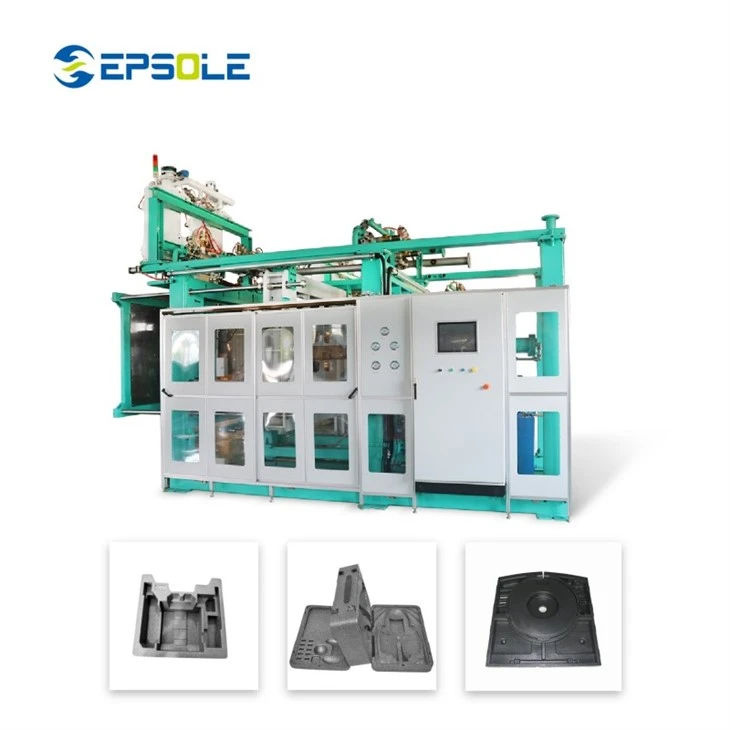
The fix here is to follow ISO-standard pre-foaming parameters for your specific material, and to integrate inline conditioning between pre-foaming and moulding. This means letting expanded beads age in a deaeration hopper for 4-24 hours (depending on bead type) to equalize pressure inside each bead, so they expand uniformly during moulding. For more complex materials like EPP, which is used for automotive crash parts and sports padding, this conditioning step is even more critical: EPP beads have a higher closed-cell content, so pressure imbalances lead to parts with weak spots that can fail safety tests. Models like the EPP Automatic Shape Moulding Machine we supply are engineered with inline deaeration and pressure monitoring for each pre-foam batch, so you don't have to manually track bead age and pressure-a huge win for consistency across long production runs.
Third, maintaining precise tooling alignment and condition is often the most underrated factor in product consistency. Your mould is the blueprint for every part, so even a 0.1mm misalignment between the two halves of the mould, or a small amount of resin buildup on the cavity walls, will throw off every part it produces. I've seen moulds that were never cleaned show a 2mm variation in part length after just 500 runs-buildup of old foam residue on the surface creates a thin barrier that prevents new beads from forming a tight, uniform seal. Clamping force is tied directly to tooling too: if your mould isn't clamped with enough force during steam injection, steam will leak out, leaving gaps in the part's structure; if you clamp too hard, you'll warp the mould or squeeze excess material out, creating uneven edge thickness.
Tooling maintenance doesn't have to be complicated, but it needs to be scheduled and standardized. We recommend a weekly deep clean of mould cavities with a food-grade, non-abrasive foam cleaner, followed by a pressure test to check for leaks. For high-volume runs, we also suggest a tooling alignment check every 200 runs, using a precision dial indicator to ensure both halves of the mould line up perfectly. For manufacturers running high-output EPS parts, our QDCS eps moulding machine is built with automatic mould clamping and alignment features that adjust for wear in real time, eliminating the need for manual alignment checks that take time and introduce human error. This machine also includes a tooling wear sensor that alerts operators when cavities are starting to degrade, so you can replace moulds before they start causing inconsistent parts.
Fourth, implementing real-time process monitoring and batch tracking turns reactive quality control into proactive consistency. The old way of checking parts every 10 runs only catches inconsistencies after they've already produced 9 bad parts. Modern shape moulding machines can track every parameter of every run, from steam pressure to cooling time, and flag deviations before they lead to bad parts. I work with a large automotive parts supplier that uses our EPS basic automatic molding machine, and they've connected the machine's monitoring system to their quality control software, so every part is linked to its production batch. If a run is even 1 PSI below the target steam pressure, the machine automatically stops and alerts an operator, instead of continuing to make the rest of the batch. This level of tracking also makes it easy to trace issues back to their root cause-if multiple batches show the same density variation, you can check if the pre-foaming hopper was having pressure issues, instead of guessing that the machine is faulty.
For materials like ETPU, which is used for athletic footwear soles and medical devices, consistency is even more critical because parts have to meet exact performance specifications (like shock absorption and flexibility). Our ETPU Styrofoam Moulding Machine comes with integrated sensors that track not just process parameters, but also part weight after each run-since ETPU parts' weight directly correlates to their density and performance. This means you can catch a bad part before it leaves the machine, and adjust settings mid-run if needed, without waiting for lab testing.
Finally, training your operators to prioritize consistency over speed is the long-term key to sustaining quality. Even the most advanced machine will produce inconsistent parts if an operator cuts corners to finish a run faster. Over my years in this industry, I've seen too many operators skip the pre-run moisture check, rush through mould cleaning, or adjust cycle times to meet a daily quota, all of which lead to quality issues. The best approach is to create a standardized operating procedure (SOP) for every step of the process, from loading raw beads to shutting down the machine, and train operators to treat the SOP as non-negotiable. We offer hands-on training for all the machines we supply, including modules on why each step matters, not just how to do it, so operators understand that skipping a step doesn't just make their day harder-it hurts the customer and the business.
If you're struggling with consistent output from your shape moulding machine, or looking to upgrade to a system designed to minimize variation, we're here to help. Our team has worked with manufacturers across industries, from packaging to automotive, to tailor solutions that fit your specific production needs and material types. Whether you need an automatic system for high-volume runs or a basic machine for smaller batches, we can provide the support and expertise to help you achieve the consistency you need to grow. Contact our team today to discuss your requirements and learn more about how our shape moulding machines can elevate your product quality.