

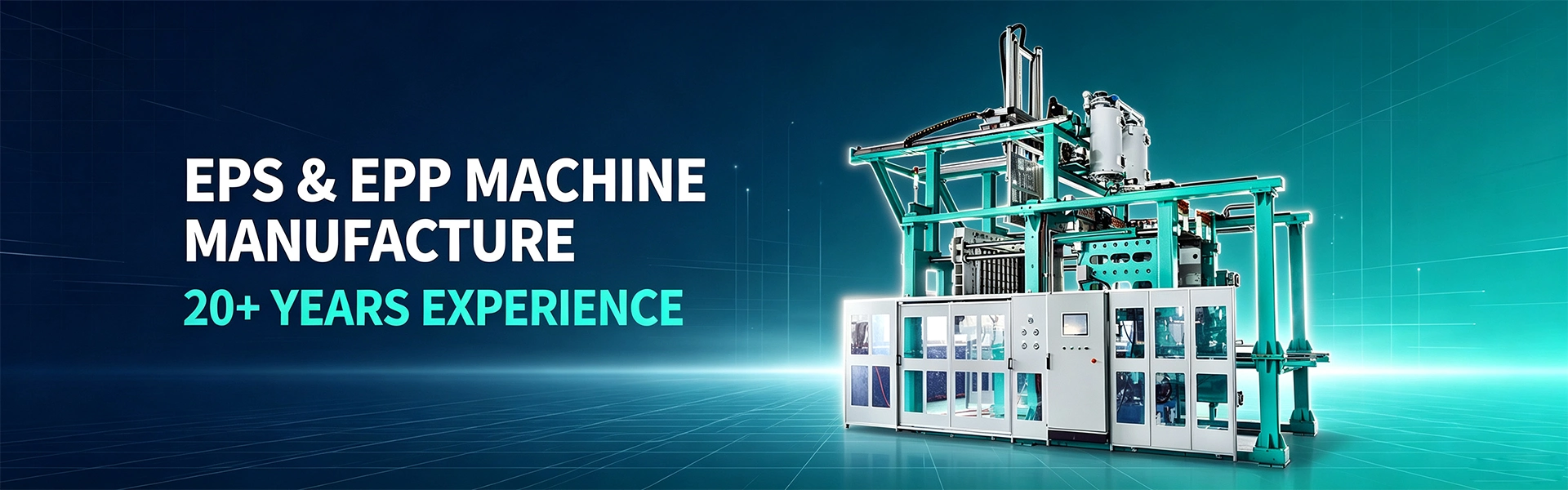

Hangzhou Epsole Machinery Co., Ltd. is one of the most reliable manufacturers and suppliers of eps expandable polystyrene foam beads pre expander machine production line in China. We warmly welcome you to buy high quality eps expandable polystyrene foam beads pre expander machine production line for sale here from our factory. Good service and reasonable price are available.
Intelligent EPS Batch Pre-Expander Machine: Precision Foaming Without Constant Manual Re-Tuning
Stop losing production hours and wasting raw beads every time you switch EPS resin suppliers or lot numbers. Powered by ±0.2°C PID Steam-Air Proportional Control and Closed-Loop Weighing Feedback, Epsole's batch pre-expander automatically adapts to variations in pentane content, bead size distribution, and storage age-delivering uniform bulk density from 8 g/L to 140 g/L.
Why Do Standard Pre-Expanders Struggle When You Change EPS Raw Material Batches?
• The Physical Reality: Freshly produced beads vs. beads stored for 30+ days have different blowing agent (pentane) retention and internal vapor pressure.
• Conventional Machine Failure: Fixed-timer steam valves either over-steam high-pentane beads (causing surface melting and severe clumping) or under-heat aged beads (failing to reach low target densities).
• The Physical Reality: Switching between #201/#301 fine beads (for thin-wall packaging) and #401/#501 coarse beads (for ICF blocks or insulation boards) changes heat transfer rates and glass transition softening behavior.
• Conventional Machine Failure: Operators spend 1–2 hours manually tweaking steam valves and air dampers by trial and error-wasting 50–150 kg of raw material per batch switch.
• *The Commercial Reality:* When a downstream foam factory uses an outdated pre-expander with poor temperature stability (±2°C–3°C swings), good EPS resin produces inconsistent foam beads-leading buyers to blame the resin trader for "defective raw material."
How Epsole Matches Machine Parameters to Your Exact EPS Raw Material Properties
±0.2°C PID Steam-Air Proportional Control: Tailoring the Softening Curve to Resin Grade
• How It Works: High-precision PT100 temperature sensors inside the expansion chamber feed real-time data to a PID proportional control system. By dynamically blending saturated steam with compressed air, the system maintains chamber temperature within ±0.2°C and constant foaming pressure.
• Material Matching Value:
• For High-Expansion & Low-Density Grades (8–15 g/L): Delivers pure, stable thermal energy to maximize cell expansion without rupturing fragile cell walls.
• For Flame-Retardant & Recycled-Blend Grades: Mixes compressed air precisely to lower steam temperature, preventing premature coating stripping or bead agglomeration.
01
Closed-Loop Weighing & Auto-Feed Compensation: Eliminating Batch-to-Batch Density Drift
• How It Works: Equipped with a dedicated brand weighing controller integrated with the PLC and touchscreen HMI, coupled with a precision photoelectric level sensor inside the barrel.
• Material Matching Value: After each expansion cycle, the weighing unit measures the exact bulk density of the discharged beads. If Lot B expands 3% less than Lot A, the PLC automatically recalculates and adjusts the screw feeding weight and residence time for the very next cycle-keeping density tolerance strictly within ±1% (lab standard resin) to ≤±2% (industrial production).
02
100-Slot PLC Material Recipe Library: One-Touch Switching Across Suppliers & Ratios
• How It Works: The PLC HMI stores up to 100 customized foaming recipes indexed by Resin Brand + Grade Type + Bead Size + Target Density (g/L).
• Material Matching Value: Each recipe locks in pre-heating time, main steam pressure, proportional air ratio, stirring load threshold, and discharge time. Switching from *14 g/L Fast-Cycling Packaging Resin* to *22 g/L Flame-Retardant Block Resin* takes one tap on the touchscreen.
03
Vacuum-Assisted / Fluidized Bed Drying System: Protecting Fragile Cell Structures
• How It Works: Rapid depressurization discharge combined with an optimized fluidized bed dryer (and optional vacuum drying configuration) removes surface moisture quickly and uniformly.
• Material Matching Value: Prevents post-expansion clumping, eliminates moisture interference during automatic sample weighing, and shortens silo aging (maturing) time by 20%–30% before shape or block molding.
04
Built for Both Sides of the EPS Supply Chain: Resin Traders & Foam Manufacturers
For EPS Raw Material Traders & Distributors
As an EPS raw material distributor, your profitability depends on how smoothly your resin runs on your customers' machines.
• Pre-Shipment Foaming Verification: Send your new resin lots to Epsole's testing lab-we generate a standardized Pre-Expansion Parameter Sheet (Steam Pressure, Temp Curve, Cycle Time, Achievable Density) that you can hand directly to your downstream foam factories.
• Equipment + Resin Bundling: Recommend or bundle Epsole's high-compatibility batch pre-expanders to your foam plant clients so their operators never blame your resin for machine-induced clumping or shrinkage.
For Foam Factory Technical Buyers & Plant Engineers
Stop being locked into a single expensive resin supplier just because your old pre-expander cannot handle alternative grades.
• 80% Faster Batch Changeovers: Recall pre-saved PLC recipes for different suppliers, bead sizes (#201–#601), or seasonal storage conditions in seconds.
• Lower Steam Consumption & Scrap Rate: Insulated stainless-steel expansion vessel + proportional PID valves cut steam waste by 15%–20% while eliminating trial-batch scrap.
• Seamless Silo & Molding Integration: Can be linked directly with Epsole Auto Silo Storage Systems and Shape/Block Molding Machines via PLC central control.

FAQ

Q1: How does the Epsole EPS batch pre-expander handle raw material batches with fluctuating pentane content?
Q2: Can one pre-expander machine process Fast-Cycling, Flame-Retardant, and Graphite EPS grades?
Q3: Why does my current pre-expander cause bead clumping or thermal shrinkage when expanding below 15 g/L?
Q4: How do we achieve ultra-low densities (8–11 g/L) for EPS block or packaging applications?
Hot Tags: eps expandable polystyrene foam beads pre expander machine production line, China, manufacturers, suppliers, factory, price, vacuum, for sale, Spare Parts for Silo, EPS Batch Pre Expander Foaming Machine, Cornice CNC Cutter, EPS Expandable Polystyrene Pre expander Machine, EPS Expanded Polystyrene Particles Making Machine, Pre Expanding Polystyren Machine