

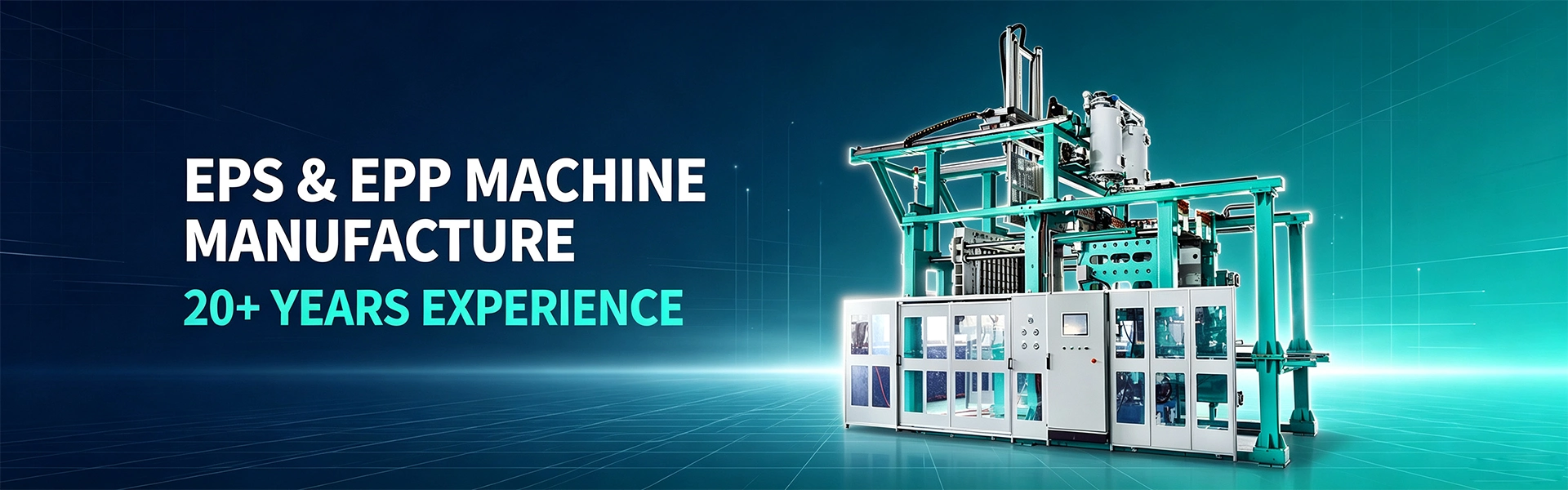

Hangzhou Epsole Machinery Co., Ltd. is one of the most reliable manufacturers and suppliers of eps cement sandwich panel machine in China. We warmly welcome you to buy high quality eps cement sandwich panel machine for sale here from our factory. Good service and reasonable price are available.

EPS Cement Sandwich Panel Machine: Proprietary Composite Pressing & High-Strength Molding for Crack-Free, Code-Compliant Wall Panels
Stop losing commercial construction tenders due to two-end panel delamination, surface cracking, or failed acoustic and seismic tests. Epsole delivers a complete EPS Cement Sandwich Panel Turnk吗ey Production Line-integrating Virgin EPS Pre-Expansion, Non-Segregating High-Shear Slurry Mixing, and Multi-Cylinder Synchronous Hydraulic Composite Pressing Mold Cars-to produce monolithic lightweight wall panels that exceed ASTM, EN, BS, and GB building standards.
Key Selling Points
Why Do Many Lightweight Wall Panel Factories Struggle with Two-End Delamination, Cracking, and Failed Building Code Tests?
Two-End Delamination & Face-Board Peeling
• Why It Happens: Cheap mold cars and presses use thin tie-rods and uneven clamping Mechanisms. Under internal slurry pressure and hydration heat, the mold frame bows outward at both ends-leaving a microscopic gap between the calcium silicate face board and the EPS-cement core.
• The Field Consequence: Within weeks of stacking or installation, the face boards at both ends of the 2.44 m / 3.0 m panel peel away when sawed or nailed, causing massive site rejection.
EPS Bead Floating, Core Segregation & Surface Cracking
• Why It Happens: EPS foam beads have a density of only 12–18 kg/m³, while cement mortar is over 1,500 kg/m³. Ordinary mixers cannot coat the hydrophobic EPS beads properly-so during pouring and vibration, EPS beads float to the top while heavy cement sinks to the bottom.
• The Field Consequence: Uneven density creates severe differential drying shrinkage, leading to deep structural cracks across the panel surface and crumbly edges that break during handling.
Substandard Sound Insulation & Weak Seismic/Hanging Strength
• Why It Happens: Because the core contains interconnected air voids and poor interfacial bonding with the outer boards, sound waves pass right through and expansion bolts pull out easily.
• The Field Consequence: Your panels get disqualified from high-margin projects like hotels, hospitals, schools, and high-rise steel-frame apartments that strictly mandate ≥40–45 dB STC soundproofing and ≥1000 N hanging strength.
Tailored Turnkey Value for Your Building Materials Business
For New Lightweight Wall Material Manufacturers & Investors
• Complete Chemical Formula & Local Raw Material Adaptation: You don't need a background in polymer chemistry. Our turnkey package includes proven anti-floating, anti-crack slurry formulas adapted to your local cement grade, fly ash/slag, sand, and climate humidity.
• In-House Virgin EPS Foaming Saves 25%–30% Core Material Cost: By including the upstream EPS pre-expander right inside your line, you expand raw EPS resin yourself instead of buying expensive external foam sheets or low-grade recycled crumbs.
• Fast ROI & End-to-End Commissioning: From 2D/3D plant layout and foundation drawings to on-site installation, slurry trial batching, and first-batch panel testing, our engineers stay until your workers master the entire process.
For Prefabricated Building Component Factories & EPC Contractors
• 100% Project Tender Qualification: Produce structural-grade lightweight partition and exterior cladding panels that pass third-party laboratory testing for Class A1 fireproofing, 45 dB sound insulation, and Magnitude-8 seismic shear.
• Seamless Integration with Steel & Precast Concrete Structures: Precision tongue-and-groove panels install 4–5× faster than brick masonry (60–80 m²/day per installer) with dry construction and zero double-sided plastering.
• Multi-Thickness Rapid Changeover: Switch smoothly between 75/90/100 mm interior partition panels and 120/150/200 mm exterior thermal insulation wall panels on the same mold car platform.

FAQ

How does Epsole's pressing structure prevent the calcium silicate face boards from delaminating at both ends of the panel?
How do you prevent lightweight EPS foam beads from floating in the heavy cement slurry and causing panel cracks?
Can the panels produced by your line pass international acoustic (40–48 dB), seismic, and Class A1 fire resistance tests?
What is the difference between an EPS Cement Sandwich Panel Machine and a Color-Steel Metal EPS Sandwich Panel Line?
They serve different building markets and use completely different processes:
1. EPS Cement Sandwich Panel Machine (This Page): Bonds Calcium Silicate / Fiber Cement Boards with a solid EPS-Cement Composite Mortar Core inside hydraulic pressing mold cars to create heavy-duty, fireproof, soundproof interior/exterior masonry-replacement walls for apartments, hotels, hospitals, and prefab buildings.
2. Color-Steel EPS Sandwich Panel Line: Continuously laminates pre-painted steel coils onto sliced EPS foam boards using polyurethane glue, primarily for industrial warehouse roofs and cold rooms.What panel thicknesses and lengths can be produced on one mold car?
Do you provide on-site installation, chemical additive formulas, and worker training overseas?
Hot Tags: eps cement sandwich panel machine, China, manufacturers, suppliers, factory, price, vacuum, for sale, Automatic Air Cooling Eps Block Molding Machine, Automatic eps panel making machine, polystyrene flooring, High Quality EPS Automatic Block Molding Machine Production Line, Eps Moulding Machines Polystyrene Production Line, Vertical Eps Block Making Machinery