

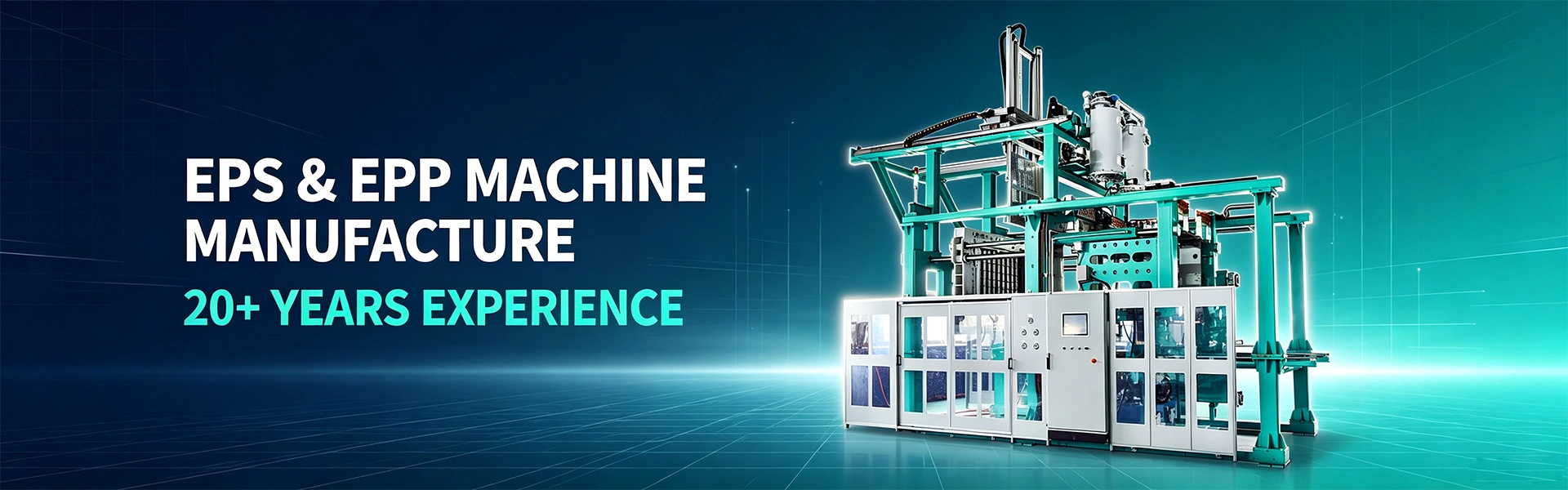
A production line's real, ongoing performance depends just as much on a less glamorous set of decisions: where your raw material beads come from, how reliably you can source accessories and wear parts, and whether your machinery supplier can support your operation as a whole system rather than a single piece of equipment.
The Machine Is Only One Piece of the Production System
An EPS shape moulding machine does not operate in isolation. It depends on a consistent supply of properly pre-expanded EPS beads, a working mould matched to the machine's specification, and a range of accessories and wear components that keep the system running reliably over time, from steam valves and seals to control system components and mould-side hardware. A manufacturer who sources an excellent machine but has no reliable plan for raw material supply or spare parts availability has really only solved part of the production challenge.
Hangzhou Epsole Machinery Co., Ltd. has structured its business around this reality for over 20 years, manufacturing not only EPS shape moulding machines but also EPS accessories, EPS raw materials, and EPS moulds as an integrated offering. This is a deliberate approach, built on the understanding that customers are not simply buying a machine, they are building a production system that needs to run reliably for years, and that system works best when its components are engineered to work together rather than sourced independently from disconnected suppliers.
Why Raw Material Quality Is Not a Commodity Decision
It is tempting to treat EPS raw material, the pre-expanded polystyrene beads that feed into the shape moulding machine, as a simple commodity purchase, since beads from different suppliers can look visually similar. In practice, bead quality, consistency in pre-expansion density, and formulation consistency batch to batch have a direct effect on how well a given mould and machine configuration performs. Inconsistent raw material can produce the same symptoms as a poorly performing machine or mould, uneven density, dimensional variation, higher scrap rates, even when the equipment itself is functioning correctly, which makes diagnosing the actual root cause considerably more difficult for a manufacturer working with disconnected suppliers for machine, mould, and material.
Because Epsole manufactures EPS raw materials alongside our machinery and mould offerings, we are able to help customers understand how a specific raw material formulation will interact with their particular mould and machine configuration, rather than leaving that interaction to trial and error after the equipment has already been installed. For manufacturers who are new to EPS production, this integrated perspective often prevents weeks of troubleshooting that would otherwise be spent trying to determine whether a quality issue originates with the machine, the mould, or the raw material.
Accessories: The Difference Between a Complete System and a Partial One
EPS accessories, ranging from pre-expanders and ageing silos to conveying and material handling equipment, are what turn a standalone shape moulding machine into a functioning production line. A manufacturer who purchases only the core moulding machine and later discovers they also need to separately source compatible pre-expansion equipment, material handling systems, and other accessories, often from a different supplier entirely, can face compatibility issues, extended installation timelines, and unclear accountability when something in the broader system does not perform as expected.
Epsole's approach is to help customers plan their full production system from the outset, including the accessories needed to support the core shape moulding machine, so that manufacturers can budget accurately and avoid the common experience of discovering additional necessary equipment only after the main machine has already arrived. For manufacturers building their first EPS production line, this kind of complete-system planning at the sourcing stage is often more valuable than a slightly lower price on the moulding machine alone.
Spare Parts: The Supply Chain Question Buyers Ask Too Late
Spare parts availability is, in our experience, the single most underestimated factor in long-term production reliability, and one of the questions buyers most often fail to ask in enough detail before finalizing a machine purchase. Every shape moulding machine has wear components, valves, seals, sensors, and mould-side hardware, that require periodic replacement as part of normal operation. The real question is not whether these parts will eventually need replacing, since they will, but how quickly and reliably you can obtain them when that time comes.
A manufacturer who discovers, only after a critical wear part fails, that their equipment supplier does not stock spare parts and requires a fresh custom order shipped from overseas, can face weeks of lost production time waiting for a component that should have been a routine, same-week replacement. This is why Epsole maintains a stocked spare parts supply and treats spare parts availability as a core part of the product we sell, not an afterthought handled only when a customer calls with an urgent problem. We encourage every prospective customer to ask directly, before placing an order, what spare parts are kept in stock and what the realistic turnaround time looks like for the specific components most likely to need replacement on their particular machine configuration.
The Case for a Single, Accountable Supplier
There is a real operational advantage to sourcing your shape moulding machine, mould, raw materials, and accessories from a single manufacturer with genuine in-house capability across all four areas, rather than assembling a production system from multiple disconnected suppliers. When something underperforms, whether that is a quality issue, an unexpected downtime event, or a component that does not fit as expected, a single accountable supplier can diagnose the issue across the full system rather than each supplier pointing to the others as the likely source of the problem. This is a pattern we hear about frequently from customers who came to Epsole after a frustrating experience trying to coordinate between a machine supplier, a separate mould shop, and a separate raw material vendor, none of whom had full visibility into how their individual component was performing within the customer's actual production system.
This does not mean every manufacturer needs to source every component from the same supplier, some experienced manufacturers deliberately diversify their supply chain for other strategic reasons, but it does mean the trade-off is worth making deliberately and with full awareness of the coordination cost involved, rather than defaulting to fragmented sourcing simply because no single supplier was considered for the full system at the outset.
What to Evaluate Before You Finalize Your Supply Chain
Before finalizing your EPS production investment, it is worth mapping out your full supply chain requirements explicitly: the shape moulding machine itself, the mould, your ongoing raw material source, the accessories needed to support the complete production line, and your plan for spare parts and technical support once the system is running. For each of these, ask whether your prospective supplier has genuine in-house capability or whether you will need to coordinate separately with additional vendors, and factor that coordination complexity into your evaluation alongside price and technical specifications.
Epsole's engineering team walks new customers through exactly this kind of full-system planning during the sourcing conversation, because we have found that manufacturers who think through their complete supply chain before placing an order experience far fewer surprises during installation and ongoing operation than those who focus narrowly on the machine purchase alone and address the rest of the supply chain reactively.
A Long-Term View of Supply Chain Reliability
As your business grows, the value of a reliable, integrated supply chain compounds. A manufacturer scaling from one machine to multiple production lines, or expanding into new mould configurations and product lines, benefits significantly from an existing relationship with a supplier who already understands their raw material requirements, spare parts history, and mould specifications, rather than having to rebuild that relationship and knowledge base with a new supplier for every expansion. This is one of the reasons many of Epsole's customers who started with a single machine and a modest raw material order have, over subsequent years, consolidated their broader EPS equipment and material sourcing with us as their production has grown, finding that the coordination savings alone justify staying with a single, proven supplier relationship.
A Note for First-Time Buyers Entering the EPS Industry
For manufacturers entering EPS production for the first time, the full-system supply chain question can feel overwhelming when it is layered on top of an already unfamiliar machine purchase decision. Our recommendation for first-time buyers is to be explicit with your prospective supplier about your inexperience with the broader supply chain, rather than assuming you will figure out raw material sourcing, accessories, and spare parts logistics after the machine arrives. A supplier with genuine full-system experience should welcome this conversation and walk you through the complete picture as part of the sourcing process, since a first-time buyer who understands their full production system before committing to a purchase is far more likely to become a satisfied, long-term customer than one who discovers gaps in their planning only after production has already begun.
Questions Worth Asking Any Prospective Supplier
Before finalizing a purchase, bring these questions to any prospective EPS equipment supplier: Do you manufacture raw materials and moulds in-house, or only the shape moulding machine itself? What accessories will I need to run a complete production line, and are those available from you directly or will I need to source them separately? What spare parts do you keep in stock, and what is the realistic turnaround time if a critical component fails? A supplier who can answer all three questions with specific, confident detail is demonstrating the kind of full-system capability that meaningfully reduces your operational risk over the life of the production line, compared to a supplier who can only speak knowledgeably about the machine itself.
Building a Reliable EPS Supply Chain From the Start
If you are planning a new EPS production line, or evaluating whether to consolidate your machinery, mould, raw material, and accessories sourcing with a single supplier, Epsole's team can walk through your complete production system requirements and identify where an integrated approach would reduce cost, complexity, or risk in your specific situation. With over 20 years of experience manufacturing EPS machinery, accessories, raw materials, and moulds, and a customer base spanning more than 30 countries, we bring a full-system perspective to every new inquiry, rather than a narrow focus on a single piece of equipment. Contact us with details about your production goals, and our team will help you plan a complete, reliable supply chain along with a formal quotation.