

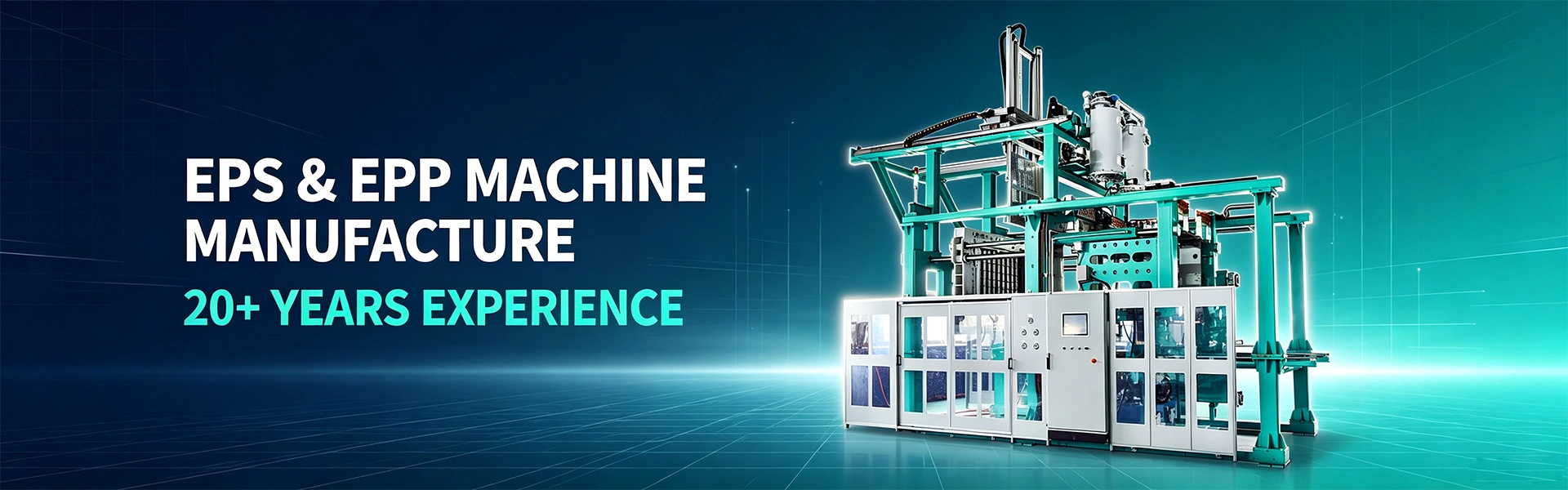
High-precision moulds are not simply manufacturing tools-they are the foundation of product consistency, structural integrity, and production efficiency. In EPP manufacturing, even the smallest deviation in mould design or machining accuracy can lead to significant defects in final products.
Overview of EPP Production and Moulding Principles
The production of EPP products involves expanding polypropylene beads through steam heating and then fusing them inside a mould cavity. The process typically includes:
Pre-expansion of raw EPP beads
Aging and stabilization of beads
Filling beads into mould cavities
Steam heating and expansion
Cooling and shaping
Demoulding the finished product
At the heart of this process is the mould, which determines the final shape, density distribution, surface quality, and dimensional accuracy of the product.
Unlike injection moulding, EPP moulding relies heavily on steam penetration and controlled expansion. This means the mould must allow precise airflow, pressure balance, and thermal distribution. Any inconsistency in the mould structure directly affects product quality.
What Defines a High-Precision Mould in EPP Manufacturing?
A high-precision mould is engineered with extremely tight tolerances and optimized structural design to ensure consistent production results. In EPP applications, such moulds typically feature:
CNC-machined cavities with micron-level accuracy
Uniform steam channels for consistent heating
Optimized venting systems to release trapped air
High-quality aluminum alloy construction for thermal efficiency
Reinforced structural design for long-term durability
Modular inserts for flexible product variations
Precision here does not only refer to dimensional accuracy but also to thermal behavior, pressure distribution, and long-term stability under repeated production cycles.
Why High Precision Is Critical in EPP Production
1 Dimensional Stability and Product Fit
One of the most important requirements in industries like automotive and packaging is precise dimensional control. EPP parts are often used as structural or protective components, meaning they must fit perfectly into assemblies or product housings.
For example, in automotive crash absorption components, even a 1–2 mm deviation can compromise safety performance or assembly compatibility.
High-precision moulds ensure:
Tight dimensional tolerance across mass production
Repeatable consistency between batches
Accurate replication of CAD designs
Without precision moulds, manufacturers risk producing inconsistent parts that cannot be assembled reliably or safely.
2 Uniform Expansion and Density Control
EPP material expands when exposed to steam. However, uneven steam distribution leads to inconsistent cell structure, resulting in weak points in the final product.
High-precision moulds solve this problem by:
Designing optimized steam channels
Ensuring uniform heat penetration
Controlling pressure balance during expansion
This results in consistent density across the entire product, which is crucial for applications requiring impact resistance and energy absorption.
In contrast, poorly designed moulds often produce:
Dense and weak zones
Uneven surface textures
Reduced mechanical strength
3 Mechanical Strength and Impact Resistance
The structural performance of EPP is directly related to the uniformity of its internal foam structure. High-precision moulds ensure that beads fuse evenly, creating a stable and strong cellular network.
This is especially important in:
Automotive bumper cores
Helmet padding systems
Protective packaging inserts
A uniform structure allows the material to absorb and distribute impact energy more effectively, improving safety performance in real-world applications.
4 Surface Quality and Aesthetic Performance
In consumer-facing industries such as electronics packaging or high-end product protection, surface appearance matters. High-precision moulds ensure smooth cavity surfaces and consistent bead fusion, resulting in:
Clean and uniform product surfaces
Minimal visible defects
Reduced post-processing requirements
Low-quality moulds, on the other hand, may cause:
Surface roughness
Flow marks
Incomplete forming
5 Production Efficiency and Cycle Time
Manufacturing efficiency is directly tied to mould performance. High-precision moulds are designed to optimize steam flow and cooling efficiency, reducing cycle times significantly.
Key benefits include:
Faster heating and cooling cycles
Reduced demoulding resistance
Lower rejection rates
Stable continuous production
Over time, even small improvements in cycle time can translate into substantial cost savings and higher production capacity.
Engineering Features of High-Precision EPP Moulds
To achieve such performance, high-precision moulds incorporate several engineering advancements:
1 Advanced CNC Machining Technology
Modern moulds are produced using high-speed CNC systems that ensure extremely tight dimensional accuracy. This is essential for complex geometries and large-scale mould structures.
2 Optimized Steam Distribution System
Steam channels are carefully designed to ensure uniform heat transfer across the entire cavity. This prevents uneven expansion and improves structural consistency.
3 Efficient Venting System
Proper venting allows air and excess steam to escape during the moulding process, preventing defects such as air pockets or incomplete filling.
4 High Thermal Conductivity Materials
Aluminum alloys are commonly used due to their excellent thermal conductivity, allowing rapid heating and cooling cycles.
5 Structural Reinforcement Design
To withstand repeated high-pressure cycles, moulds are reinforced to maintain long-term stability without deformation.
6 Modular Design Capability
Many modern moulds are designed with interchangeable inserts, allowing manufacturers to produce multiple product variations using a single base mould system.
Applications of High-Precision EPP Moulded Products
Products manufactured using high-precision moulds are widely used in several industries:
Automotive Industry
Energy absorption blocks
Door panel inserts
Bumper cores
Seat components
Logistics and Packaging
Protective packaging inserts
Shockproof transport trays
Reusable packaging systems
Electronics Industry
Anti-static protective packaging
Precision-fit cushioning structures
Cold Chain Logistics
Insulated containers
Temperature-sensitive transport packaging
Sports and Safety Equipment
Helmet liners
Protective padding systems
In all these applications, precision directly affects safety, durability, and user experience.
Problems Caused by Low-Precision Moulds
When mould precision is insufficient, production issues become frequent and costly. Common problems include:
Product deformation and warping
Inconsistent density distribution
High scrap rates
Poor assembly compatibility
Uneven surface finish
Increased energy consumption during production
These issues not only reduce profitability but also damage brand reputation, especially in high-standard industries like automotive manufacturing.
Relationship Between Mould Quality and Machinery
Even the most advanced mould cannot perform well without compatible machinery. EPP production requires:
Stable steam generation systems
Accurate pressure control
Efficient vacuum and cooling systems
Reliable clamping force mechanisms
Companies such as Epsole EPS machine provide integrated production solutions that combine mould engineering with optimized machinery systems. This integration ensures stable production performance and reduces operational risks.
How to Choose the Right High-Precision Mould Supplier
Selecting a mould supplier is a strategic decision. Manufacturers should evaluate:
Technical Capability
CNC machining accuracy
Engineering design experience
Simulation and testing capabilities
Material Quality
Use of high-grade aluminum or alloy materials
Thermal performance stability
Durability under high-cycle production
Customization Ability
Ability to design complex geometries
Support for product-specific optimization
Service and Support
Installation guidance
Maintenance services
Long-term technical support
A reliable supplier does not only deliver a mould but also provides long-term production optimization support.
Future Trends in EPP Mould Precision Technology
As industries demand higher efficiency and sustainability, mould technology continues to evolve. Key trends include:
AI-assisted mould design optimization
Digital simulation of steam flow
Higher automation in mould production
Lightweight yet stronger mould structures
Integration with smart manufacturing systems
These innovations will further enhance precision, reduce production costs, and improve product consistency.
Conclusion
High-precision moulds are the backbone of successful EPP production. They determine not only the shape of the final product but also its strength, durability, appearance, and performance. In industries where safety, reliability, and efficiency are critical, investing in high-precision moulds is no longer optional-it is essential.
From automotive components to packaging solutions, precision mould technology ensures that EPP materials perform at their highest potential. As manufacturing continues to advance, companies that prioritize mould accuracy and system integration will maintain a strong competitive advantage in the global market.