

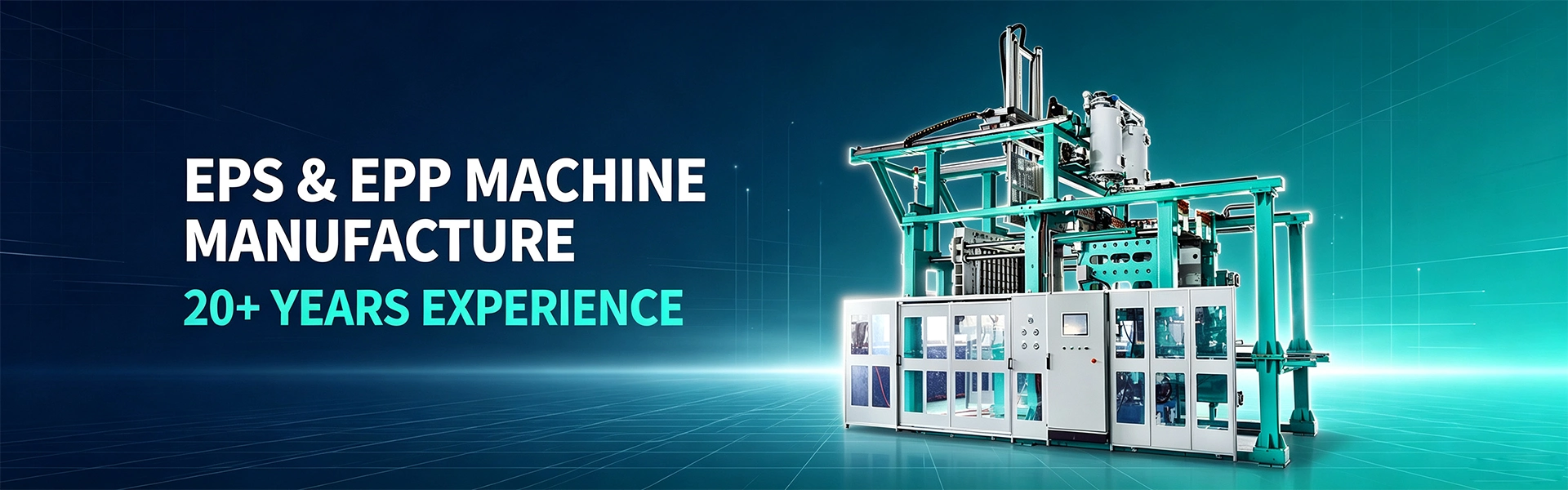
In the competitive landscape of Expanded Polystyrene (EPS) manufacturing, the word "automation" often triggers a narrow focus: replacing people with machines to save on wages. While labor reduction is certainly a component, viewing automation through this single lens is a strategic mistake that leads to underperforming investments and missed opportunities .
True automation is not about eliminating human presence-it is about orchestrating a seamless flow from the molding machine to the shipping dock. It is the difference between a collection of individual automated machines and a fully integrated, intelligent production line where post-processing, drying, inspection, and palletizing work in perfect synchronization.
Redefining Automation - From Labor Replacement to System Integration
The Automation Mindset Shift
| Traditional Thinking | Integrated Automation Thinking |
|---|---|
| Automate to reduce headcount | Automate to increase OEE and consistency |
| Focus on individual machine speed | Focus on overall line throughput |
| Robots replace manual tasks | Systems eliminate process variability |
| Automation is a cost center | Automation is a competitive weapon |
The True Value Drivers
Beyond labor savings, a well-planned automated line delivers:
Cycle Time Compression: By eliminating the "human delay" between mold opening and part removal, the molding press can run at its optimal cycle time 24/7, increasing productive output by 20-40% .
Quality Consistency: Robotic handling eliminates the variation and potential damage introduced by manual contact. Every part is removed, placed, and processed identically .
Data Generation: Integrated systems generate real-time production data, enabling proactive decision-making rather than reactive firefighting .
The Foundation - Assessing Your Automation Readiness
Before selecting robots or conveyors, you must honestly assess whether your current operation is ready for automation. Many manufacturers make the costly mistake of automating a fundamentally unstable process.
The "Stable Core" Prerequisite
Automation cannot compensate for an unreliable molding machine. If your press suffers from unpredictable cycle times, frequent faults, or produces parts with variable dimensions, the entire downstream automation system will amplify these defects rather than solve them .
Key readiness indicators:
Predictable Cycle Times: Your molding machine must complete every cycle within a tight time window to allow downstream robots to be synchronized effectively .
Exceptional Part Consistency: Parts must have identical geometry and density every cycle. Robotic grippers rely on consistent part positioning; variation causes pickup failures .
Industry 4.0 Connectivity: Your machines must be equipped with standard communication protocols (OPC UA, Ethernet/IP) to send and receive signals from a central line controller .
Product Portfolio Analysis
Not all products are equally suited for full automation. Analyze your product mix:
High-volume, stable SKUs: Ideal candidates for dedicated automation.
Frequently changing, complex parts: Require flexible automation with vision guidance and quick-change tooling.
Low-volume, unique items: May be better suited for semi-automated or manual handling.
The Building Blocks - Key Components of an Automated Post-processing Line
A fully automated EPS post-processing and palletizing line consists of several integrated modules. Understanding each component's role helps you design a system that matches your specific needs.
1. Automated Unloading and Primary Handling
The interface between the molding machine and the automation line is critical. This is where the part transitions from the mold to the material handling system.
Technology options:
6-Axis Articulated Robots: Offer maximum flexibility for complex parts and multiple pickup points. Equipped with custom, multi-fingered grippers or vacuum cup arrays, they enter the mold immediately upon opening, gently remove all parts, and place them onto a synchronized take-away conveyor .
Gantry Robots (Linear Robots): Often more cost-effective for simpler, repetitive tasks and can handle heavier loads over longer distances.
Vision-Assisted Systems: For lines producing intricate parts prone to sticking, vision systems guide the robot to ensure complete cavity clearance every cycle .
Design consideration: Gripper design is paramount. It must handle hot, fragile parts without marking or deformation, and it must accommodate the full range of products in your portfolio.
2. Integrated Drying and Stabilization
Manual lines often rely on ambient air and uncontrolled "racking" for drying, leading to inconsistent moisture content and variable processing times .
The automated solution: The take-away conveyor feeds directly into an automated drying tunnel or stabilization conveyor. These systems provide controlled temperature and airflow for a predetermined, consistent duration. Parts exit at a uniform, optimal moisture level, ready for secondary operations .
Benefit: This closed-loop process eliminates the variability of rack drying, ensuring that downstream cutting, printing, or stacking operations receive parts with predictable properties.
3. In-Line Post-Processing Stations
Once dried and stabilized, parts can be routed through various automated finishing operations:
Automatic Trimming and De-flashing: CNC trimming stations or specialized punching machines automatically remove parting-line flash and sprue, achieving a finished cosmetic standard impossible with manual trimming .
Precision Cutting: For multi-component packaging or block conversion, automated cutting saws or hot-wire systems can precisely cut parts based on digital designs with perfect repeatability .
Automated Inspection: Vision systems can inspect critical dimensions, surface quality, and fusion integrity, automatically rejecting non-conforming parts before they reach packaging .
4. Automated Sorting and Stacking
For lines producing multiple parts per cycle or multiple variants, sorting and stacking become complex manual tasks.
Automated solutions:
Pick-and-Place Systems: Robots sort different parts into separate streams, stack them into predefined bundles, and apply intermediate packaging like slip sheets or shrink film .
Collating Systems: Conveyors and gantries arrange parts in the precise orientation required for palletizing.
5. Automated Palletizing
The final step in the post-processing line is preparing finished goods for warehouse storage or shipment.
Palletizing robots place stacked bundles onto pallets in optimized, stable patterns. Advanced systems can:
Automatically select the correct pallet size
Apply layer sheets between tiers
Coordinate with stretch wrappers for complete end-of-line automation
Integration point: The palletizing system should communicate with your warehouse management system (WMS) to ensure finished goods are tracked and routed correctly.
The Brain - Centralized Control and Data Integration
All the mechanical components of an automated line are useless without a central nervous system to orchestrate them. This is where the concept of "automation" truly transcends labor replacement .
The Line Controller (SCADA/HMI)
A Supervisory Control and Data Acquisition (SCADA) system or dedicated Line Controller acts as the conductor of your automation orchestra. It:
Monitors the status of every component in real-time
Manages the timing of the entire production sequence
Collects production data (cycle counts, downtime, reject rates)
Triggers alarms or automatic shutdowns if a fault is detected
Recipe Management
Modern automated lines support multi-recipe and multi-station linkage . When you change products, the central system can:
Load the correct robot gripper program
Adjust conveyor speeds and drying tunnel parameters
Set inspection criteria
Configure palletizing patterns
This capability transforms changeover from a mechanical reconfiguration task into a digital "one-click" operation.
Data Traceability
For quality-critical industries (automotive, electronics, medical devices), full-process traceability is essential. Integrated systems can record process parameters and material batch information for every cycle, creating a complete digital record for each production batch .
Matching Automation to Your Needs - A Planning Framework
Not every factory needs the same level of automation. The key to a successful investment is matching the solution to your specific operational requirements.
Tier 1: Basic Automation (Entry Level)
Suitable for: Small to medium producers with limited product variety and moderate volumes.
Scope:
Robotic unloading from molding machine to conveyor
Basic take-away conveyor to manual stacking station
Simple PLC control with basic recipe storage
Benefits: Eliminates ergonomic risks, increases machine utilization, reduces light manual tasks.
Tier 2: Integrated Line Automation (Mid-Level)
Suitable for: Medium to large producers with established product lines and quality requirements.
Scope:
Robotic unloading
Automated drying tunnel
In-line trimming/de-flashing
Automated stacking and basic palletizing
Centralized control with data collection
Benefits: Consistent quality, reduced work-in-progress inventory, documented production data, 1-2 operators per shift instead of 3-4 .
Tier 3: Fully Integrated Smart Line (High-Level)
Suitable for: High-volume producers, multi-plant operations, quality-critical applications.
Scope:
Complete integration from raw material silos to palletized goods
Vision-guided robotic handling
Automated inspection and rejection
Full data traceability (MES integration)
Quick-change tooling for multiple SKUs
Predictive maintenance capabilities
Benefits: Maximum OEE, full regulatory compliance, scalable capacity, minimum labor content per unit.
The Partner Advantage - Why Integration Expertise Matters
Building a truly efficient automated EPS line is more than procuring a list of components. It is an engineering exercise in synchronization, reliability, and data integration .
The Risk of Fragmented Solutions
The greatest risk in automation projects lies in the "gaps"-the interfaces between different machines from different suppliers where:
Communication protocols fail
Timing mismatches cause jams
Responsibility for problems is unclear
Efficiency grinds to a halt
The Value of a System Integrator
A comprehensive solution provider with deep expertise across the entire EPS equipment spectrum-from pre-expanders and shape molding machines to drying systems and palletizing robots-takes a holistic view .
They engineer core machines for integration from the ground up and can design, supply, and commission the synchronized peripheral systems that create a cohesive whole. This single-source responsibility ensures:
Seamless communication between all components
Optimized line balancing
Faster commissioning and ramp-up
Single-point accountability for performance
Conclusion
Automation in EPS post-processing and palletizing is not about replacing people-it is about transforming your manufacturing capability. A well-planned automated line:
Unlocks the full potential of your molding machines
Delivers consistent quality that manual processes cannot match
Generates data that enables continuous improvement
Creates a safer, more engaging workplace for your team
Positions your business for sustainable growth and competitive advantage
The key is to plan with a holistic view, starting from your specific production requirements and building a solution that integrates seamlessly from the mold open signal to the finished pallet.
As one industry expert noted, in the global market for EPS products, the fully integrated, automated line is "the ultimate competitive weapon"-representing a strategic leap from manual production management to streamlined, digital manufacturing excellence .