

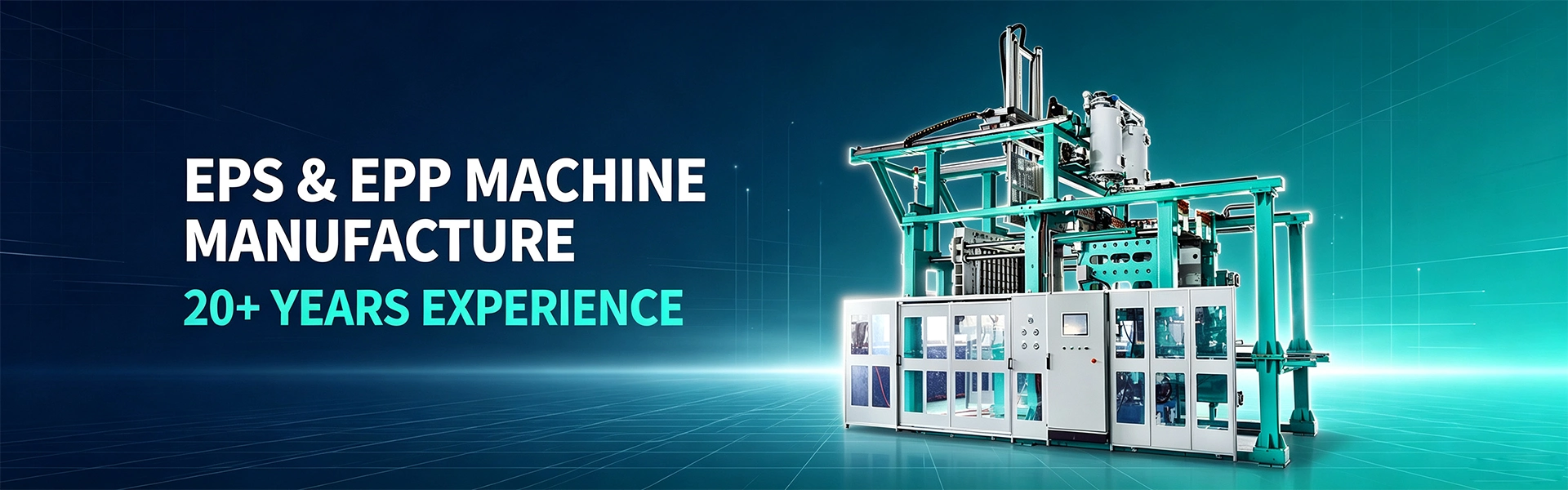
Expanded Polystyrene, commonly known as EPS, is one of the most widely used foam materials in packaging, insulation, construction protection, cold-chain logistics and industrial cushioning. It is lightweight, cost-effective, easy to shape and capable of absorbing impact while providing excellent thermal insulation. These properties make EPS valuable across many industries, from appliance packaging and seafood boxes to insulation boards, protective inserts and molded foam components.
However, EPS also creates a serious recycling challenge. Although the material itself is recyclable, its extremely low density means that most EPS waste is made up mostly of air. Loose EPS packaging takes up large storage space, increases transportation cost and is easily scattered if not collected properly. For factories, warehouses, logistics companies and recycling operators, the real problem is not whether EPS can be recycled, but whether it can be collected, compacted, transported and reused economically.
This is where efficient EPS recycling systems become essential. A modern EPS recycling system is not just a machine placed at the end of a production line. It is a complete waste-management strategy that combines sorting, crushing, compaction, densification, storage, logistics, material traceability and downstream reuse. When designed correctly, it can turn bulky foam waste into high-density blocks or ingots that are easier to store, ship and sell as recycled material.
For companies pursuing sustainable manufacturing, EPS recycling is no longer just an environmental gesture. It is a practical operational decision linked to cost reduction, ESG reporting, waste compliance, brand reputation and circular economy participation. The goal is not only to keep foam out of landfill, but also to recover its material value and reintegrate it into new production chains.
Why EPS Recycling Matters in Sustainable Manufacturing
Sustainable manufacturing is not limited to using renewable energy or reducing carbon emissions at the production line. It also includes how materials are selected, how waste is handled, how logistics are optimized and how products or by-products are returned into useful circulation. EPS recycling fits directly into this broader definition because it addresses one of the most visible and difficult waste streams in packaging and insulation industries.
EPS is widely used because it offers excellent performance per unit weight. A small amount of polymer can create a large volume of protective or insulating material. This efficiency is beneficial during product use, but it creates challenges after use. When EPS becomes waste, its large volume and low weight make it inefficient to store or transport unless it is compressed.
For a manufacturer, unmanaged EPS waste can quickly become a hidden cost. It occupies warehouse space, increases waste-hauling frequency, complicates housekeeping and may create fire-safety or contamination risks if stored improperly. For companies shipping large quantities of packaged goods, EPS recycling can reduce waste-disposal costs while demonstrating environmental responsibility to downstream customers.
In B2B supply chains, sustainability is increasingly connected to supplier evaluation. Large brands, retailers and industrial buyers often expect suppliers to show evidence of waste reduction, recycling programs and responsible material handling. An efficient EPS recycling system can therefore become part of a company's operational credibility. It proves that sustainability is not just stated in marketing language, but embedded in factory practice.
Understanding the EPS Waste Challenge
The biggest challenge with EPS waste is volume. EPS foam contains a high percentage of air, which is the reason it is lightweight and protective. But that same property makes loose EPS waste inefficient to handle. A truck filled with loose EPS may carry very little actual polymer material. This creates poor transportation economics and weak recycling motivation if no volume-reduction system is in place.
Contamination is another major issue. EPS used for food packaging may contain moisture, organic residue or odor. EPS from construction sites may contain dust, cement particles or labels. Packaging EPS may contain tape, paper, plastic film or mixed foam grades. These contaminants can reduce the value of recycled EPS and may limit downstream reuse options.
Collection structure also matters. If EPS waste is scattered across multiple production areas without a defined collection route, recycling becomes inconsistent. Workers may treat EPS as general waste simply because the recycling process is inconvenient. A good EPS recycling system must therefore be designed around actual factory behavior, not just machine capacity.
The final challenge is market connection. Compacting or densifying EPS is only valuable if the processed material can be sold, reused or sent to a recycling partner. A company should understand the requirements of downstream buyers before investing in equipment. Output form, density, cleanliness, moisture content and storage method all influence the value of recycled EPS.
How an Efficient EPS Recycling System Works
A complete EPS recycling system usually begins with source separation. EPS should be collected separately from paper, metal, food waste, general plastic and contaminated materials. The cleaner the incoming EPS stream, the higher the value of the recycled output. In many factories, the first step is to place dedicated EPS collection bags, cages or bins near unpacking stations, molding lines, warehouse areas or construction-material cutting zones.
After collection, the EPS is inspected and pre-sorted. Large contaminants such as tape, labels, plastic straps, metal staples and non-EPS foam should be removed. Some facilities also separate white EPS from colored EPS, food-grade EPS from industrial EPS or clean material from contaminated material. This improves downstream consistency.
The next step is size reduction. Large EPS pieces are fed into a crusher or shredder, which breaks them into smaller particles or fragments. Crushing improves feeding efficiency and prepares the material for compaction or densification. The design of the crushing chamber matters because EPS is light and springy; poor feeding can lead to bridging, clogging or low throughput.
Once crushed, EPS can be processed by a compactor or densifier. A compactor typically uses mechanical screw pressure to compress EPS into dense blocks through cold pressing. A densifier uses heat and mechanical pressure to melt or semi-melt the foam into denser ingots. Both methods reduce volume dramatically, but they serve different operational needs.
Finally, the compacted or densified EPS is cooled, stacked, labeled and stored for transport. A well-managed system records output weight, material source, processing date and contamination status. This creates traceability and helps companies evaluate recycling efficiency over time.
EPS Compactors: Cold Compression for Volume Reduction
An EPS compactor is designed to reduce the volume of loose EPS foam through mechanical pressure. In many systems, EPS is first crushed and then forced through a screw compression chamber. The material exits as compacted blocks that are much easier to store and transport than loose foam.
Cold compression is attractive because it avoids melting the material. This can help preserve the polymer structure and may create an output preferred by certain recyclers. It also avoids some odor and fume concerns associated with thermal processing. For warehouses, distribution centers and packaging-heavy factories, EPS compactors are often a practical first step toward recycling.
The efficiency of a compactor depends on feeding design, screw strength, compression ratio, motor power and output block stability. If the machine is undersized, waste may accumulate faster than it can be processed. If the machine is oversized, investment cost may be unnecessarily high. The correct choice should be based on daily EPS waste volume, operating hours, available labor and storage capacity.
For companies that generate clean EPS packaging waste, compactors can create a direct improvement in logistics. Instead of transporting truckloads of air-filled foam, companies can ship compressed blocks with much higher material density. This reduces transport frequency, handling cost and waste-storage pressure.
EPS Densifiers: Thermal Densification for High-Density Output
An EPS densifier uses heat, crushing and pressure to convert bulky foam into dense ingots. Compared with cold compaction, thermal densification usually creates a much denser output. This can be valuable when transportation distance is long or when downstream recyclers prefer melted material.
During densification, EPS is crushed and fed into a heated chamber. The foam softens, collapses and is extruded into compact material. Because the air inside the foam is removed, the final volume is dramatically reduced. The output can be stacked on pallets, stored in bags or prepared for sale to recyclers who process polystyrene into pellets or other recycled products.
The main advantage of densification is maximum volume reduction. This makes it suitable for high-volume EPS waste generators, regional recycling centers and facilities where transport cost is a major barrier. However, densifiers require careful control of temperature, ventilation and operator safety. Overheating may degrade the material or produce undesirable odor. Proper exhaust handling and maintenance are important.
Densifiers are not always the best choice for every facility. If a company produces moderate amounts of clean EPS and local recyclers accept compacted blocks, a cold compactor may be more practical. If the company processes large volumes, faces high freight cost or needs very dense output, a densifier may offer stronger economics.
Comparing EPS Compactors and EPS Densifiers
Choosing between an EPS compactor and an EPS densifier should be based on waste volume, material cleanliness, local recycling requirements, energy cost, space, labor and downstream buyer preference.
| Factor | EPS Compactor | EPS Densifier |
|---|---|---|
| Main process | Cold mechanical compression | Thermal melting and compression |
| Output form | Compressed blocks | Dense melted ingots |
| Heat requirement | Low or none | Required |
| Typical advantage | Lower odor, simpler operation | Higher density, better long-distance logistics |
| Best for | Warehouses, packaging factories, clean EPS streams | High-volume recyclers, large factories, long-distance transport |
| Key concern | Block stability and compression ratio | Temperature control, ventilation and material degradation |
The decision should not be made by machine price alone. A lower-cost machine that cannot match waste volume will create bottlenecks. A high-capacity machine that exceeds real demand may create unnecessary capital cost. The best system is the one that matches actual material flow.
Designing an EPS Recycling Workflow for Factories
An efficient EPS recycling system begins with a workflow map. The factory should identify where EPS waste is generated, how much is generated per shift, who handles it, where it is temporarily stored and how often it must be processed. Without this map, equipment selection becomes guesswork.
For packaging-heavy operations, EPS waste may be generated at unpacking stations, assembly areas, shipping departments or customer-return zones. For EPS molding factories, waste may come from trimming, defective parts, start-up scrap, bead overflow or rejected molded products. Each source may require different handling.
A practical workflow should define collection containers, transport routes, sorting rules, machine feeding schedules and storage methods for processed output. Workers should not need to make complicated decisions. The system should make the correct recycling behavior easy.
In large facilities, it may be useful to install multiple collection points and one centralized recycling station. In smaller factories, a compact machine near the main waste-generation area may be enough. The layout should reduce unnecessary movement and prevent loose EPS from spreading across the workshop.
Quality Control in Recycled EPS Material
Recycled EPS value depends heavily on quality. Clean, dry, well-sorted EPS is more attractive to downstream recyclers than mixed, wet or contaminated material. Therefore, quality control should be built into the recycling process.
The first control point is contamination removal. Tape, labels, paper, soil, food residue and mixed plastics should be removed before crushing. If contaminants enter the compactor or densifier, they may reduce output quality and increase maintenance requirements.
Moisture control is also important. Wet EPS can create odor, poor densification, steam pockets or inconsistent output. Food packaging EPS should be handled carefully, and heavily contaminated material may require separate treatment or may not be suitable for high-value recycling.
Output quality should be checked by density, block stability, color, odor and visible contamination. For larger recycling programs, recording input weight and output weight helps measure recovery efficiency. If the system consistently produces low-value output, the problem may be upstream sorting rather than the recycling machine itself.
Downstream Applications of Recycled EPS
Recycled EPS can enter several downstream pathways. In many cases, compacted or densified EPS is processed into recycled polystyrene pellets. These pellets may be used in plastic products, picture frames, hangers, insulation-related products or other applications where recycled polystyrene is acceptable.
Some EPS waste may be reused in construction-related materials, lightweight fill, insulation products or composite materials, depending on local regulations and material quality. Clean production scrap from EPS molding factories is often easier to recycle than post-consumer mixed waste because it has more predictable composition.
For manufacturers, understanding downstream applications is important because it affects how waste should be sorted and processed. If the recycled output is intended for pelletizing, cleanliness and melt behavior matter. If it is intended for lower-grade reuse, contamination tolerance may be higher. The recycling system should therefore be designed backward from the target reuse path.
Economic Benefits of EPS Recycling Systems
The economic value of EPS recycling comes from several areas. The first is waste-disposal cost reduction. Companies that pay for waste collection by volume or container frequency can benefit significantly from volume reduction. A compactor or densifier can reduce the number of waste pickups and improve storage efficiency.
The second benefit is logistics optimization. Loose EPS is expensive to transport because it occupies large space with little weight. Once compacted or densified, the material becomes more economical to move. This can make recycling feasible even when the nearest recycler is not close to the factory.
The third benefit is material revenue. Clean compacted or densified EPS may be sold to recyclers. Revenue depends on local market conditions, material quality, output form and buyer requirements. While companies should not rely only on recycled-material income, it can help offset equipment and operating costs.
The fourth benefit is operational cleanliness. EPS waste that is compacted quickly is easier to manage. It reduces workshop clutter, improves housekeeping and lowers the chance of loose foam spreading around the facility. This has indirect value for safety, efficiency and customer audits.
Environmental and ESG Value
EPS recycling supports environmental goals by reducing landfill pressure and recovering material value. Because EPS is bulky, even a modest weight of waste can occupy significant landfill volume. Compacting and recycling it helps reduce this pressure.
From an ESG perspective, EPS recycling provides visible and measurable evidence of waste-management improvement. Companies can track the amount of EPS collected, processed and diverted from disposal. These figures can support sustainability reports, customer audits and internal environmental targets.
Recycling also supports circular economy principles. Instead of treating EPS as a single-use waste material, companies can recover it as a resource. Although recycling cannot eliminate the need for responsible material design, it helps close part of the loop between production, use and reuse.
For brands and manufacturers, sustainability claims must be backed by real action. Installing an EPS recycling system, training workers, documenting recovered material and building downstream recycling partnerships are concrete steps that demonstrate environmental responsibility.
Common Mistakes in EPS Recycling Projects
One common mistake is buying equipment before understanding waste flow. A machine may look technically capable, but if it does not match the factory's actual waste volume, layout or labor availability, the project may fail. Workflow design should come before equipment purchase.
Another mistake is ignoring contamination. If workers place mixed waste into EPS collection bins, output value declines quickly. Clear signage, training and simple sorting rules are essential.
Some companies also underestimate storage requirements. Even compacted EPS needs organized storage before shipment. Output blocks should be protected from moisture, contamination and fire risk. Palletization, labeling and transport planning should be part of the system.
A final mistake is failing to connect with downstream recyclers early. If no buyer accepts the output form, the company may end up storing recycled blocks without a clear destination. Before installation, companies should confirm recycler requirements for density, cleanliness, color, moisture and packaging.
How to Choose an EPS Recycling System Supplier
A qualified EPS recycling system supplier should not simply sell a machine. They should help evaluate material type, waste volume, processing goal, workshop layout, power requirements, operator workflow and downstream market. The best supplier acts as a system partner rather than an equipment vendor.
When discussing a project, buyers should provide daily or weekly EPS waste volume, material source, contamination level, available floor space, working hours and target output. They should also clarify whether the output will be sold, reused internally or sent to a contracted recycler.
A strong supplier should explain the difference between compactors and densifiers, recommend the correct capacity and identify risks before installation. They should also provide guidance for operator training, maintenance, spare parts and safety.
For companies involved in EPS molding, packaging production, insulation-board manufacturing or industrial logistics, supplier selection should include both recycling expertise and foam-processing knowledge. Understanding EPS as a material is important because recycling performance is linked to density, contamination, bead structure and previous use.
Conclusion
Efficient EPS recycling systems are becoming an important part of sustainable manufacturing. EPS remains valuable because it is lightweight, protective and thermally efficient, but these same properties make unmanaged waste difficult to store and transport. Without proper recycling infrastructure, EPS can become a costly and visible waste problem.
A well-designed EPS recycling system transforms this problem into an opportunity. Through source separation, crushing, compaction or densification, companies can reduce waste volume, improve logistics, recover material value and support ESG objectives. The system also improves factory cleanliness and provides measurable evidence of responsible waste management.
The right solution depends on the company's material flow. Some facilities need a compact EPS compactor for clean packaging waste. Others require a high-density EPS densifier for large-volume recycling and long-distance transport. In all cases, success depends on matching equipment with workflow, material quality and downstream reuse requirements.
For manufacturers, packaging companies, EPS molding factories and recycling operators, investing in an efficient EPS recycling system is not only an environmental decision. It is a practical manufacturing strategy that reduces cost, strengthens supply-chain credibility and moves the business closer to a circular economy. If your facility generates EPS waste, now is the time to evaluate your recycling workflow, material output goals and equipment options. A greener planet begins with systems that make responsible action practical, measurable and economically sustainable.