

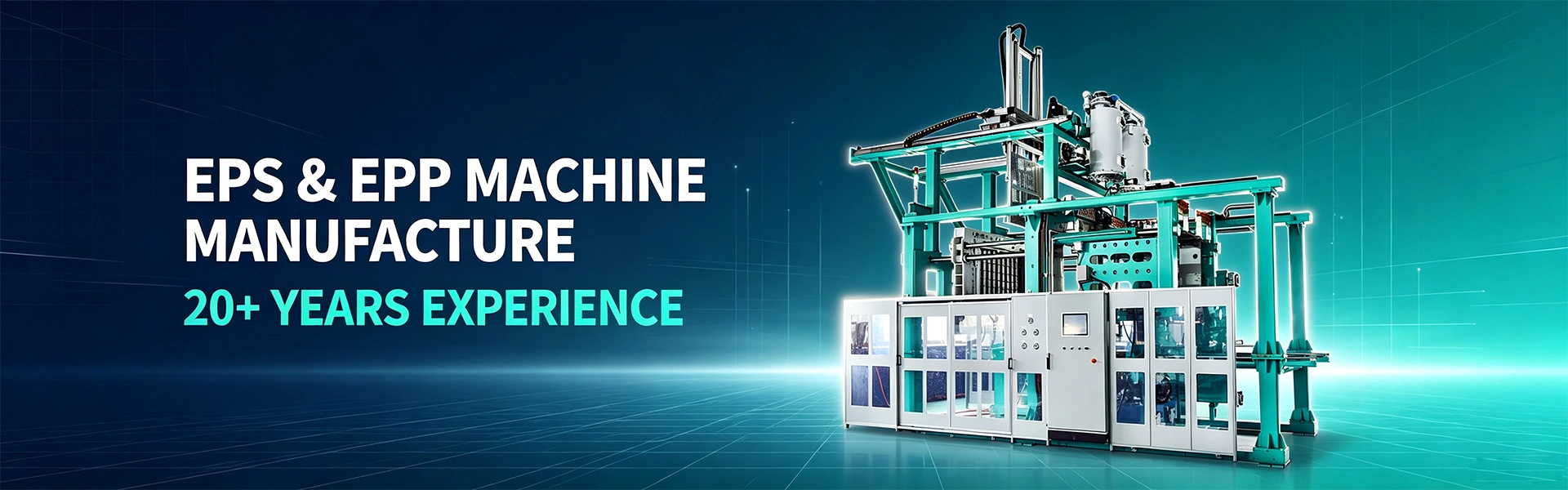
Introduction: The Energy Cost Imperative in EPS Manufacturing
For global manufacturers of Expanded Polystyrene (EPS) products, operational profitability increasingly hinges on one critical variable: energy efficiency. In an industry where steam generation traditionally accounts for 60-70% of total production energy consumption, escalating energy costs worldwide have transformed efficiency from a competitive advantage into a survival necessity. Particularly in markets like Europe and North America-where environmental regulations tighten and energy prices remain volatile-the pressure to reduce the carbon footprint and operational expenses of foam manufacturing has never been greater.
This reality presents both a challenge and an opportunity. While traditional EPS molding equipment often operates with inherent energy waste through steam loss, incomplete condensation, and imprecise thermal control, the next generation of machinery offers a fundamentally different approach. Modern engineering now integrates intelligent process control with closed-loop steam recovery systems and advanced thermal management to dramatically alter the production equation. For a top EPS machine manufacturer and factory like Hangzhou Epsole Machinery, advancing these technologies is central to delivering what modern industry demands: high-efficiency, high-stability machinery that provides the best long-term value through radically improved energy economics.
This article examines the three technological pillars enabling this shift-intelligent steam management, steam recovery technology, and optimized thermal design-and demonstrates how investing in these advanced systems delivers measurable, rapid returns on investment while future-proofing production facilities against rising energy costs.
The Legacy Challenge: Understanding Energy Inefficiency in Traditional Systems
To appreciate the breakthrough of modern systems, one must first understand the energy loss points in conventional EPS molding operations. A typical, older generation EPS shape moulding machine often suffers from several systemic inefficiencies:
Open-Loop Steam Systems: Many traditional machines operate on a "once-through" steam principle. High-pressure steam is injected into the mold cavity to expand and fuse the EPS beads, after which the spent steam and condensate are simply vented to the atmosphere or a drain. This represents a direct loss of both thermal energy and treated water.
Imprecise Process Control: Relying on manual valves or basic timers, older controls cannot make fine adjustments to steam pressure, temperature, or injection timing based on real-time conditions. This often leads to over-injection of steam-using more energy than necessary to ensure complete part formation-or inconsistent cycles that produce waste.
Poor Thermal Insulation and Mold Design: Standard molds and platens can lose significant heat to the environment. Inefficient steam channel design within the mold requires higher initial pressure to ensure even bead fusion, particularly in complex or thick-walled products.
The cumulative effect is a process where, as industry studies have indicated, as little as 40-50% of the purchased energy (gas, electricity, or oil) actually contributes to the useful work of expanding and molding the polymer. The rest is lost. Modern engineering targets these loss points systematically.
Pillar 1: Intelligent Steam Management – Precision as the Foundation of Efficiency
The first and most critical leap forward is the transition from analog, open-loop control to digital, closed-loop intelligent steam management. This is not merely an upgrade to a digital display; it is a fundamental re-engineering of the molding process itself.
An intelligent control system on a modern EPS/EPP shape moulding machine functions as the central nervous system for energy optimization. It typically involves:
Multi-Stage, Sensor-Driven Injection: Instead of a single blast of steam, the process is divided into distinct phases-pre-fill, main fill, and pack/hold-each with independently controlled pressure and time parameters. Temperature sensors within the mold cavity provide real-time feedback, allowing the controller to determine the exact moment when fusion is complete and to terminate steam injection. This eliminates the "safety margin" of extra steam that characterizes manual operation.
Adaptive Recipe Management: Advanced controllers can store and execute precise recipes for different products, accounting for variables like bead type, pre-puff density, and product geometry. More importantly, they can make micro-adjustments from cycle to cycle based on sensor data, compensating for minor fluctuations in steam supply or ambient conditions to maintain consistent quality with minimal energy input.
Integration with Pre-Expander and Drying Systems: True intelligence extends beyond the molding press. Leading systems from integrated EPS equipment manufacturers like Epsole allow the molding machine's controller to communicate with the pre-expander and automatic dryer. This ensures that beads arrive at the mold at the optimal moisture content and temperature, reducing the latent heat required for fusion and further streamlining energy use across the entire production line.
The direct result of this precision is a reduction in steam consumption per cycle, typically in the range of 15-25% compared to traditional controlled machines, while simultaneously improving product consistency and reducing scrap rates.
Pillar 2: Closed-Loop Steam Recovery Technology – Capturing Lost Energy
If intelligent control minimizes the amount of steam needed, steam recovery technology ensures that the energy within that steam is used to its maximum potential. This represents the most dramatic hardware innovation for energy savings in modern EPS machinery.
A closed-loop steam recovery system captures the spent steam and hot condensate from the molding cycle and repurposes it. Here's how a typical advanced system works:
Capture and Separation: After the molding cycle, the steam-and-condensate mixture is not vented. Instead, it is directed into a flash vessel or separation tank. Here, pressure is reduced, causing some of the hot condensate to "flash" back into low-pressure steam.
Energy Reuse Pathways: The recovered energy is then redirected for multiple pre-heating functions:
The generated low-pressure steam is often used to pre-heat the water in the boiler feed tank. This significantly reduces the primary energy (gas, electricity) required to raise the feedwater to boiling point.
The remaining hot condensate is circulated through heat exchangers to pre-heat incoming cold water for the next molding cycle or for other plant uses.
Water and Chemical Savings: The condensed water, now purified through the distillation-like process of evaporation and re-condensation, is often of very high quality. It can be filtered and returned directly to the boiler, drastically reducing fresh water intake and the need for water-softening chemicals.
For a manufacturer operating multiple EPS molding machines around the clock, the impact is profound. By implementing a robust steam recovery system, factories routinely report reductions of 20-30% in their primary fuel consumption for steam generation. This technology is a hallmark of European-standard EPS machines designed for markets where energy costs and environmental stewardship are paramount. It transforms the molding process from a linear, wasteful system into a more circular, resource-efficient one.
Pillar 3: Efficient Mold & Machine Design – Optimizing the Thermal Environment
Precision control and energy recovery are amplified by the third pillar: optimizing the physical equipment to retain and utilize heat effectively. This encompasses both the mold itself and the core machine structure.
Advanced Mold Engineering: High-efficiency molds feature optimized steam channel geometries that ensure rapid, even distribution of steam with minimal pressure drop. This allows operators to use the lowest effective pressure. Furthermore, molds designed for compatibility with recovery systems include improved drainage to efficiently remove condensate, which is a key to effective heat recovery. For specialized applications like EPP molding or producing large-format EPS construction panels, this engineered efficiency is even more critical.
Machine Insulation and Thermal Mass: Modern molding presses from leading Chinese manufacturers are designed with energy retention in mind. This includes insulating critical steam lines and platens to reduce radiant heat loss to the factory environment. Some designs also incorporate thermal mass elements that help stabilize process temperatures, reducing the energy spikes needed at the start of production runs or after idle periods.
High-Efficiency Peripheral Components: The pursuit of efficiency extends to pumps and motors. The integration of variable frequency drives (VFDs) on hydraulic pumps and cooling water circulators allows these components to draw only the power needed for the specific demand of the cycle, cutting parasitic electrical loads significantly.
The Bottom Line: Quantifying the Return on Investment
The integration of these three pillars is not merely a technical exercise; it is a compelling financial decision. The return on investment (ROI) for upgrading to a modern, energy-optimized EPS shape moulding machine is increasingly rapid.
Case Study Perspective: A Packaging Producer's Calculation
Consider a mid-sized factory running two traditional machines, consuming approximately 500 kg of steam per hour in total, operating 6,000 hours annually. With an average cost of steam at $30 per ton, the annual steam cost is $90,000.
By upgrading to new machines featuring intelligent control (saving 20% steam) and a basic recovery system (saving a further 20% of the remaining demand), total steam consumption could be reduced by approximately 36%. This translates to:
New Annual Steam Cost: ~$57,600
Annual Savings: $32,400
Additional Savings: Reduced scrap, lower water and chemical costs, and decreased maintenance from running a cleaner boiler system.
With the premium for an advanced, energy-saving machine from a reliable supplier like Epsole Machinery, the payback period on the energy savings alone can often fall between 1.5 to 3 years, after which the savings flow directly to the bottom line. In regions with higher energy costs or carbon taxes, this payback is even faster.
Conclusion: A Strategic Investment in Sustainable Competitiveness
The evolution of EPS molding technology from a high-consumption process to a model of precision efficiency is well underway. For forward-thinking manufacturers, the question is no longer if to upgrade, but when and with whom.
Choosing a partner that embodies the synthesis of these three technological pillars is crucial. It requires a manufacturer with deep R&D capabilities, proven experience in system integration, and a commitment to long service life and stability. As a factory with over two decades of experience exporting European-standard machinery to more than 65 countries, Hangzhou Epsole Machinery designs its EPS and EPP shape moulding machines with this holistic view of efficiency. Our goal is to provide clients with more than a machine; we deliver a high-efficiency production asset that lowers operating costs, ensures compliance with evolving energy regulations, and secures long-term competitiveness in a global market.
In an industry where margins are perennially scrutinized, mastering energy efficiency is the ultimate leverage. The modern, intelligent EPS molding machine is the tool that provides it.
Ready to transform your production economics with intelligent, energy-saving EPS technology?
Contact the engineering team at Hangzhou Epsole Machinery today to discuss a customized analysis of potential savings for your specific operation. As a top manufacturer and solution supplier, we are here to help you build a more efficient and profitable future.