

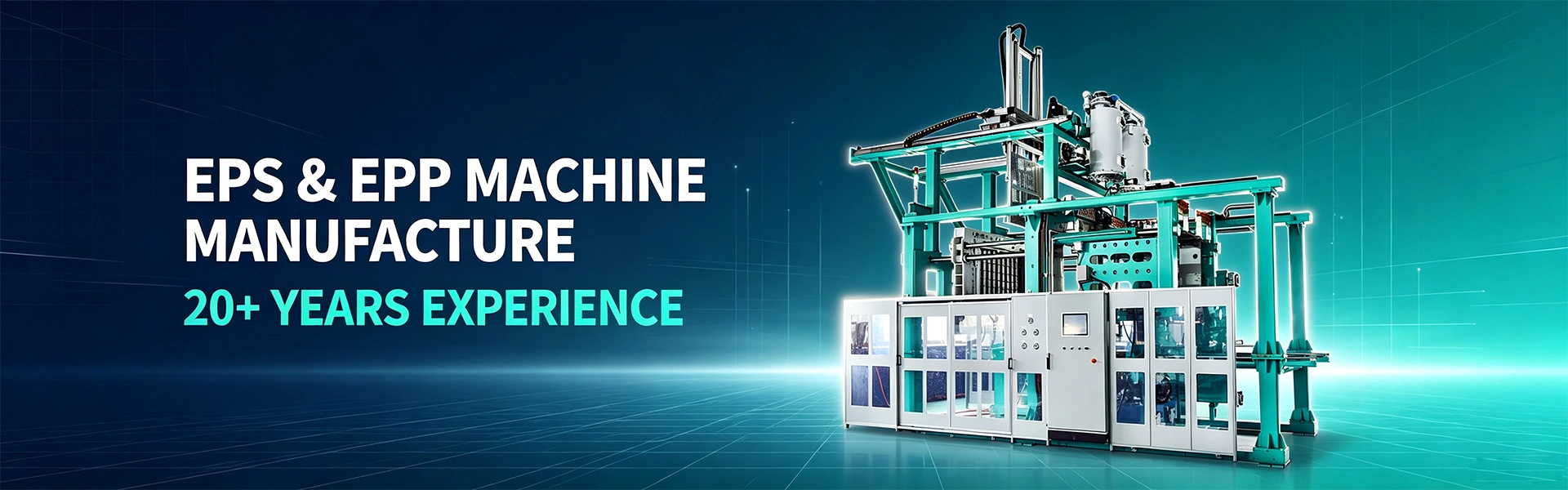
Introduction: The Automation Imperative in a Competitive Global Market
In the fast-paced world of protective packaging, where margins are tight and delivery deadlines are non-negotiable, efficiency is the ultimate currency. For producers of Expanded Polystyrene (EPS) packaging components-from simple blocks to complex, custom-designed cushioning-the traditional, labor-intensive production model is becoming economically untenable. The challenges are universal: rising labor costs, difficulty in maintaining a skilled workforce for repetitive tasks, costly human error leading to product variation and waste, and the relentless market pressure for faster turnaround times.
This landscape has propelled automation from a luxury for high-volume specialists to a strategic necessity for any manufacturer aiming to compete regionally or export globally. True competitive advantage no longer lies in a single piece of equipment but in a seamlessly integrated production line where machinery, robotics, and software communicate flawlessly. For a top-tier EPS machine factory and supplier like Hangzhou Epsole Machinery, the mission is to move beyond supplying standalone EPS shape moulding machines to providing complete, synergistic automation solutions. These solutions are engineered to maximize throughput, guarantee unparalleled product consistency, and deliver a rapid, quantifiable return on investment by transforming the entire production workflow from raw bead handling to finished product dispatch.
This article deconstructs the modern automated EPS packaging line, illustrating how the integration of a high-stability molding core with intelligent material handling, post-processing, and data systems creates a manufacturing asset of superior productivity, reliability, and profitability.
Part 1: The Bottlenecks of the Manual and Semi-Automated Workflow
To appreciate the transformative power of full automation, one must first understand the inefficiencies inherent in conventional setups. A typical semi-automated line often includes a modern molding press but remains hobbled by manual interventions at critical junctures:
Manual Unloading and Handling: After the molding cycle, an operator must open the press, manually remove the often hot and fragile parts, and place them on a cart or conveyor. This step limits the machine's cycle time to human speed, creates a variability bottleneck, and exposes workers to ergonomic risks.
Inconsistent Drying and Curing: Manually transferred parts may spend unpredictable times in drying racks, leading to uneven moisture content. This inconsistency can affect subsequent cutting, printing, or stacking quality and final product performance.
Disconnected Post-Processing: Trimming, cutting, and assembly often occur in separate, disconnected stations. Transporting parts between these stages increases handling damage, work-in-process inventory, and floor space requirements.
Data Silos and Reactive Management: Without integrated data flow, production metrics like cycle counts, downtime causes, and yield rates are manually logged, making real-time optimization and proactive maintenance nearly impossible.
These disjointed processes result in lower overall equipment effectiveness (OEE), higher direct labor costs per unit, and a greater risk of quality deviations that can lead to customer complaints-especially critical when serving industries like electronics or medical devices.
Part 2: The Engine of the Line: A Core of Uncompromising Stability
The foundation of any successful automated EPS packaging line is not the robot itself, but the molding machine at its heart. Automation cannot compensate for an unreliable or inconsistent press. If the core machine suffers from unpredictable cycle times, frequent faults, or produces parts with variable dimensions or density, the entire downstream automation system will falter, becoming a channel for amplifying defects rather than productivity.
Therefore, the primary requirement for automation readiness is a high-stability, high-efficiency EPS or EPP shape moulding machine. Key attributes of such a machine include:
Predictable, Repeatable Cycle Times: The machine must complete every cycle-from mold closing, steam injection, cooling, to mold opening-within a tight time window. This rhythmic predictability is essential for programming and synchronizing downstream robots and conveyors. Machines built to European standards, like those from Epsole, emphasize this repeatability through robust hydraulic systems and precision steam valves.
Exceptional Part Consistency: Every ejected part must have identical geometry, density, and surface finish. This is achieved through advanced process control systems that meticulously regulate every parameter, ensuring that the 500th part is identical to the first. Consistent part dimensions are critical for reliable robotic pickup and placement.
Low Fault Incidence and Ease of Access: Automated lines run for long, unattended periods. The core molding machine must be engineered for long service life and reliability. Furthermore, a logical layout for quick mold changes and easy access to maintenance points minimizes line downtime when intervention is required.
Integrated Communication Ports (Industry 4.0 Ready): A modern machine must be equipped with standard communication protocols (e.g., OPC UA, Ethernet/IP) that allow its controller to send signals ("cycle complete," "fault alarm," "mold open") and receive commands from a central line supervisory system.
This reliable core is the non-negotiable starting point. It transforms the molding press from a variable-paced workstation into a pulsing, predictable engine that drives the entire automated system.
Part 3: Building the Automated Ecosystem: Key Components and Integration
With a stable core in place, the automation ecosystem is built around it. This involves integrating specialized systems that handle every step from bead intake to palletized output.
1. Automated Unloading and Primary Handling:
6-Axis Articulated or Gantry Robots: Equipped with custom, multi-fingered grippers or vacuum cup arrays, these robots enter the mold immediately upon opening, gently and precisely remove all parts, and place them onto a synchronized take-away conveyor. They work at machine pace, unlocking the full speed potential of the press.
Vision-Assisted Systems (for complex parts): In lines producing multiple SKUs or intricate parts prone to sticking, vision systems can guide the robot, ensuring complete clearance of the mold cavity every cycle.
2. Integrated Drying and Stabilization Conveyors:
The take-away conveyor from the robot feeds directly into an automated drying tunnel. These tunnels provide controlled temperature and airflow for a predetermined, consistent duration. Parts exit at a uniform, optimal moisture level, ready for secondary operations. This closed-loop process eliminates the variability of rack drying.
3. In-Line Post-Processing Stations:
Automatic Trimming and De-flashing: Conveyors route dried parts through CNC trimming stations or specialized punching machines that automatically remove parting-line flash and sprue, achieving a finished cosmetic standard impossible with manual trimming.
Precision Cutting and Fabrication: For multi-component packaging, automated cutting saws or hot-wire systems can precisely cut blocks or shape parts inline, based on digital designs, with perfect repeatability.
4. Final Handling, Inspection, and Palletizing:
Automated Sorting and Stacking: Robots or pick-and-place systems can sort different parts, stack them into predefined bundles, and apply intermediate packaging like shrink film.
Automated Palletizing: The final step involves robots placing stacked bundles onto pallets in an optimized, stable pattern, ready for stretch-wrapping and warehouse storage or shipment.
The Role of the Central Control System (The "Conductor"):
All these components are orchestrated by a Supervisory Control and Data Acquisition (SCADA) system or a dedicated Line Controller. This "conductor" monitors the status of every component, manages the timing of the entire sequence, collects production data, and can trigger alarms or automatic shutdowns if a fault is detected, preventing jams or damage.
Part 4: The Tangible Benefits: Measuring the ROI of Automation
Investing in a fully integrated automated line is a significant capital decision. Justifying it requires a clear understanding of the multidimensional returns.
1. Dramatic Increase in Productive Output:
By eliminating manual unloading delays, the molding press can operate at its optimal, faster cycle time 24/7. It is not slowed by shift changes, breaks, or fatigue. This alone can increase the machine's productive output by 20-40%.
2. Radical Reduction in Direct Labor Costs:
A line that once required 3-4 operators per shift for unloading, handling, and trimming can often run with 1 supervising technician. This direct labor savings provides a fast and continuous payback on the automation investment.
3. Unmatched Quality Consistency and Traceability:
Robotic handling eliminates the physical damage and variation introduced by human contact. Every part undergoes identical processing. Integrated sensors can log data for every cycle (pressures, times, robot pickup confirmation), creating a full digital traceability record for each production batch-a valuable feature for quality-critical industries.
4. Enhanced Workplace Safety and Morale:
Automating repetitive, ergonomically challenging tasks (lifting hot parts, manual trimming) reduces workplace injuries. It also allows the workforce to be upskilled to more rewarding roles in machine supervision, programming, and maintenance.
5. Optimized Floor Space and Material Flow:
An integrated line is a compact, logical flow of material. It eliminates the clutter of carts, temporary storage, and disjointed workstations, improving factory layout efficiency and reducing work-in-progress inventory.
ROI Calculation Example:
Consider a factory producing standard EPS blocks. A semi-automatic line with one press and three operators per shift produces 800 blocks in an 8-hour shift. An automated line with the same press, running at a 25% faster effective rate with one supervisor, produces 1,000 blocks. Factoring in the labor savings and increased output value against the cost of the automation solution, the payback period for many of our clients at Epsole Machinery falls between 18 to 36 months. Subsequent years yield pure cost advantage and increased capacity.
Conclusion: The Integrated Solution Partner Advantage
Building a truly efficient automated EPS packaging line is more than procuring a list of components. It is an engineering exercise in synchronization, reliability, and data integration. The greatest risk lies in the "gaps"-the interfaces between different machines from different suppliers where communication fails, materials jam, and efficiency grinds to a halt.
This is where the value of a comprehensive solution supplier becomes paramount. As a professional manufacturer with deep expertise across the entire EPS equipment spectrum-from pre-expanders and shape moulding machines to drying systems-Hangzhou Epsole Machinery takes a holistic view. We engineer our core machines for integration from the ground up and can design, supply, and commission the synchronized peripheral systems that create a cohesive whole.
Our role is to act as a partner, providing not just machines, but a turnkey production solution that delivers a guaranteed boost in output and consistency. In the global market for EPS packaging, where efficiency defines winners, the fully integrated, automated line is the ultimate competitive weapon. It represents a strategic leap from manual production management to streamlined, digital manufacturing excellence.