

Introduction: Compliance as the Foundation of Global Business
For manufacturers of Expanded Polystyrene (EPS) products, the ambition to supply international markets-particularly high-value regions like the European Union, North America, and other regulated economies-is often met with a complex web of technical standards and legal mandates. Compliance is no longer merely a checkbox on a client questionnaire; it is the fundamental license to operate and compete. This is especially true for two critical sectors: food-contact packaging and construction materials. In these fields, the end-product's compliance is intrinsically linked to the equipment and processes used in its manufacture.
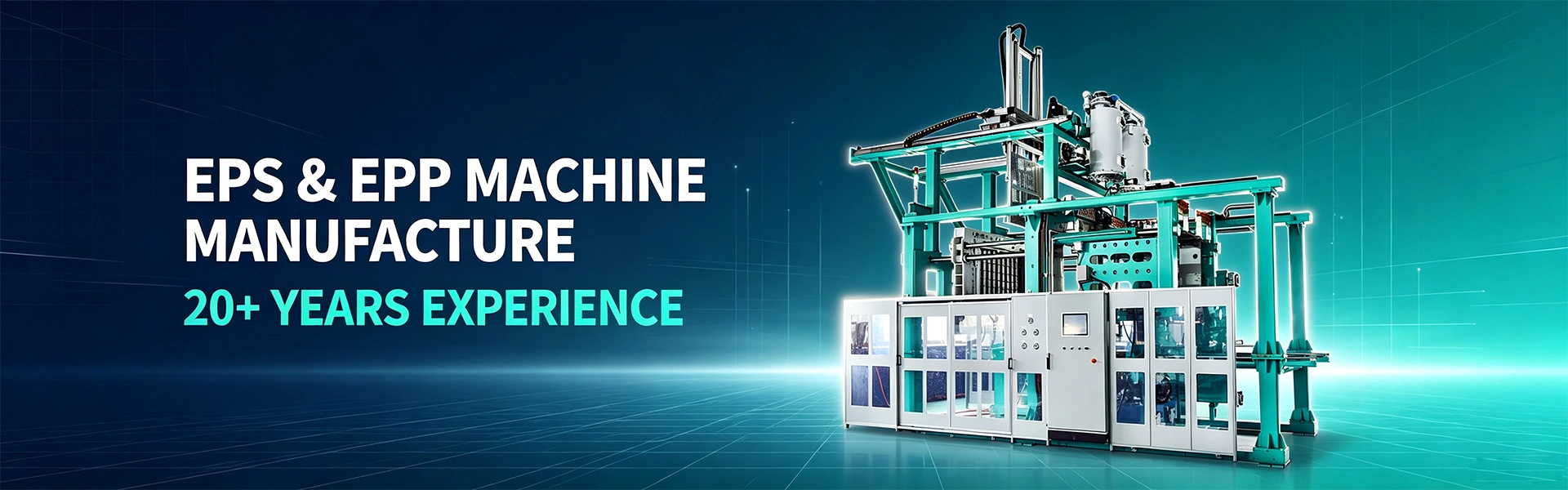
A common misconception among growing producers is that compliance is achieved solely through material selection and final product testing. While crucial, this view overlooks the pivotal role of production machinery. The precision, stability, and hygiene-by-design of the EPS shape moulding machine and its auxiliary systems are what ensure that certified raw materials are consistently transformed into compliant finished goods, batch after batch. For a top manufacturer and supplier like Hangzhou Epsole Machinery, engineering equipment that enables and simplifies our clients' compliance journey is a core design principle. This article explores the specific equipment considerations for producing food-grade and construction EPS, arguing that partnering with a knowledgeable factory is a strategic investment in market access, risk mitigation, and brand reputation.
Part 1: The High-Stakes Arena of Food-Grade EPS Packaging
EPS packaging for food-from fresh fish boxes and meat trays to insulated containers for meal delivery-is governed by stringent global regulations. Frameworks like the EU's Framework Regulation (EC) No 1935/2004, along with detailed national measures (e.g., FDA regulations in the USA), establish that materials must not transfer their constituents to food in quantities that could endanger human health, bring about an unacceptable change in the composition of the food, or deteriorate its sensory properties.
1.1 From Regulation to Machine Design: Key Principles
Producing compliant food-grade EPS requires machinery that addresses several critical fronts:
A. Hygiene and Cleanability: Preventing Contamination at Source
The machine must be designed to prevent the introduction of physical, chemical, or microbial contaminants.
Hygienic Material Pathways: Critical contact areas for the EPS beads and steam, such as hoppers, feed systems, and closed steam circuits, must be constructed from approved, non-reactive materials (e.g., specific stainless-steel grades) and designed for easy access and cleaning. Smooth, polished surfaces without cracks or crevices prevent material buildup and bacterial growth.
Separation from Lubricants: A paramount concern is the potential migration of mineral oils or greases from the machine's hydraulic system into the product. Advanced EPS molding machines destined for food-grade production incorporate features like double-acting piston rods with advanced seal technology and physically isolated platen designs to ensure that hydraulic oil cannot leak into the mold clamping area or the product zone, even under fault conditions.
B. Process Stability and Traceability: Ensuring Consistent Results
Regulations require consistency. A process that drifts can turn compliant material into a non-compliant product.
Precise Thermal Control: Consistent bead fusion is vital. Incomplete fusion can create fragile areas where beads might detach (a physical contaminant risk), while overheating can cause polymer degradation. Machines must offer exact, repeatable control over steam temperature, pressure, and cycle time to process food-approved beads within their optimal window consistently.
Data Logging for Due Diligence: Modern European standard machines are equipped with controllers that can log key process parameters for every production batch. This data provides an auditable trail, demonstrating that products were manufactured under controlled, specified conditions-a crucial part of a producer's due diligence file.
1.2 The Role of Auxiliary Equipment in the Food-Grade Chain
Compliance extends beyond the molding press. An integrated EPS equipment line must be viewed holistically.
Clean Air and Drying Systems: Post-molding, products must be dried and cooled with filtered air to prevent contamination from ambient dust or microbes. Automated drying tunnels with HEPA-filtered air intake are part of a complete food-grade solution.
Safe Handling and Storage: Conveyors and robotic handlers used in automated food-packaging lines should also use food-safe materials and be designed for easy cleaning.
For the producer, selecting a machine factory that understands these requirements means receiving equipment that is not only powerful but also "audit-ready," significantly smoothing the path to certifications from schemes like BRCGS Packaging or ISO 22000.
Part 2: Engineering for Performance: EPS in Construction and Building Compliance
In the construction industry, EPS is primarily used as insulation material in the form of boards, blocks, and shaped elements for walls, roofs, and floors. Compliance here revolves around two key performance aspects: thermal performance (Energy Efficiency) and reaction to fire (Safety).
2.1 Precision for Performance: Thermal Consistency is Key
The declared Lambda (λ) value, or thermal conductivity, of an insulation product is its core selling point. This value must be certified and guaranteed. The density and uniformity of the EPS cell structure are the primary factors determining this value.
Machine Stability Dictates Product Uniformity: Any fluctuation in the molding process-be it steam pressure, cooling rate, or bead distribution-can create density variations within a board. A dense patch and a less dense patch in the same panel will have different insulation values, creating a thermal bridge and invalidating the product's certified performance. Therefore, the EPS shape moulding machine for construction panels must deliver exceptional process stability. Precise, computer-controlled steam management and even cooling across the entire, often very large, platen area are non-negotiable features to produce panels with homogeneous density from edge to edge and from batch to batch.
The Challenge of Large Formats: Producing large boards (e.g., 1200mm x 600mm or larger) amplifies these challenges. It requires machines with massive, perfectly parallel platens, high and evenly distributed clamping force to prevent flash on large molds, and a steam system capable of delivering uniform energy to the entire cavity. This is where the engineering prowess of an experienced manufacturer becomes critical.
2.2 Manufacturing for Fire Safety: Beyond Just Adding Flame Retardants
Most construction EPS contains flame-retardant (FR) additives to achieve ratings like Euroclass E or, with specialized composites, even B. However, the machine's role is crucial in realizing the additive's potential.
Uniform Dispersion Through Controlled Processing: The molding process must ensure the FR additives are evenly distributed throughout the final product. Inconsistent heat or poor bead fusion can lead to weak spots with lower FR concentration, compromising the fire performance of the entire element. A stable, well-controlled molding cycle ensures a consistent and closed-cell structure that locks in the additives.
Dimensional Stability and Aging Performance: Construction products are tested for long-term performance. Poorly fused EPS or boards with internal stress may warp or shrink over time, which can affect both their insulating performance and their fire-rated assembly (e.g., creating gaps in a fire barrier). Machines that ensure complete fusion and integrated, controlled cooling minimize these risks.
2.3 Navigating the Certification Jungle: CE Marking and Beyond
In the EU, construction EPS panels are covered by the Construction Products Regulation (CPR), requiring CE marking based on a harmonized standard (EN 13163). The factory production control (FPC) mandated for CE marking heavily relies on consistent, controlled manufacturing processes. The data logging and repeatability provided by a high-end molding machine are invaluable assets for maintaining FPC and passing rigorous notified body audits. For exports to other regions, understanding the machine's role in meeting standards like ASTM (USA) or building codes globally is equally important for a supplier with international clients.
Part 3: The Strategic Value of a Compliance-Enabled Equipment Partner
Choosing production machinery is a long-term strategic decision. When targeting regulated markets, the choice of equipment partner becomes a decisive factor in mitigating risk and ensuring business continuity.
1. Risk Mitigation: Non-compliant products can lead to rejected shipments, costly recalls, legal liability, and irreparable brand damage. Equipment that is designed and built with compliance in mind acts as the first and most robust line of defense against these failures.
2. Faster Time-to-Market: A manufacturer that understands target market regulations can provide machines that are pre-configured to support compliance needs. This accelerates the client's own certification and approval processes, getting products to market faster than competitors grappling with adapting unsuitable equipment.
3. Long-Term Investment Protection: Regulations evolve. Partnering with an innovative factory committed to R&D, like Epsole Machinery, means your production asset is more likely to be adaptable to future regulatory changes, whether in material formulations, energy efficiency demands, or digital traceability requirements.
4. Beyond the Machine – The Value of Knowledge: Perhaps the greatest asset a specialized supplier offers is knowledge. From advising on mold design for optimal material flow in a food tray to recommending cooling cycle settings for a stable insulation board, this technical partnership is invaluable. It transforms the transaction from buying a machine to acquiring a compliance-enabling solution.
Conclusion: Building Your Market Access on a Foundation of Certified Engineering
In the global marketplace for EPS products, quality is a given, and compliance is the price of entry. For ambitious producers, achieving and maintaining compliance cannot be an afterthought managed solely in the quality lab; it must be engineered into the production process from the very beginning.
The EPS molding machine is the cornerstone of this compliant process. Its stability ensures the consistent realization of material properties. Its hygienic design safeguards product purity. Its precision and controllability form the basis of auditable factory production control. Therefore, investing in equipment from a top manufacturer that prioritizes these principles is not merely a capital expenditure-it is a strategic investment in your company's credibility, resilience, and growth potential in the world's most demanding markets.
At Hangzhou Epsole Machinery, our two decades of experience as a factory and supplier to over 65 countries have been defined by this understanding. We engineer our EPS and EPP shape moulding machines not just for performance, but to be the reliable, enabling partners our clients need to navigate the complexities of global standards with confidence, turning regulatory hurdles into competitive advantages.