

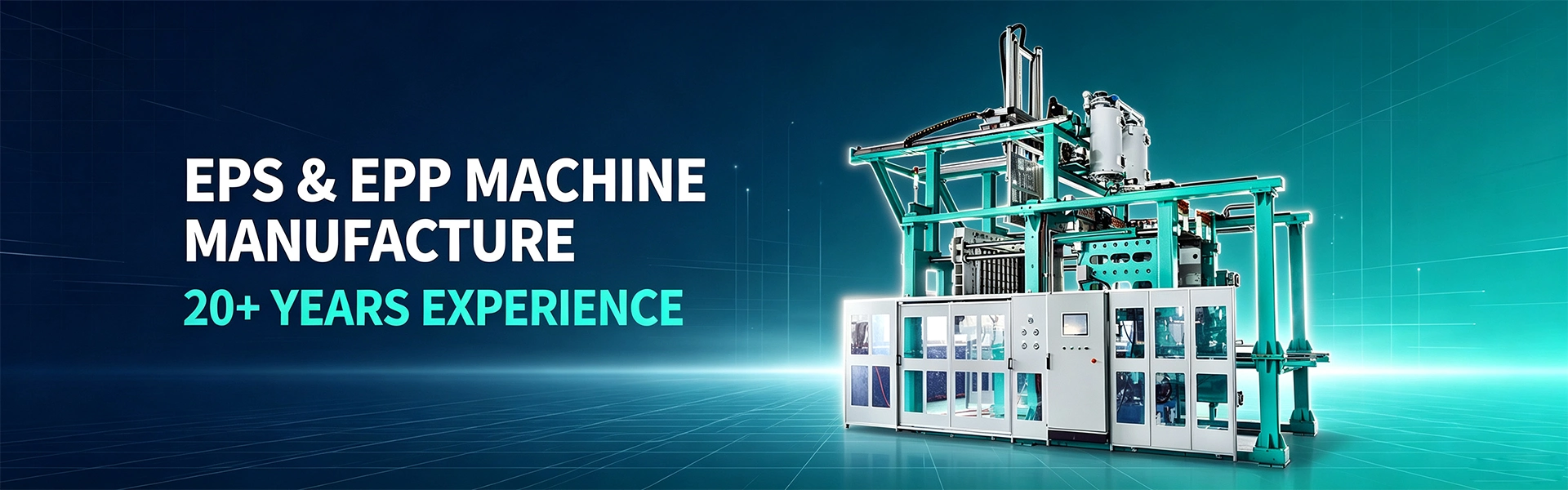
Steam is the lifeblood of EPS production, but it's also often the largest operating expense. Industry data shows that a typical EPS molding machine consumes 500–800 kg of steam per hour, yet only 30–40% of that thermal energy is actually used for expansion and fusion. The rest is lost through radiation, open vents, faulty traps, condensate discharge, and suboptimal process design. For a plant producing 10,000 tons of EPS annually, steam costs can exceed 3 million RMB per year.
Cutting steam consumption by 30% is achievable with a combination of low-cost operational tweaks and targeted equipment upgrades. This guide provides a step-by-step roadmap to reach that goal.
Conduct a Thorough Steam Energy Audit
You cannot manage what you do not measure. Before making any changes, you must understand exactly where your steam is going.
What to Measure:
Install sub-meters on each major steam consumer: pre-expanders, molding machines, steam distribution headers, and condensate return lines. Measure the following for at least one full week:
- Steam flow (kg/hour) per machine
- Pressure before and after each machine
- Condensate temperature at outlet
- Cycle time and steam-on time per batch
Typical Loss Distribution:
Based on energy audits from dozens of EPS plants, the breakdown of steam consumption often looks like this:
| Loss Category | % of Total Steam |
|---|---|
| Condensate discharge & blowdown | 35–45% |
| Mold & cooling system heat loss | 25–30% |
| Exhaust & radiation (pipes, vessels) | 15–20% |
| Actual useful steam for fusion | 30–40% |
This means 60–70% of your steam bill is waste. The goal is to flip that ratio.
Establish a Baseline:
Calculate your current steam-to-EPS ratio-kg of steam consumed per kg of EPS produced. A reasonable industry benchmark is 3.0–4.0 kg steam/kg EPS for a well-optimized line. Older, poorly maintained lines often exceed 5.0 kg/kg. Your target after improvements should be 2.5–3.0 kg/kg-a 30–40% reduction.
Optimize Pre-Expansion Parameters
Pre-expansion is the most steam-intensive step. Small changes here yield outsized savings.
Reduce Steam Pressure to the Minimum Viable Level
Many operators run pre-expanders at higher pressure than necessary, believing it guarantees consistent bead density. In reality, excess pressure increases steam velocity, damages bead cell structure, and wastes energy.
Recommended Pressure Benchmarks:
| EPS Density Target (kg/m³) | Recommended Steam Pressure (bar) |
|---|---|
| 10–15 (low-density insulation) | 0.6–0.8 |
| 15–25 (general packaging) | 0.8–1.0 |
| 25–35 (high-strength blocks) | 1.0–1.2 |
| >35 (specialty parts) | 1.2–1.4 |
How to find your optimal pressure: Start with the supplier's standard recipe. Reduce pressure in small steps (0.05 bar at a time) while monitoring bead density and expansion ratio. Stop when you see the first sign of incomplete expansion, then increase pressure slightly (0.02–0.03 bar) to establish a stable operating point.
One study found that decreasing steaming pressures from 0.70 to 0.60 bar can save up to **9.7%** of steam.
Balance Steam Pressure and Residence Time
Running at the lowest stable steam pressure and matching residence time gives good bead expansion with less wasted latent heat. Start with supplier default recipes, reduce pressure in small steps, and check density and fusion after each change.
Control Moisture and Fluidized Bed Settings
Correct fluidized bed air flow and temperature reduces bead moisture, so you need less steam for reheating and post-expansion steps. Target bed air temperature of 30–40°C and bead moisture below 2%.
Upgrade Molding Machine Steam Systems
Implement Precision Steam Pressure Control
Advanced molding machines with PID-controlled steam systems can achieve sensitive pressure control with ±0.1 Mpa tolerance, reducing heating time and saving 25–30% of energy consumption. Look for systems that use balance valves and pressure sensors instead of traditional electronic connector pressure gauges.
Use Multi-Stage or Adaptive Steam Control
Teubert's proprietary molding machine main valve/bypass valve steam control system reduces steam consumption by over 30% compared to conventional machines. Modern machines can automatically adjust steam valves according to the different steam energy requirements at each stage of the molding process.
Optimize Piping Layout
Use large pipelines and valves placed very close to the mold, reducing excess energy consumption while improving running speed.
Implement Heat and Condensate Recovery
Steam Recovery Systems
Advanced pre-expanders can capture and recycle up to 30% of waste steam, reducing boiler load. A thermal energy recovery system combined with intelligent control technology can reduce steam consumption by **30%** and overall energy consumption by over 25%.
Condensate Recovery
Condensate discharge and blowdown account for 35–45% of total steam loss-the single largest waste category. Recovering this hot condensate and returning it to the boiler can yield substantial savings:
- One EPS facility reported annual savings of 800,000 RMB from condensate recovery
- Another case showed 7,000 tons of annual steam savings and 800,000 RMB/year in steam savings, plus 6.6万吨 (66,000 tons) of recovered condensate worth 2 million RMB/year
Flash Steam Recovery
High-temperature condensate contains flash steam that can be recovered and reused. Systems that recover flash steam and condensate can significantly improve overall steam system efficiency.
Residual Steam Condensation
Some advanced steam setting equipment directs residual steam from the setting box into a condenser, where it condenses into water for reuse. This reduces steam loss when doors open and minimizes energy consumption from continuous condenser operation.
Improve Insulation
Insulating exposed steam pipelines and equipment helps prevent heat loss and reduce energy consumption. Insulating the EPS molding machine and its hot components also helps reduce the amount of steam required to maintain the optimal process temperature.
Key areas to insulate:
- Steam distribution headers and pipes
- Molding machine bodies and hot components
- Pre-expander vessels
- Condensate return lines
Reduce Steam Leakage and Maintain Equipment
Steam leakage can cause significant energy loss. Regular maintenance and inspection of the steam system can help identify and repair leaks, thereby improving energy efficiency.
Maintenance Checklist:
- Inspect steam traps regularly-faulty traps are a major source of waste
- Check for visible steam leaks at pipe joints and valves
- Monitor pressure drops across the system
- Ensure condensate drains are functioning properly
- Clean and maintain steam strainers
Minimize Idle Time and Optimize Cycles
Maintaining the EPS molding machine at an appropriate process temperature helps reduce the time required for the machine to reach optimal temperature, thereby minimizing idle time and related steam consumption.
Strategies:
- Keep machines warm during short breaks rather than allowing full cool-down
- Optimize cycle timing to eliminate unnecessary steam-on time
- Use quick-change mold systems to reduce downtime
Leverage Automation and Real-Time Monitoring
Using automation in EPS molding machines can help reduce energy consumption by optimizing steam usage. Automatic monitoring and control of steam supply helps maintain consistent steam pressure and minimize energy loss.
Key Automation Features:
Intelligent steam management that ensures uniform heating and effective energy reduction
Online charts that track steam use per batch and show where leaks, wrong settings, or bad raw material cause extra energy demand
Automated density control and recipe storage
Integrated energy monitoring dashboards
Summary: Action Plan for 30% Steam Reduction
| Priority | Action | Expected Savings |
|---|---|---|
| 1 | Conduct steam energy audit and establish baseline | Foundational |
| 2 | Optimize pre-expansion steam pressure | 5–15% |
| 3 | Install/replace steam traps and fix leaks | 5–10% |
| 4 | Implement condensate and flash steam recovery | 10–20% |
| 5 | Insulate pipes and equipment | 3–8% |
| 6 | Upgrade to precision steam control (PID/automation) | 10–30% |
| 7 | Optimize cycle times and reduce idle time | 5–10% |
Conclusion
Cutting steam consumption by 30% in your EPS production line is not a theoretical dream. Dozens of EPS producers have already achieved it by combining low-cost operational tweaks with targeted equipment upgrades. In many cases, the payback period is less than 12 months.
The path is clear:
1. Measure where your steam is going
2. Optimize pre-expansion parameters
3. Upgrade steam systems and controls
4. Recover heat and condensate
5. Insulate and maintain your system
6. Automate for consistent performance
Start with the energy audit, implement the low-cost fixes first, then plan for equipment upgrades with the shortest payback periods. The savings-both financial and environmental-will follow.