

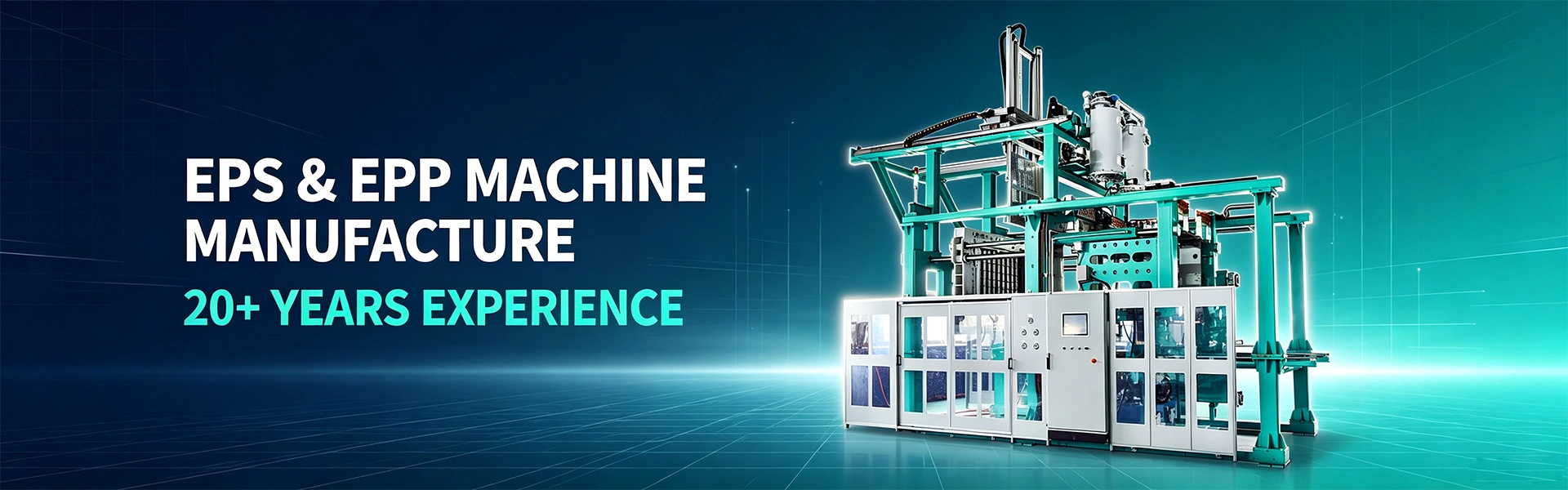
As an EPS manufacturer, you face a constant pressure to balance upfront capital expenditure against long-term operational profitability. At first glance, a lower-priced machine from a non-certified supplier may seem attractive for your bottom line. However, this short-term thinking often masks significantly higher costs over the machine's lifetime-costs that quietly erode profits year after year.
Investing in European-standard EPS machines is not merely a compliance decision; it is a strategic financial move that reduces energy consumption, minimizes downtime, lowers maintenance expenses, and future-proofs your business against tightening regulations. Here is why European-standard EPS equipment delivers superior long-term value.
CE Certification: The Gateway to Safety and Global Markets
European-standard EPS machines are defined first and foremost by CE certification. The CE mark is not a voluntary quality label but a legal requirement for machinery sold within the European Economic Area. It signifies that the equipment complies with all relevant EU legislation, including the Machinery Regulation and the Low Voltage Directive (LVD).
Why CE Certification Matters Financially
Market Access Protection. Non-certified machines cannot be legally imported into EU member states. For manufacturers targeting European markets, CE certification is non-negotiable. Without it, your products may be seized at customs, incurring massive financial penalties and destroying customer trust.
Liability Risk Reduction. Non-compliant equipment poses serious safety hazards. In the event of an accident involving non-CE machinery, manufacturers face unlimited product liability claims, legal fees, and potential bans from tenders. European-standard machines undergo rigorous third-party testing, including assessments of electrical safety, mechanical guarding, and emergency stop systems, significantly reducing these risks.
Competitive Differentiation. Increasingly, major European buyers will only source EPS products from manufacturers using CE-certified production lines. This certification serves as proof that your factory meets internationally recognized safety and quality benchmarks, directly impacting your ability to win contracts with premium clients.
Superior Energy Efficiency: Lower Operating Costs from Day One
Energy consumption represents one of the largest ongoing expenses in EPS production. European-standard machines are engineered with advanced energy-saving technologies that directly reduce your utility bills.
Steam Consumption Breakthroughs
Steam is the lifeblood of EPS molding. Traditional EPS pre-expanders consume approximately 50–60 kg of steam per 100 kg of EPS produced. By contrast, modern energy-efficient pre-expander machines featuring intelligent steam management reduce steam consumption to just 25–40 kg per 100 kg of EPS-a reduction of 30–40% or more. With steam costs rising steadily across industrial markets, these savings compound dramatically over years of continuous operation.
For EPS shape molding machines meeting European standards, per-cycle steam consumption ranges from as low as 2 to 3.5 kg, with cooling water requirements between 15 and 30 kg per cycle. When operating over thousands of daily cycles, the cumulative reduction in steam generation and water treatment costs is substantial.
Pre-Expander Energy Breakthroughs
Intermittent (batch) pre-expanders that meet European efficiency benchmarks can achieve unit steam demand only half that of continuous pre-expanders. Some models incorporate closed constant-pressure foaming barrels that deliver more than 50% energy savings compared to conventional continuous systems.
Furthermore, intelligent steam recovery systems capture and recycle up to 30% of waste steam, reducing boiler load and further cutting fuel consumption. Double-walled insulation reduces heat loss by 40% compared to conventional models-meaning less energy wasted and more directed to productive foaming.
When you factor in variable-frequency drive and PLC integrated control systems-which reduce energy consumption per unit product by 8–12%-the total energy savings become transformative. For an EPS producer running three shifts, these efficiency gains can translate into tens of thousands of dollars in annual savings on fuel, electricity, and water.
Lower Maintenance Costs and Unmatched Durability
European-standard EPS machines are built with heavier-gauge steel, precision-machined components, and corrosion-resistant materials. This translates directly into lower total cost of ownership through extended service intervals and reduced downtime.
The Maintenance Advantage
Machines that meet European construction standards often feature:
- Hydrogen-stress-relieved steel frames: After high-temperature annealing chassis welding and heat treatment, frames achieve high strength and stability, resisting deformation under continuous heavy loads.
- Stainless steel material-contact components: These ensure clean, stable expansion and prevent contamination-related product defects.
- Full electric drive alternatives: European-standard shape molding machines increasingly replace hydraulic systems with pure electric drives, eliminating hydraulic issues entirely and dramatically reducing maintenance requirements.
Long-Term Durability Benefits
Lower-quality machines often use substandard steel, undersized valves, and non-certified electrical components, leading to frequent breakdowns. European-standard machines feature certified electrical components for safer, longer-running operation. The result: fewer production interruptions, less emergency repair spending, and extended asset life.
Moreover, manufacturers of CE-certified equipment typically provide comprehensive remote support, clear documentation, and readily available spare parts, ensuring that when maintenance is needed, downtime is minimized.
Future-Proofing Against European Green Regulations
The regulatory environment for EPS production is tightening rapidly. Failing to invest in European-standard machinery today risks expensive retrofits or outright replacement tomorrow.
The New Regulatory Landscape
The Ecodesign for Sustainable Products Regulation (ESPR) was formally adopted by the European Parliament and will be phased in between 2026 and 2030. This regulation significantly expands traditional ecodesign requirements, demanding that products-and the machinery used to produce them-meet higher environmental performance standards, with compliance no longer limited to isolated technical characteristics of a product alone.
Specifically for EPS insulation materials, the core standard EN 13163 governs thermal resistance, water absorption, and compression performance. Meeting these specifications requires a production line capable of maintaining tight process control-a capability that European-standard EPS machines are specifically designed to deliver.
Furthermore, the EU has proposed lowering the limit for HBCDD (a hazardous flame retardant) from 100 mg/kg to 75 mg/kg, with review and assessment by the Commission scheduled for **January 1, 2026**. This means EPS manufacturers must produce materials with ever-lower contaminant levels-requiring precise, stable, and repeatable machine performance.
The Cost of Non-Compliance
If your EPS line is not built to European standards, you face:
1. Inability to export to the EU market if your materials fail compliance testing.
2. Costly retrofits to bring substandard machinery into compliance.
3. Loss of contracts with EU-based buyers demanding certified supply chains.
4. Environmental fines under national implementation of EU directives.
By investing in European-standard EPS machinery, you ensure that your production line is already aligned with current and upcoming regulations, avoiding these financial pitfalls entirely.
Real-World ROI and Payback Periods
The financial case for European-standard EPS machines is compelling, with documented payback periods that justify the higher initial investment.
Documented Returns
For an energy-efficient pre-expander with steam control, 30% lower operating costs can pay for the machine in just 12 to 18 months.
For a complete automatic EPS production line, manufacturers using well-designed systems typically achieve payback within two to four years. This calculation accounts for:
- Reduced labor costs (automation reduces dependence on manual operators)
- Lower energy consumption per kg of foam produced
- Minimal waste through accurate density control
- Reduced scrap through consistent product quality
Labor Savings as a Major Contributor
Consider a medium-to-large factory: If automation reduces the workforce by 10 operators and the average annual labor cost per worker is $12,000, the annual labor savings alone would be $120,000. When combined with energy, water, and maintenance savings, the total annual benefit often exceeds $200,000.
The Hidden Cost of Downtime
Lower-quality machines suffer from more frequent breakdowns, longer repair times, and reduced spare parts availability. Every hour of unplanned downtime represents lost production revenue plus overtime labor and expedited shipping costs for replacement parts. European-standard machines, with their superior build quality and global service networks, minimize these hidden costs.
Conclusion: The Long View
When evaluating EPS machinery investments, focusing solely on the purchase price is a costly mistake. European-standard EPS machines demand higher upfront capital, but they deliver superior value over the machine's operational life through:
- CE certification that provides market access, reduces liability, and differentiates your products.
- Dramatically lower energy and water consumption that cuts utility bills year after year.
- Reduced maintenance requirements and longer equipment lifespan through superior build quality.
- Regulatory compliance that future-proofs your business against tightening EU environmental standards.
- Proven ROI with payback periods as short as 12–18 months for core components.
In a competitive global market where energy costs continue rising and environmental regulations grow stricter, the question is not whether you can afford a European-standard EPS machine-it is whether you can afford to operate without one.
Manufacturers who make the strategic choice to invest in European-standard EPS equipment today are positioning themselves for sustainable growth, lower operational costs, and competitive advantage in premium markets for years to come. Those who choose the cheaper path may find that the true cost of "savings" reveals itself in higher energy bills, frequent breakdowns, regulatory penalties, and lost market opportunities. The choice is clear: invest in quality, and your bottom line will thank you.