

Polystyrene (PS) is a kind of polymer synthesized by free radical addition of styrene monomer. It is a colorless transparent thermoplastic with glass transition temperature higher than 100 ℃.
Polystyrene
Glass transition temperature 80-90 ℃, amorphous density 1.04-1.06 g / cm3, crystal density 1.11-1.12 g / cm3, melting temperature 240 ℃, resistivity 1020-1022 Ω· cm, thermal conductivity 30 ℃, 0.116 w / (m · K)
Polystyrene is a kind of amorphous random polymer, which has excellent thermal insulation, insulation and transparency. It can be used at 0 ~ 70 ℃ for a long time, but it is brittle and easy to crack at low temperature. In addition, there are isotactic, syndiotactic and atactic polystyrene. The homopolymer is highly crystalline, while the syndiotactic polymer is partially crystalline.
Polystyrene (PS) includes
Common polystyrene, expanded polystyrene (EPS), high impact polystyrene (HIPS) and syndiotactic polystyrene (SPS).
Common polystyrene resin
Ordinary polystyrene resin is nontoxic, odorless, colorless transparent particles, glass like brittle materials. Its products have high transparency, light transmittance up to 90%, good electrical insulation, easy coloring, good processing fluidity, good rigidity and chemical corrosion resistance.
The shortcomings of ordinary polystyrene are brittleness, low impact strength, easy to appear stress cracking, poor heat resistance and not resistant to boiling water.
Ordinary polystyrene resin is an amorphous polymer. The side group of polystyrene macromolecular chain is benzene ring. The random arrangement of large volume side group is benzene ring, which determines the physical and chemical properties of polystyrene, such as high transparency, high stiffness, high glass transition temperature, brittleness and so on.
Expandable polystyrene
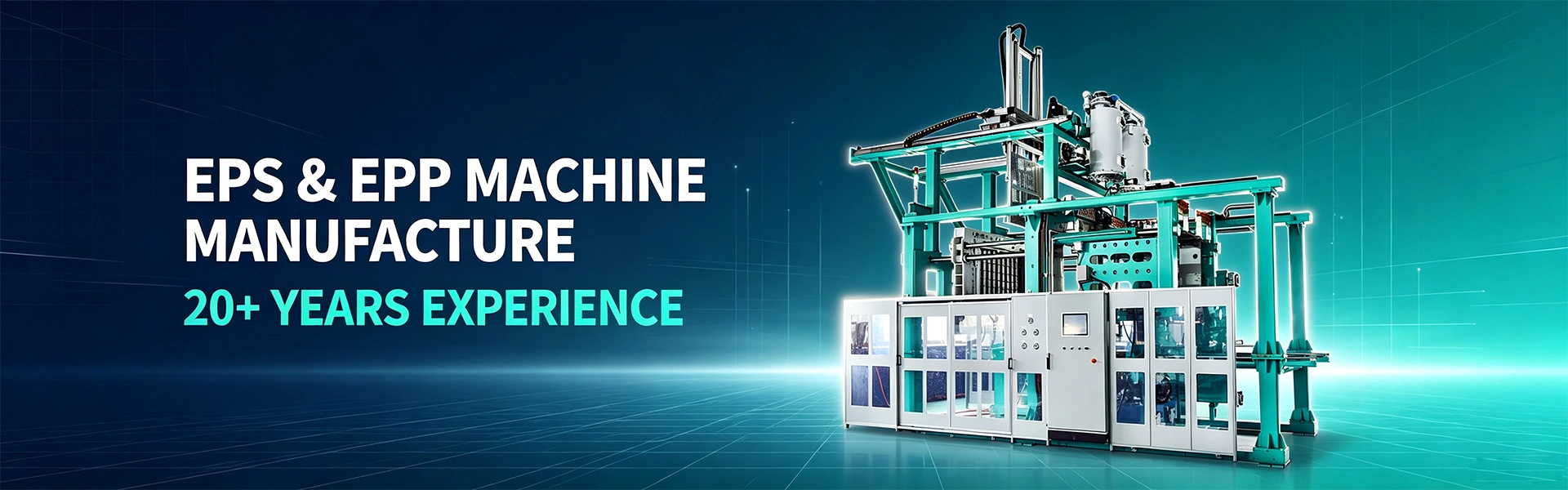
It is made of physical foaming agent which is impregnated with low boiling point in ordinary polystyrene, and is heated and foamed during processing, and is specially used for making foam plastic products.
High impact polystyrene
It is a copolymer of styrene and butadiene. Butadiene is the dispersed phase, which improves the impact strength of the material, but the product is opaque. Syndiotactic polystyrene is of syndiotactic structure, which is produced by metallocene catalyst. It is a new kind of polystyrene with good performance and belongs to engineering plastics.
Formability
The amorphous material has low moisture absorption, does not need to be fully dried, and is not easy to decompose, but has high coefficient of thermal expansion and easy to produce internal stress. It has good fluidity and can be molded by screw or plunger injection machine. High material temperature, high mold temperature, low injection pressure and prolonged injection time are suitable for reducing internal stress and preventing shrinkage and deformation. Various types of gate can be used, and the gate is connected with the plastic part by arc, so as to avoid damaging the plastic part when the gate is removed. The demoulding angle is large and the ejection is even. The wall thickness of plastic parts is uniform, and it is better not to have inserts. If there are inserts, they should be preheated.
1.Water absorption is very small, and it can not be dried before molding. Mold temperature 30-60 degrees, material temperature 140-200 degrees.
2.It is brittle and easy to crack, with high coefficient of thermal expansion and easy to produce internal stress.
3.Good fluidity, should pay attention to die clearance, prevent shrinkage, flash.
4.High material temperature, high mold temperature and low injection pressure should be adopted. Prolonging injection time is beneficial to reduce internal stress and prevent shrinkage and deformation. However, if the material temperature is too high, silver wire is easy to appear. If the material temperature is too low or there are many release agents, the transparency is poor.
5.Various types of gate can be used. The stripping angle should be large and the jacking force should be uniform to prevent cracking.
6.The wall thickness of plastic parts is uniform, and it is better not to have inserts. All surfaces should be connected by circular arc, and there should be no notches or sharp corners.
Product application
Polystyrene is often used to make foamed plastic products. Polystyrene can also be copolymerized with other rubber polymer materials to produce products with different mechanical properties. Common applications in daily life are disposable plastic tableware, transparent CD box and so on. Expanded polystyrene (styrofoam) has been widely used in building materials since 2003.