

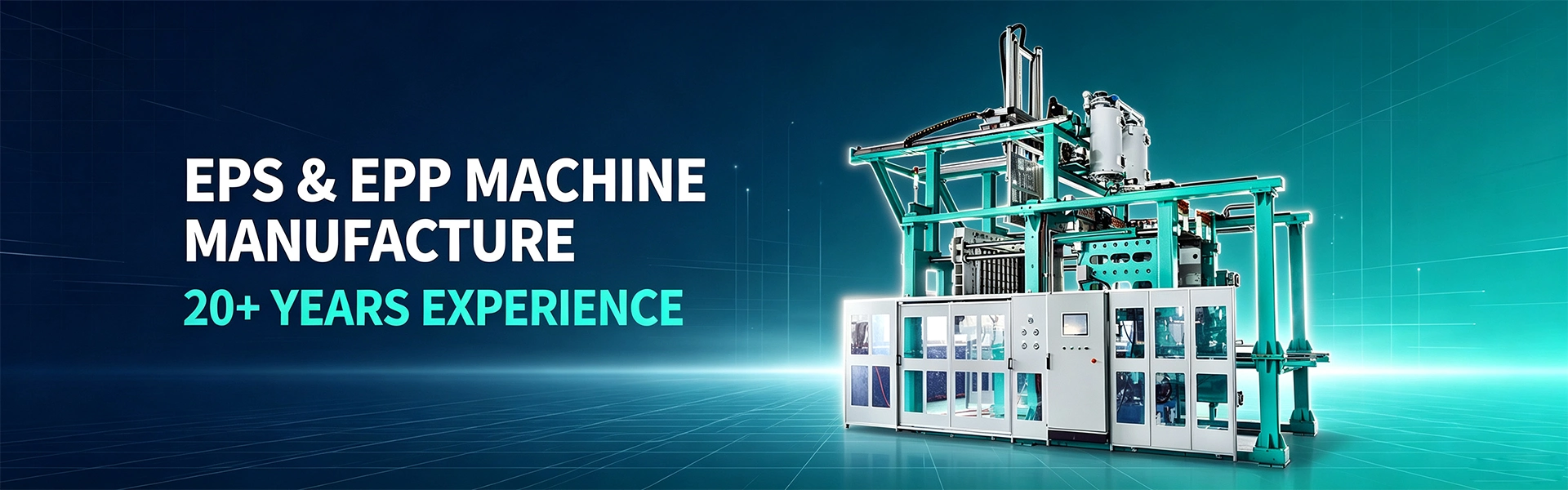
The global demand for EPS (Expanded Polystyrene) products continues to grow rapidly across industries such as packaging, construction insulation, cold chain logistics, electronics protection, and industrial cushioning. As a result, more entrepreneurs and manufacturers are investing in EPS factories to enter this profitable and expanding market.
However, building a successful EPS factory from scratch requires far more than simply purchasing machinery. Buyers must carefully evaluate factory planning, equipment selection, production workflow, utility systems, labor requirements, operating costs, and long-term market strategy.
For first-time investors, the process can feel overwhelming.
This comprehensive guide explains everything you need to know about setting up a new EPS factory from the ground up, including:
Market research
Factory layout planning
EPS machinery selection
Utility requirements
Production workflow
Budget planning
Automation considerations
Common mistakes to avoid
How to maximize long-term ROI
Whether you plan to produce EPS packaging, EPS insulation boards, fish boxes, or custom foam products, this guide will help you build a more efficient and profitable EPS manufacturing business.
What Is an EPS Factory?
An EPS factory is a manufacturing facility that produces expanded polystyrene foam products using steam-expanded polystyrene beads.
The production process generally includes:
EPS bead pre-expansion
Aging and stabilization
Shape or block moulding
Cooling
Cutting and finishing
Packaging and storage
EPS factories can manufacture various products such as:
Protective packaging
Appliance cushioning
Construction insulation panels
Fish boxes
Fruit boxes
Decorative mouldings
Industrial foam components
The type of products you plan to manufacture will strongly influence factory design and machinery selection.
Step 1: Research the Local and Export Market
Before investing in machinery or land, buyers must first understand market demand.
Identify High-Demand EPS Products
Different regions have different EPS product demands.
Common High-Demand Markets
EPS Packaging Industry
Used for:
Electronics
Home appliances
Furniture protection
Logistics packaging
Construction Insulation
EPS insulation boards are widely used in:
Residential buildings
Commercial construction
Cold storage facilities
Cold Chain and Seafood Industry
EPS fish boxes remain highly popular due to their thermal insulation properties.
Analyze Your Competitors
Buyers should study:
Existing EPS manufacturers
Product pricing
Production capacity
Delivery speed
Product quality
Market gaps
Understanding competitors helps define your market positioning.
Step 2: Choose the Right Factory Location
Factory location directly affects operating costs and logistics efficiency.
Important Factors to Consider
Transportation Access
Choose locations near:
Highways
Ports
Industrial zones
Major customer markets
Transportation efficiency lowers shipping costs.
Utility Availability
EPS factories require:
Stable electricity supply
Water access
Steam systems
Industrial gas availability
Poor utility infrastructure can reduce production efficiency.
Labor Availability
Factories need:
Machine operators
Technicians
Maintenance staff
Packaging workers
Choose areas with accessible industrial labor resources.
Environmental Regulations
Some countries have strict regulations regarding:
Steam boiler emissions
Waste disposal
Industrial safety
Buyers should verify local compliance requirements before construction begins.
Step 3: Determine Your Production Capacity
Production scale affects:
Factory size
Equipment selection
Utility systems
Labor requirements
Investment budget
Questions Buyers Should Ask
How many EPS products will be produced daily?
What densities are required?
Is future expansion planned?
Will production focus on packaging or insulation?
Small vs Large EPS Factories
| Factory Type | Daily Output | Investment Level |
|---|---|---|
| Small Factory | Low to Medium | Lower |
| Medium Factory | Medium to High | Moderate |
| Large Automated Factory | High Volume | High |
Buyers should choose production capacity based on actual market demand rather than overinvesting too early.
Step 4: Understand the Complete EPS Production Process
Understanding workflow helps buyers plan equipment and factory layout more effectively.
1. EPS Pre-Expansion
Raw EPS beads are expanded using steam.
The pre-expander determines:
Foam density
Bead consistency
Production efficiency
2. Aging and Stabilization
Expanded beads are stored in silos to:
Stabilize pressure
Improve moulding quality
Reduce deformation
Proper aging is essential for consistent product quality.
3. Shape or Block Moulding
EPS beads are moulded into final products using:
Shape moulding machines
Block moulding machines
This stage largely determines:
Product appearance
Strength
Dimensional accuracy
4. Cooling and Drying
Efficient cooling improves:
Production speed
Product stability
Mould release performance
5. Cutting and Finishing
Block EPS products are cut into:
Insulation boards
Panels
Customized dimensions
Modern CNC cutting systems improve precision and reduce waste.
Step 5: Choose the Right EPS Machinery
Machinery selection is one of the most important decisions in setting up an EPS factory.
Essential EPS Equipment List
EPS Pre-Expander
Responsible for expanding raw EPS beads.
Important features:
Density control
Steam efficiency
Automation level
Aging Silos
Used to stabilize expanded beads before moulding.
EPS Shape Moulding Machine
Used for:
Packaging products
Fish boxes
Appliance inserts
Custom foam products
EPS Block Moulding Machine
Used for producing:
Large EPS blocks
Insulation panels
Construction foam boards
EPS Cutting Machine
Used to cut blocks into finished dimensions.
Advanced systems may include:
CNC control
Automatic cutting
Multi-wire systems
Steam Boiler
Steam is essential for EPS production.
Boiler capacity must match production requirements.
Air Compressor
Required for:
Pneumatic control systems
Valve operation
Automation functions
Vacuum System
Improves:
Product density
Cooling efficiency
Surface finish
Step 6: Decide Between Semi-Automatic and Fully Automatic Systems
Automation level strongly affects production efficiency and labor costs.
Semi-Automatic EPS Factories
Advantages:
Lower investment
Easier startup
Simpler maintenance
Disadvantages:
Higher labor costs
Lower efficiency
Greater operator dependence
Fully Automatic EPS Factories
Advantages:
Higher output
Stable quality
Lower labor costs
Better scalability
Disadvantages:
Higher initial investment
Greater technical complexity
For long-term industrial competitiveness, many modern factories choose full automation.
Step 7: Plan Factory Layout Carefully
A well-designed layout improves:
Workflow efficiency
Worker safety
Material handling
Expansion capability
Important Factory Areas
Raw Material Storage
Should remain:
Dry
Ventilated
Fire-protected
Production Area
Must allow:
Smooth equipment operation
Easy maintenance access
Efficient product transportation
Finished Product Storage
EPS products require large storage space due to low density and high volume.
Boiler and Utility Room
Should be isolated for:
Safety
Noise reduction
Maintenance convenience
Step 8: Calculate Total Investment Costs
Many first-time investors underestimate total project costs.
Main Investment Categories
Machinery Costs
Usually the largest expense.
Factory Construction
Includes:
Buildings
Flooring
Ventilation
Electrical systems
Utility Installation
Steam pipelines, electrical wiring, and water systems can be expensive.
Labor and Training
Operators require training for safe and efficient production.
Raw Material Inventory
Factories need sufficient EPS bead inventory before production begins.
Step 9: Understand Operating Costs
Long-term profitability depends on operational efficiency.
Main Operating Expenses
Steam Consumption
One of the biggest EPS production costs.
Electricity
Used for:
Compressors
Pumps
Automation systems
Labor Costs
Automation reduces labor dependence significantly.
Maintenance
High-quality machinery reduces maintenance frequency.
Step 10: Focus on Energy Efficiency
Energy-saving technology greatly improves profitability.
Modern EPS factories increasingly use:
Energy-saving boilers
Steam recovery systems
Vacuum cooling
Intelligent PLC controls
Reducing steam consumption significantly lowers production costs over time.
Step 11: Evaluate Supplier Reliability
Choosing the right EPS machinery supplier is critical.
What Buyers Should Look For
Manufacturing Experience
Experienced suppliers offer better technical solutions.
International Export Experience
Overseas projects require strong logistics and support capability.
Technical Support
Good suppliers provide:
Installation assistance
Online troubleshooting
Operator training
Spare parts support
Machine Quality
Buyers should inspect:
Welding quality
Electrical components
Automation systems
Steel structure strength
Step 12: Train Your Production Team
Even advanced machinery requires skilled operators.
Training should include:
Machine operation
Safety procedures
Maintenance routines
Production management
Well-trained teams improve:
Efficiency
Product quality
Machine lifespan
Step 13: Develop a Sales and Marketing Strategy
A factory without customers cannot succeed.
Important Sales Channels
Local Distributors
Construction Companies
Appliance Manufacturers
Seafood Packaging Suppliers
Export Markets
Factories should build strong customer relationships before scaling production.
Common Mistakes First-Time EPS Factory Investors Make
Buying Cheap Machinery
Low-cost equipment often causes:
Frequent downtime
Poor product quality
Higher maintenance costs
Ignoring Future Expansion
Factories should leave space for:
Additional machinery
Increased storage
Higher automation
Underestimating Energy Costs
Steam and electricity significantly affect long-term profitability.
Poor Factory Layout Design
Bad layouts reduce efficiency and increase labor costs.
Choosing Inexperienced Suppliers
Lack of technical support can create serious production problems.
Future Trends in EPS Manufacturing
The EPS industry continues evolving rapidly.
Smart Factory Automation
Modern EPS factories increasingly use:
PLC automation
Production monitoring
Remote diagnostics
Intelligent control systems
Sustainable Manufacturing
Environmental concerns drive demand for:
Recyclable EPS products
Energy-saving systems
Cleaner production technologies
High-Efficiency Production
Manufacturers increasingly focus on:
Faster moulding cycles
Lower steam consumption
Reduced labor dependency
Why EPS Manufacturing Remains a Strong Investment
EPS products continue offering:
Lightweight protection
Excellent insulation
Cost-effective packaging
Broad industrial applications
Global demand remains strong across:
Construction
Logistics
Electronics
Food transportation
Industrial packaging
With proper planning, EPS factories can generate stable long-term profitability.
Conclusion
Setting up a new EPS factory from scratch requires careful planning, smart equipment selection, and long-term business strategy.
Successful EPS factory investment depends on:
Understanding market demand
Choosing the right machinery
Designing efficient workflows
Controlling operating costs
Partnering with reliable suppliers
Buyers should carefully evaluate:
Production capacity
Automation level
Energy efficiency
Factory layout
Technical support
Future expansion potential
A modern EPS factory is not just a manufacturing facility-it is a long-term industrial investment capable of generating strong profits in growing global markets.
By selecting high-quality machinery, implementing efficient production systems, and focusing on operational optimization, manufacturers can build competitive and sustainable EPS businesses for years to come.