

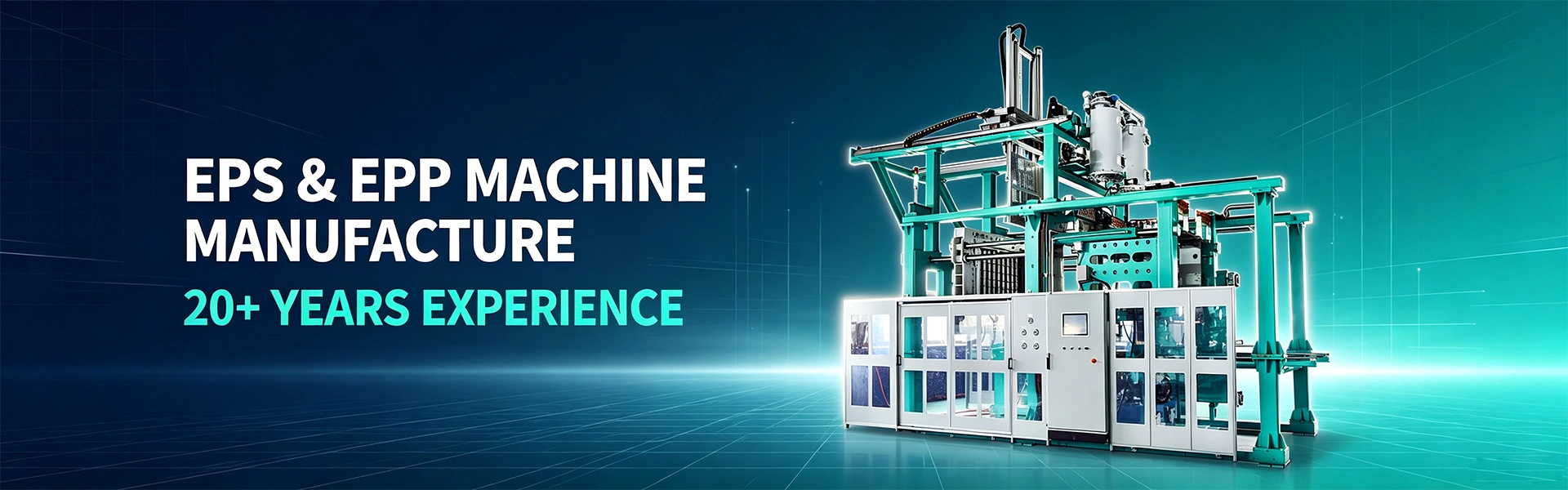
Steam is the lifeblood of Expanded Polystyrene (EPS) production. It powers pre‑expansion, drives molding cycles, and ensures beads fuse into strong, lightweight products. Yet for most EPS manufacturers, steam is also the single largest operating expense – and often the most inefficient.
Industry data reveals a startling fact: a typical EPS molding machine consumes 500–800 kg of steam per hour, but only 30–40% of that thermal energy is actually used for expansion and fusion. The rest is lost through radiation, open vents, faulty traps, condensate discharge, and suboptimal process design. For a plant producing 10,000 tons of EPS annually, steam costs can exceed 3 million RMB (or ~$420,000 USD) per year.
The good news? Cutting steam consumption by 30% is not a theoretical dream. Dozens of EPS producers have already achieved it by combining low‑cost operational tweaks with targeted equipment upgrades. In many cases, the payback period is less than 12 months.
Step 1: Conduct a Thorough Steam Energy Audit
You cannot manage what you do not measure. Before changing any settings or buying new equipment, you must understand exactly where your steam is going.
What to Measure
Install sub‑meters on each major steam consumer:
- Pre‑expanders (batch or continuous)
- Molding machines
- Steam distribution headers
- Condensate return lines
Measure at least the following for one full week of normal production:
- Steam flow (kg/hour) per machine
- Pressure before and after each machine
- Condensate temperature at outlet
- Cycle time and steam‑on time per batch
Typical Loss Distribution in EPS Lines
Based on energy audits from dozens of EPS plants, the breakdown of steam consumption often looks like this:
| Loss Category | % of Total Steam |
|---|---|
| Condensate discharge & blowdown | 35–45% |
| Mold & cooling system heat loss | 25–30% |
| Exhaust & radiation (pipes, vessels) | 15–20% |
| Actual useful steam for fusion | 30–40% |
This means 60–70% of your steam bill is, in effect, waste. The goal is to flip that ratio.
Establish a Baseline
Calculate your current steam‑to‑EPS ratio – kg of steam consumed per kg of EPS produced. A reasonable industry benchmark is 3.0–4.0 kg steam/kg EPS for a well‑optimized line. Older, poorly maintained lines often exceed 5.0 kg/kg. Your target after improvements should be 2.5–3.0 kg/kg – a 30–40% reduction.
Step 2: Optimize Pre‑expansion Parameters
Pre‑expansion is the most steam‑intensive step. Small changes here yield outsized savings.
2.1 Reduce Steam Pressure to the Minimum Viable Level
Many operators run pre‑expanders at higher pressure than necessary, believing it guarantees consistent bead density. In reality, excess pressure increases steam velocity, damages bead cell structure, and wastes energy.
Practical pressure benchmarks:
| EPS Density Target (kg/m³) | Recommended Steam Pressure (bar) |
|---|---|
| 10–15 (low‑density insulation) | 0.6–0.8 |
| 15–25 (general packaging) | 0.8–1.0 |
| 25–35 (high‑strength blocks) | 1.0–1.2 |
| >35 (specialty parts) | 1.2–1.4 |
How to find your optimal pressure:
Start with the supplier's standard recipe. Reduce pressure in small steps (0.05 bar at a time) while monitoring bead density and expansion ratio. Stop when you see the first sign of incomplete expansion, then increase pressure slightly (0.02–0.03 bar) to establish a stable operating point.
A plant that reduces pre‑expansion pressure from 1.2 bar to 0.9 bar typically saves 12–18% of steam in that stage alone.
2.2 Shorten Steam‑On Time (Cycle Timing)
Overly long expansion cycles increase steam consumption without improving density – and can actually damage beads. Use a timer or PLC to precisely control the steam injection period.
Typical pre‑expansion cycle (batch expander):
- Pre‑heating: 5–10 seconds
- Steam injection: 20–60 seconds (depends on density)
- Holding/equalization: 10–20 seconds
- Discharge: 5–10 seconds
Work to reduce the steam injection phase to the shortest time that consistently produces beads with the required density and fusion quality. Each second saved across hundreds of cycles per day adds up to significant steam reduction.
2.3 Control Moisture in the Fluidised Bed
Excess moisture in pre‑expanded beads forces the molding machine to use extra steam later to reheat and re‑expand them. Maintain fluidised bed air temperature between 30°C and 40°C, and keep bead moisture content below 2% (ideally 1–1.5%).
2.4 Upgrade to an Energy‑Efficient Pre‑expander
If your pre‑expander is more than 10 years old, consider replacement. Modern intermittent pre‑expanders with fully enclosed constant‑pressure foaming barrels can achieve unit steam demand only half that of continuous pre‑expanders – a 50% reduction.
Some advanced models also feature:
- Double‑walled insulation – reduces heat loss by 40%
- Intelligent steam control valves – deliver steam precisely when needed
- PLC‑controlled expansion cycles – eliminate operator variability
Step 3: Seal Steam Leaks and Improve Insulation
Leaks and poor insulation are the low‑hanging fruit of steam saving. They require little capital and pay back in weeks.
3.1 Insulate Every Hot Surface
If you can touch a steam pipe, valve, or vessel and it feels warm, you are losing money. The heat loss from a 50 mm uninsulated pipe at 150°C is equivalent to burning 10–15 kg of fuel oil per metre per year.
Priority areas for insulation:
- Main steam headers (5–15% loss without insulation)
- Pre‑expander barrels and steam chests
- Expansion vessel walls (3–10% energy loss)
- Mold platens and steam distribution manifolds
Specification: Use mineral wool or calcium silicate insulation with a minimum thickness of 50–75 mm, covered by aluminum cladding. Double‑walled insulation systems reduce heat loss by up to 40% compared to single‑wall designs.
3.2 Establish a Steam Trap Maintenance Routine
A single failed steam trap – stuck open – can waste thousands of dollars in steam annually. Yet many plants never test their traps.
Common trap problems:
- Open failure (blowing live steam): The trap constantly vents steam, wasting 20–40 kg/hour per trap.
- Closed failure (blocked): Condensate backs up into the steam space, causing water hammer and uneven heating.
Recommended actions:
- Inspect all steam traps every week using an ultrasonic leak detector or thermal camera.
- Install sight glasses downstream of critical traps to visually confirm proper operation.
- Replace failed traps immediately. For high‑pressure traps (>5 bar), use thermodynamic or float & thermostatic types.
A well‑maintained trap population typically reduces total plant steam consumption by 5–10%.
Step 4: Install an Intelligent Steam Management System
Traditional EPS machines rely on fixed timers and manual valves. Modern systems use closed‑loop feedback to deliver steam exactly where and when it is needed.
How Smart Controls Work
An intelligent steam management system includes:
- Pressure transducers inside the mold cavity
- Temperature sensors on pre‑expander and mold surfaces
- Electronically actuated steam valves (proportional or on‑off with fast response)
- PLC with adaptive control algorithms
The PLC continuously compares actual conditions (pressure, temperature) to setpoints. It adjusts steam injection timing, pressure ramp rates, and hold phases in real time.
Measurable Benefits
Plants that upgrade to intelligent steam controls typically see:
| Performance Metric | Improvement |
|---|---|
| Steam consumption per cycle | –20% to –30% |
| Cycle time | –10% to –15% |
| Density variation (batch to batch) | –50% to –70% |
| Reject rate | –30% to –50% |
Some high‑end pre‑expanders now include automatic recipe optimisation – the machine runs test batches, measures bead properties, and self‑adjusts steam parameters to minimise consumption while maintaining quality.
Step 5: Recover Flash Steam and Return Condensate
If your plant vents flash steam to the atmosphere and dumps hot condensate down the drain, you are discarding a huge amount of energy. A closed‑loop recovery system is the single most impactful investment for steam reduction.
What Is Flash Steam?
When high‑pressure condensate is discharged to a lower pressure (e.g., after a molding cycle), some of it instantly evaporates into flash steam. This flash steam contains about 10–15% of the original heat content of the steam.
Components of a Recovery System
1. Condensate return line – collects hot condensate from each machine.
2. Flash vessel – separates flash steam from liquid condensate.
3. Heat exchanger – uses flash steam to preheat boiler feedwater.
4. Condensate receiver tank – stores returned hot water.
5. Pumps – send hot condensate back to the boiler.
Typical Savings
A properly designed recovery system can:
- Reduce fuel consumption for steam generation by 20–30%
- Reduce fresh water consumption by 30–40% (because you reuse condensate)
- Lower water treatment chemical costs by a similar percentage
Payback period: For a medium‑sized plant (10,000 tons/year), a recovery system costing $60,000–100,000 typically pays for itself in 12–18 months.
Preheating Boiler Feedwater
Even without full flash steam recovery, preheating boiler feedwater using waste heat from other sources (e.g., exhaust gases, cooling water) cuts fuel use. Raising feedwater temperature from 25°C to 55°C reduces fuel consumption by 12–18% and shortens boiler warm‑up time by 20–30%.
Step 6: Upgrade to Energy‑Efficient Molds
The mold design has a profound impact on steam efficiency. Conventional molds with simple drilled steam channels often require high steam pressure to ensure uniform fusion, especially for thick‑walled or complex products.
Features of Steam‑Efficient Molds
- Optimised steam flow passages – wide, shallow channels that distribute steam rapidly and evenly, reducing required pressure.
- Auxiliary steam chambers – separate cavities that allow steam to enter from multiple directions, preventing "shadow" zones that waste steam.
- Double‑layer insulated mold designs – trap heat inside the cavity, improving thermal transfer efficiency.
- CoreLess technology – an innovative design that eliminates internal steam cores; advanced machines (e.g., Kurtz PRO FOAMER) report up to 50% savings in steam, compressed air, and cooling water compared to conventional molds.
Mold Maintenance for Steam Efficiency
- Clean steam passages regularly – scale and debris reduce heat transfer.
- Check for cracks or warping that cause steam bypass.
- Ensure mold faces are properly aligned – misalignment forces longer steam‑on times to compensate.
Step 7: Revisit Downstream Processes
Steam savings are not limited to the pre‑expander and molding machine. Every step that follows – aging, block molding, cutting, final shaping – can either help or hurt overall steam efficiency.
Age Beads Properly
Insufficient aging means beads still contain condensed moisture and residual blowing agent. When you feed wet beads into a molding machine, you must apply extra steam to drive off that moisture before fusion can begin. This can increase molding steam consumption by 15–25%.
Best practice:
- Age beads for at least 4–12 hours (depending on density) in well‑ventilated silos.
- Maintain silo temperature at 20–25°C.
- Use moisture meters to verify bead moisture <2% before molding.
Optimize Block Molding Parameters
If you produce EPS blocks, follow the same principles as for pre‑expansion: use the minimum steam pressure that achieves complete fusion, and shorten the steam‑on time as much as quality allows. Some block molders have reduced steam consumption by 25–35% simply by adjusting these two parameters.
Step 8: Monitor, Measure, and Continuously Improve
Reducing steam consumption is not a one‑time project – it requires ongoing attention.
Key Performance Indicators (KPIs)
Track these weekly:
| KPI | Calculation | Target |
|---|---|---|
| Steam‑to‑EPS ratio | kg steam / kg EPS produced | 2.5–3.0 |
| Condensate return rate | (condensate returned / total steam generated) × 100 | >70% |
| Trap failure rate | (failed traps / total traps) × 100 | <5% |
| Steam pressure variation | (max – min) / average | <10% |
Use a Steam Monitoring Dashboard
Install a simple data logging system (many PLCs have this built in) that records:
- Instantaneous steam flow
- Cumulative steam per shift
- Peak and average pressures
- Condensate temperature
Review the data daily. A sudden increase in steam flow often indicates a new leak or a failed trap.
Train Your Operators
Even the most efficient machine will waste steam if operated poorly. Conduct regular training on:
- How to read steam meters and spot anomalies
- The importance of starting cycles on time (no idle steam)
- Proper shutdown procedures (close valves, not just stop the machine)
- How to report potential leaks or trap failures
Real‑World Case Study: How One Plant Cut Steam by 32%
Plant profile: Mid‑sized EPS packaging producer in Southeast Asia, annual output 8,000 tons. Initial steam‑to‑EPS ratio: 4.8 kg/kg.
Actions taken (over 18 months):
1. Conducted energy audit, identified leaking traps (12 traps failed) and uninsulated headers (150 metres).
2. Replaced all faulty traps and insulated all steam lines and vessel walls (investment: $18,000).
3. Reduced pre‑expansion pressure from 1.1 bar to 0.8 bar and shortened steam‑on time by 8 seconds per batch.
4. Installed a flash steam recovery system on two molding machines (investment: $45,000).
5. Upgraded the oldest pre‑expander to a modern, insulated batch expander with PLC control (investment: $72,000).
Results after 12 months:
- Steam‑to‑EPS ratio dropped from 4.8 to 3.25 kg/kg – a 32% reduction.
- Annual steam cost decreased from $380,000 to $258,000 – saving $122,000 per year.
- Total investment: $135,000. Payback period: 13 months.
- Additional benefits: condensate return reduced fresh water use by 34%, and product reject rate fell by 22% due to better process consistency.
Conclusion
Reducing steam consumption by 30% in your EPS production line is not a fantasy – it is a realistic, proven target that hundreds of plants have reached. The path is clear:
| Step | Expected Steam Saving | Payback |
|---|---|---|
| Insulation and trap repair | 5–10% | weeks |
| Process optimisation (pressure, timing) | 10–15% | 1–3 months |
| Intelligent steam controls | 10–20% | 6–12 months |
| Flash steam recovery | 15–25% | 12–18 months |
| Energy‑efficient pre‑expander/molds | 20–40% (on affected equipment) | 18–24 months |
Start today. Even if you cannot afford a full equipment upgrade, you can still achieve significant savings by insulating pipes, repairing traps, and fine‑tuning your process parameters. Every 10% reduction in steam consumption directly adds to your bottom line – and in an era of rising energy prices, those savings will only grow.