

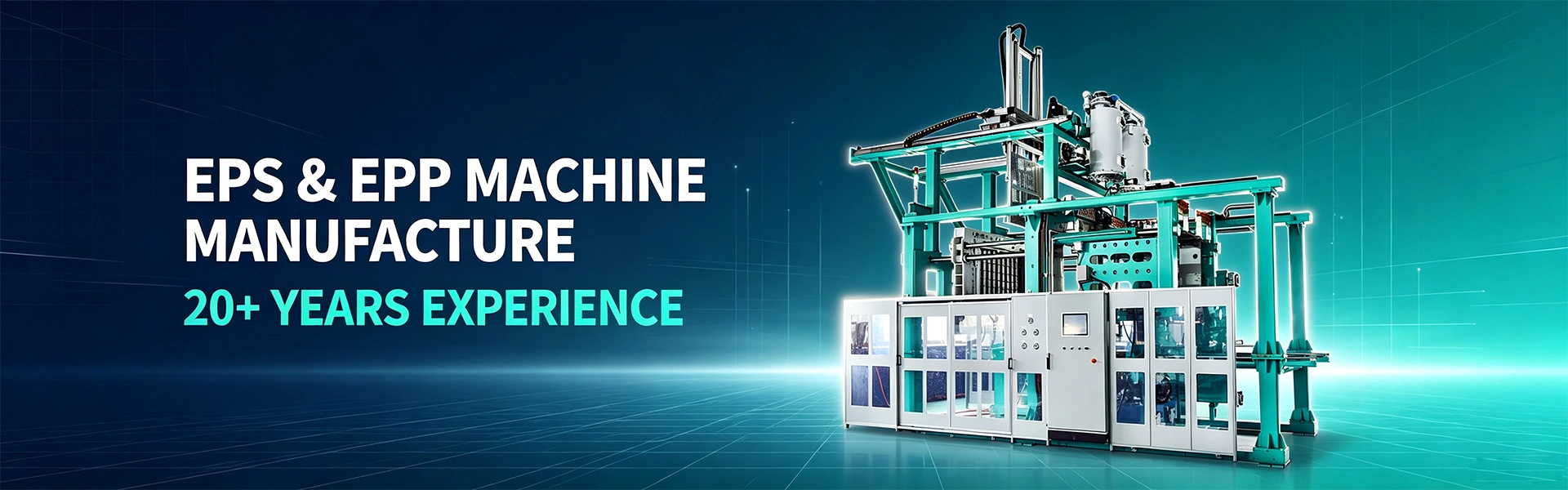
EPS (Expanded Polystyrene) machines are used for the production of polystyrene foam, commonly known as Styrofoam. The production process of EPS machines involves several steps.
Step 1: Raw Material Preparation The first step in the EPS production process involves the preparation of raw materials. Polystyrene beads are loaded into a hopper, and then fed into a pre-expander. The pre-expander heats and expands the beads, increasing their size by up to 50 times.
Step 2: Molding Once the beads have been expanded, they are ready for molding. The expanded beads are fed into a mold, which is typically made of aluminum. The mold is heated, and the beads are injected into the mold using a vacuum system. As the beads enter the mold, they begin to fuse together, forming a solid block of EPS foam.
Step 3: Cutting After the EPS foam has been molded, it is removed from the mold and cut into the desired shape and size using a hot wire cutter or a bandsaw. The cutting process can be automated or manual depending on the size of the production and required shapes.
Step 4: Finishing After cutting, the foam can be finished using various techniques like sanding, coating or painting for further customization of the products.
Step 5: Packaging Once the foam has been cut and finished, it is ready for packaging and shipping.
In conclusion, the production process of EPS machines involves the preparation of raw materials, molding, cutting, finishing and packaging of the final products.
