

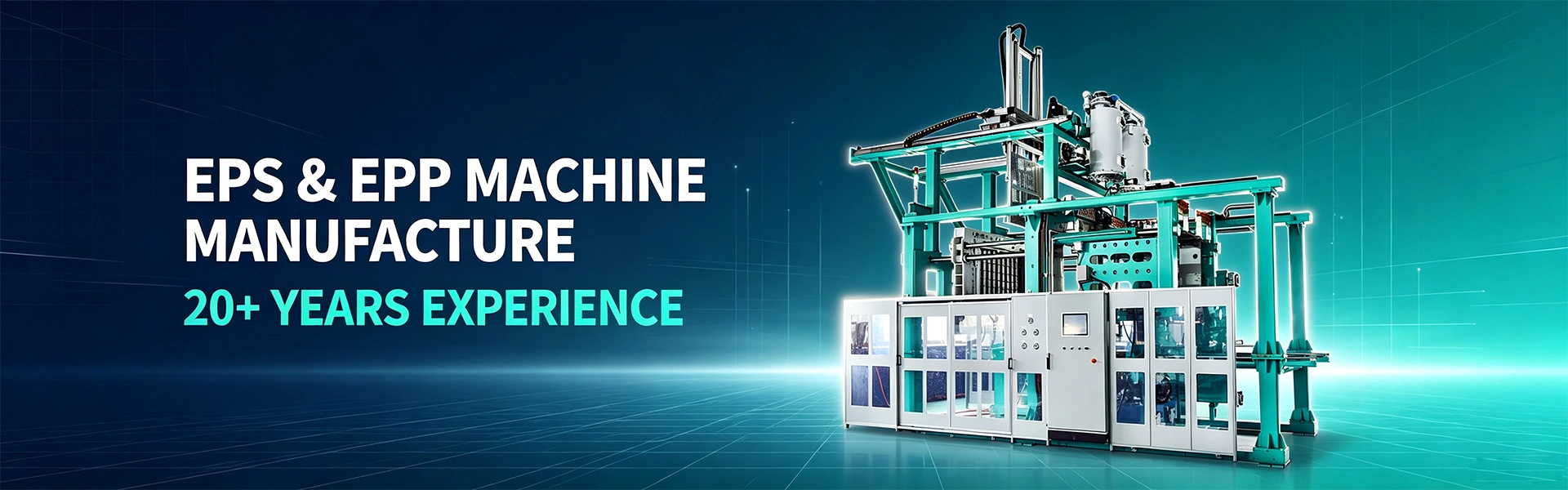
EPS pre-foaming machine is a key equipment for producing foam products. During use, you need to pay attention to multiple issues to ensure the normal operation of the equipment and extend its service life. The following are the main issues to pay attention to when using EPS pre-foaming machine:
1. Bead handling and storage
After the EPS pre-foaming machine is completed, a certain amount of foam glue and water vapor will be stored inside the beads. After leaving the machine, the beads become loose due to cooling, the internal pressure decreases rapidly, and even negative pressure (partial vacuum state) may be formed, causing the beads to deform easily. Therefore, the following points should be noted when handling and storing beads:
Air supply pressure control: The air pressure should not be too high during air supply to avoid damage to the beads.
Ventilation duct design: The inner cavity of the ventilation duct should be kept moist and the bending radius should be as large as possible to reduce friction resistance.
Anti-static measures: The pipeline should have good conductivity, and all lines should be grounded to avoid safety hazards caused by static electricity.
Transmission speed control: The bead transmission speed should not exceed 8 m/s to prevent damage to the beads.
The beads just out of the pre-foaming machine are usually in a wet and cold state. Due to the sudden cooling caused by gas absorption, negative pressure may form inside the beads. Therefore, the beads need to be placed for a period of time after leaving the machine to achieve the following purposes:
Eliminate negative pressure: balance the internal pressure of the beads with the external pressure by permeating gas to prevent cell collapse.
Stabilize the size: let the beads fully expand to ensure that their size is stable.
2. Solution to the problem of equipment mold adjustment
When using the EPS pre-foaming machine, you may encounter the problem of difficulty in equipment mold adjustment. The following are common problems and solutions:
The mold adjustment valve core is stuck:
Remove the valve for inspection and cleaning.
Use a level ruler to check the level and flatness of the equipment and adjust it if necessary.
No signal at the output point of the computer page:
Check and repair the electronic board.
Check the gap between the pin and the mold adjustment nut, measure and adjust the gap with a micrometer.
Check the locking nuts of the left and right support plates, adjust the nut position or replace the oil motor.
The net weight of the display screen is inconsistent with the touch screen display:
Check whether the line is short-circuited or broken.
Check whether the weight sensor is normal.
Check whether the line connection of the control box on the back of the weighing display is correct.
If the above problems cannot be solved, it may be a serious failure of the equipment. It is recommended to replace or upgrade the EPS pre-foaming machine in time.
3. Daily maintenance of the equipment
The EPS pre-foaming machine is a precision instrument and requires regular maintenance to ensure its normal operation:
Prevent shock: Avoid excessive force or impact on the function keys during operation.
Voltage stability: Keep the external working voltage stable to avoid voltage fluctuations from damaging the equipment.
Control box maintenance: Keep the inside of the control box dry and dust-free, clean up dust and moisture regularly, and prevent problems with electrical equipment (such as switching power supplies, control modules, relays, etc.).
Power-off maintenance: When maintaining or cleaning the equipment, be sure to turn off the power to ensure safety.
Summary
When using the EPS pre-foaming machine, pay special attention to issues such as bead processing, equipment mold adjustment, and daily maintenance. By rationally controlling the air supply pressure, optimizing the ventilation duct design, eliminating the negative pressure of beads, resolving mold adjustment failures, and regularly maintaining equipment, production efficiency can be effectively improved, equipment service life can be extended, and production safety can be ensured.