

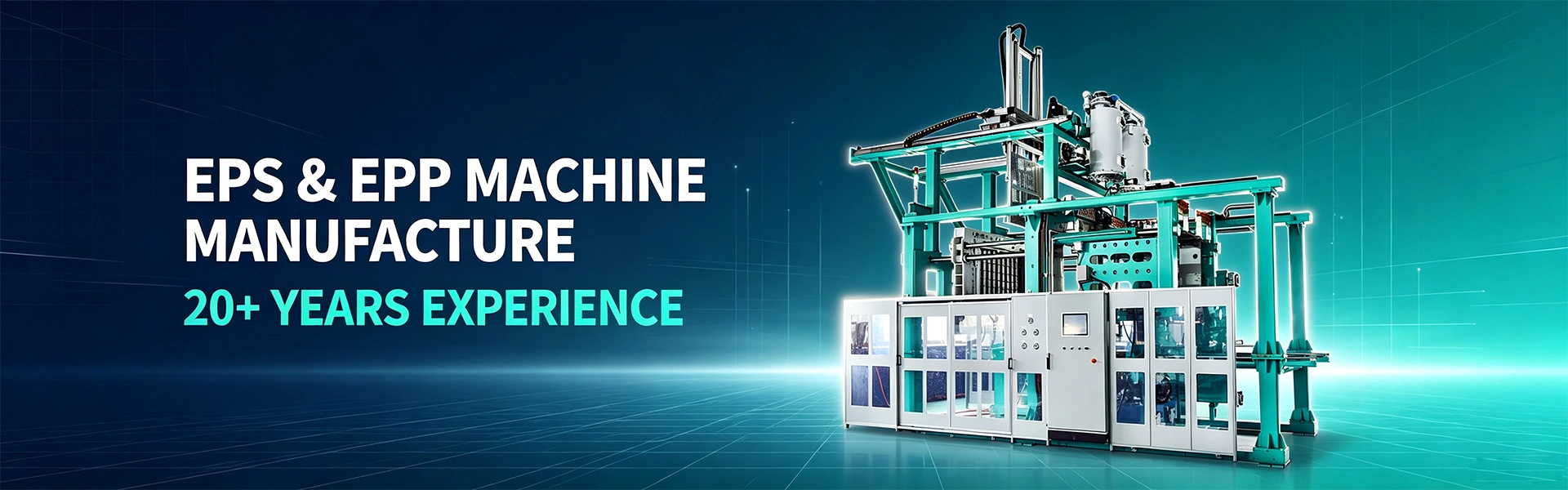
EPS foam is a lightweight material widely used in product packaging, building insulation, disposable products and other fields, which can provide good protection for products. EPS foam machinery is the core equipment for producing foam, usually composed of foam pre-expansion machine, fully automatic molding machine, cutting machine and recycling device. These parts cooperate with each other to complete the production process from raw materials to finished products through precise control. In order to ensure the long-term stable operation of the equipment, reduce the failure rate and extend the service life, regular maintenance is essential. The following are the maintenance points of EPS foam machinery:
1. Inspection before and after use
Before and after using EPS foam machinery, a detailed inspection must be carried out to ensure that the equipment is in normal working condition.
Inspection before use:
Check whether the equipment has abnormal noise or vibration.
Confirm whether all indicator lights are normal. If a fault indicator light is on, it is necessary to troubleshoot the problem in time to ensure that the equipment is started after the fault is solved.
Check whether the power supply, gas source and valve are in normal condition to ensure the safety of the equipment operating environment.
Inspection after use:
After stopping the equipment, turn off the power supply and related valves to prevent the equipment from continuing to run when unattended.
Clean the residual foam on the surface and inside of the equipment to prevent blockage or corrosion.
Check whether the parts of the equipment are worn or loose, and deal with them in time.
2. Perform simple maintenance regularly
The daily maintenance of EPS foam machinery is not complicated, but it needs to be strictly implemented to ensure the stable operation of the equipment.
Regular lubrication:
Regularly add lubricating oil to the moving parts of the equipment (such as bearings, chains, guide rails, etc.) to reduce friction and wear.
Check whether the lubrication system is working properly and ensure that the lubricating oil is sufficient and there is no leakage.
Clean the equipment:
Regularly clean the foam residue and dust inside the equipment to prevent blockage or affect the accuracy of the equipment.
Check whether the cutting machine's tool is clean, and clean or replace it if necessary.
Check wearing parts:
Regularly check the wearing parts of the equipment (such as seals, filters, tools, etc.), and replace them in time if they are worn or aged.
Check whether electrical components (such as sensors, relays, etc.) are working properly to avoid downtime due to electrical failures.
3. Perform comprehensive inspections regularly
In addition to daily maintenance, it is also necessary to conduct a comprehensive inspection of the equipment regularly to ensure that all components are in the best condition.
Mechanical parts inspection:
Check whether the transmission system of the equipment (such as belts, gears, etc.) is loose or worn, and adjust or replace it if necessary.
Check whether the fixing bolts and connectors of the equipment are tight to prevent unstable operation of the equipment due to looseness.
Electrical system inspection:
Check whether the electrical circuit is aging or damaged, and replace the damaged circuit in time.
Test whether the control system of the equipment is sensitive to ensure that the parameter settings are accurate.
Pneumatic system inspection:
Check whether the pneumatic pipeline has air leakage to ensure stable air pressure.
Clean pneumatic components (such as cylinders, solenoid valves, etc.) to prevent dust or impurities from affecting their normal operation.
4. Training and specification of operators
The maintenance of equipment not only depends on technical means, but also requires standardized operation and responsibility of operators.
Train operators:
Ensure that operators are familiar with the structure, working principle and operation process of the equipment.
Train operators to master basic troubleshooting and maintenance skills and be able to handle simple problems in time.
Standardize operation procedures:
Formulate and strictly implement the operation specifications of the equipment to avoid equipment damage due to improper operation.
Establish equipment maintenance records and regularly record the operating status and maintenance of the equipment for easy tracking and management.
Summary
The maintenance of EPS foam machinery is the key to ensuring efficient operation of the equipment and extending its service life. Through inspections before and after use, regular simple maintenance, comprehensive inspections, and standardized operations by operators, the equipment failure rate can be effectively reduced and production efficiency can be improved. Only by paying attention to the daily maintenance of the equipment can the long-term stable operation of the EPS foam machinery be ensured, creating greater value for the enterprise.