

Introduction: The Foundation of a Versatile Industry
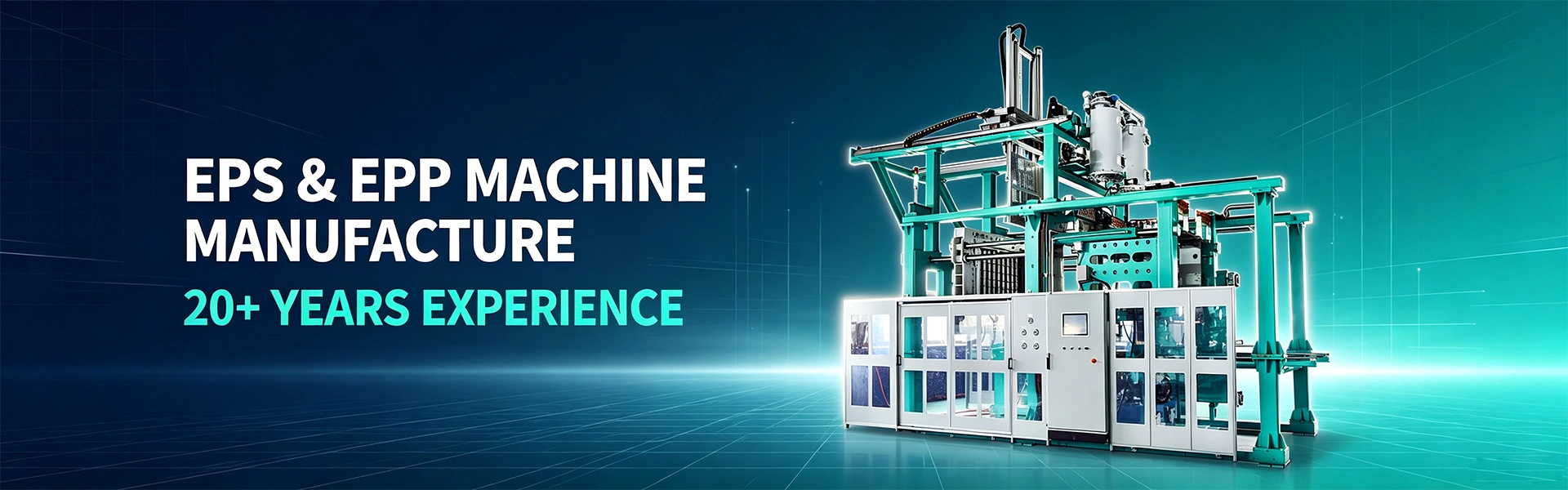
Expanded Polystyrene (EPS) is far more than simple packaging foam. As a lightweight, insulating, and highly moldable material, it serves as a critical component in industries ranging from secure consumer packaging and energy-efficient construction to specialized automotive components and precision industrial casting. At the heart of translating raw EPS beads into these invaluable finished products lies a sophisticated piece of industrial equipment: the EPS molding machine.
The global market for EPS and its manufacturing machinery is in a state of dynamic evolution. While foundational demand remains robust, the industry is being reshaped by powerful, interconnected forces. Manufacturers of EPS products and the machinery that serves them can no longer rely solely on traditional methods. Success today and tomorrow depends on a strategic understanding of shifting global demand, the relentless drive toward automation, the urgent imperative of sustainability, and the need for application-specific innovation.
This article delves into the four key trends that are defining the future of the EPS molding machinery sector. It explores how forward-thinking companies are adapting their equipment and strategies to not only meet current challenges but to seize emerging opportunities in a competitive global landscape.
Part 1: Navigating a Complex and Evolving Global Demand Landscape
The demand for EPS products is a story of global variation and strategic adaptation. Understanding this geography of demand is the first step in positioning machinery for success.
Regional Divergence and Opportunity: Market analysis consistently highlights a fragmented global picture. Regions like North America and Europe demonstrate steady demand, particularly driven by stringent building codes that favor energy-efficient materials, where EPS insulation plays a vital role. Meanwhile, developing economies in Asia-Pacific and Latin America present growth opportunities fueled by expanding e-commerce, infrastructure development, and rising consumer goods production. However, the most significant factor remains China, which dominates global EPS production and consumption.
The China Factor: A Market in Transition: China represents both the engine and a key variable in the global EPS equation. Recent industry data indicates a market experiencing a period of adjustment. While long-term fundamentals are strong, short-to-medium term factors like fluctuations in domestic consumer demand, high inventory levels at some producers, and intense competition have led to cautious production planning. For machinery manufacturers, this environment underscores a critical shift in customer priorities.
The Export Imperative and the Machinery Connection: In response to domestic softness, ambitious Chinese EPS producers are increasingly looking outward. The path to growth increasingly runs through international exports. This pivot, however, demands a higher standard. To compete in quality-conscious markets like Europe, Japan, and North America, manufacturers require machinery that delivers exceptional consistency, precision, and efficiency. This is no longer a market for basic equipment; it is a market for advanced machinery that enables producers to create export-grade products with competitive operational costs. The ability of a molding machine to produce parts with flawless surface finish, exacting dimensional tolerances, and optimal density directly translates into a manufacturer's export viability.
Part 2: The Automation and Intelligence Imperative
The transition from labor-intensive operation to automated, data-driven production is the most visible trend on the factory floor. This is not merely about replacing manual tasks; it is about fundamentally enhancing reliability, scalability, and control.
The Evolution to Full Automation: The industry's journey from manual loading and unloading to fully automated production cells has accelerated. Modern automatic pre-expanders and molding machines can manage the entire process chain-from bead feeding and steam cycling to cooling, drying, and part ejection-with minimal human intervention. The benefits are transformative:
Unmatched Consistency: Automated systems remove human variability, ensuring every cycle and every part is identical, drastically reducing waste from defects.
Higher Output & Scalability: Machines can operate 24/7, dramatically increasing plant throughput. Production capacity can be scaled more predictably through additional automated lines rather than large labor forces.
Reduced Labor Costs & Challenges: Automation mitigates rising labor costs and the difficulty of finding skilled operators for strenuous, steamy molding work, allowing human talent to focus on supervision, maintenance, and quality control.
The Rise of the Smart, Connected Machine: The next frontier of automation is intelligence. Leading-edge EPS machinery is now equipped with IoT (Internet of Things) sensors and integrated control systems that collect vast amounts of operational data.
Predictive Maintenance: Sensors monitor critical parameters like hydraulic pressure, steam valve function, and motor vibration. By analyzing this data, the system can predict a component failure before it happens, scheduling maintenance during planned downtime instead of suffering costly, unplanned production stops.
Real-Time Process Optimization: Advanced controllers can dynamically adjust steam pressure, cycle time, and cooling parameters in real-time based on the specific bead lot or ambient conditions, ensuring optimal quality and material usage for every batch.
The Paperless Factory: Integrated software provides digital logs of every production run, creating a traceable record of settings and outcomes for every part produced. This is invaluable for quality assurance and process refinement.
Case in Point - Beyond Steam: Innovations like FOX Velution's steam-free EPS molding process exemplify the radical thinking now entering the market. By using a completely different technology (infrared and vacuum), it challenges the century-old steam paradigm. While not yet the standard, such developments highlight the industry's direction: toward fully integrated, highly efficient, and increasingly automated process chains that promise lower energy consumption and even greater design freedom.
Part 3: Engineering for Sustainability and Circularity
Perhaps the most powerful trend reshaping the EPS industry is the global push toward a circular economy. For machinery manufacturers, this is not just a marketing topic; it is a profound technical challenge and a core design criterion.
The PCR Challenge: From Waste to Resource: Regulatory pressures and brand owner commitments (from companies like Amazon, Walmart, and major automotive firms) are mandating the use of recycled content. The ability to process Post-Consumer Recycled (PCR) EPS is fast becoming a non-negotiable requirement for molding machines. This is technically demanding. PCR material has different flow, fusion, and expansion characteristics compared to virgin beads.
Machinery Engineered for Recycled Content: A modern molding machine designed for sustainability must excel in several key areas:
Superior Temperature and Pressure Control: Precise, responsive control systems are needed to achieve perfect fusion with variable PCR feedstock, preventing weak spots or incomplete filling.
Enhanced Flexibility: Machines must offer wider processing windows and adaptable recipes to handle a blend of virgin and PCR materials in varying ratios without sacrificing part quality.
Robust Design: Potential contaminants in recycled feedstocks require filtration systems and machine components designed for increased durability.
Efficiency as the Cornerstone of Sustainability: True sustainability extends beyond material use to the entire production footprint. The most significant environmental impact of an EPS part often occurs during its manufacturing. Therefore, the next generation of machinery is focused on radical efficiency:
Energy & Steam Optimization: Innovations in mold design (like improved steam channel geometry), better insulation, and heat recovery systems drastically reduce steam and energy consumption per cycle.
Water Conservation: Closed-loop cooling systems and advanced ejection technology minimize water usage.
The Business Case for Green Machines: This engineering focus creates a powerful value proposition: sustainable machinery that reduces both carbon emissions and operational utility costs, delivering an environmental and economic return on investment.
Part 4: Application-Led Innovation in Machinery Design
As end-use applications for EPS become more sophisticated, the machinery must evolve in parallel. The era of the "one-size-fits-all" molding press is giving way to specialized solutions for high-value niches.
Automotive Lightweighting: The automotive industry's quest for fuel efficiency and electric vehicle range makes EPS an ideal material for complex, structural components. This requires machinery capable of:
Producing large, integrated parts with varying wall thicknesses and high structural integrity.
Handling specialized bead types for enhanced strength-to-weight ratios.
Integrating with automated trimming and assembly cells for just-in-sequence delivery to the production line.
Advanced Lost-Foam Casting: In metal casting, EPS patterns are vaporized by molten metal. This application demands extreme precision.
Machinery must produce high-density, dimensionally stable patterns with flawless surface finish and near-zero moisture content.
Tolerances are measured in fractions of a millimeter, requiring machines with exceptional control and stability.
Technical Insulation & Construction: The push for net-zero buildings is driving demand for large-format EPS blocks and shaped insulation panels.
This necessitates very large platen sizes and high clamping forces to produce homogeneous, low-density blocks.
Machinery for this sector often includes integrated block cutters and handling systems, creating a complete production line for insulation products.
The Customization Imperative: This application-led trend makes one thing clear: the future belongs to machinery suppliers who act as technical partners, not just equipment vendors. Success requires:
Offering modular machine platforms that can be configured for specific needs.
Investing in R&D to develop new molding techniques (e.g., for multi-material parts or in-mold laminations).
Providing deep application engineering support to co-develop solutions with customers entering new, high-value markets.
Conclusion: The Strategic Path Forward for EPS Manufacturers
The trajectory of the EPS molding machinery market is set. It is moving toward greater intelligence, deeper sustainability, and more precise specialization. For manufacturers of EPS products, the choice of machinery is no longer just a capital purchase; it is a strategic decision that will determine their competitiveness, regulatory compliance, and profitability for the next decade.
The winning manufacturers will be those who partner with machinery providers that understand these macro-trends and possess the engineering prowess to translate them into robust, innovative, and efficient equipment. They will seek partners who offer not just a machine, but a scalable production solution-from handling PCR materials and optimizing energy use to providing the data insights needed for continuous improvement.
At Hangzhou Epsole Machinery, we have focused on the forefront of these very trends for over 20 years. Our commitment is to engineer the advanced, flexible, and sustainable molding solutions that empower our global partners to shape not just EPS, but the future of their industries.