

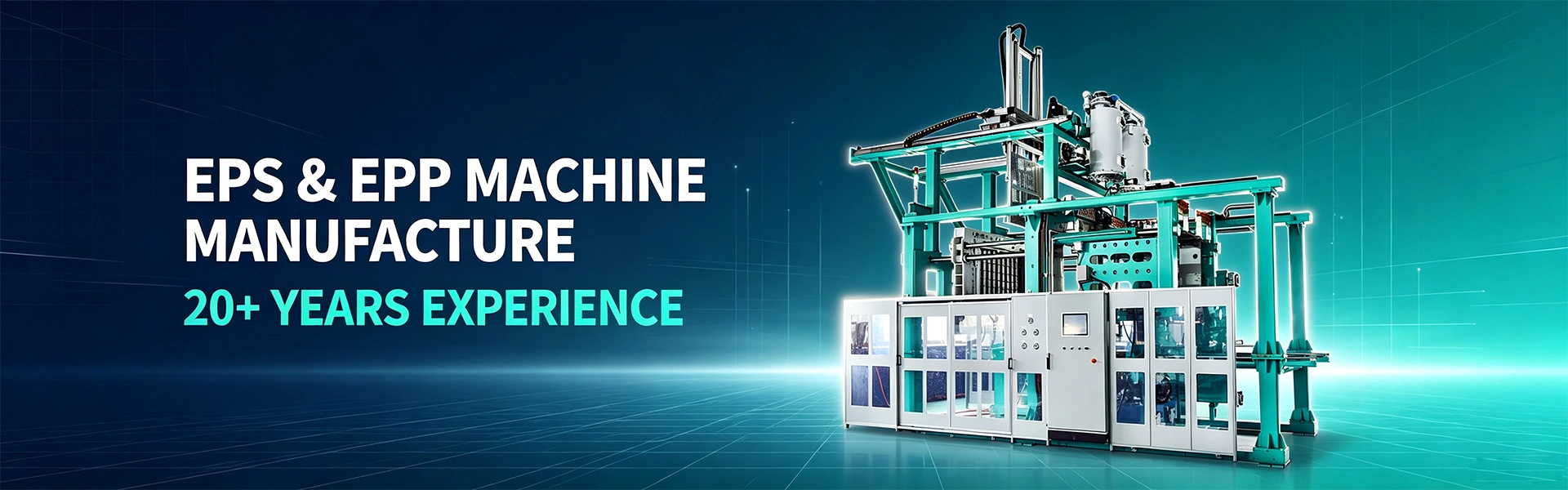
Introduction: Redefining a Material's Potential
For decades, Expanded Polystyrene (EPS) has been synonymous with protective packaging-the white foam that cradles electronics and appliances. While this remains a vital application, it represents only the surface of what this versatile polymer can achieve. Today, through advanced material science and precision engineering, EPS is being transformed into a high-performance technical material critical to industries where performance, safety, and efficiency are non-negotiable.
This evolution from simple packaging to engineered component is not accidental. It is driven by innovations in bead formulation, molding technology, and a deep understanding of structural mechanics. The modern EPS molding machine is, therefore, no longer just a "foam shaper"; it is a sophisticated thermoforming press that must deliver micron-level precision, exceptional consistency, and adaptability to specialized materials. This article explores the advanced applications redefining EPS and examines the critical engineering features required in machinery to unlock this new era of performance.
Part 1: The Material Science Foundation: More Than Just Beads
The journey to high-performance EPS begins long before the molding cycle. Breakthroughs in polymer chemistry and bead processing have created a family of specialized EPS grades, each designed for a specific mission.
High-Strength & High-Density Grades: By modifying the base polymer and increasing the final molded density (from a typical 20-30 g/l to 80-200 g/l or more), engineers create EPS with dramatically enhanced compressive and flexural strength. This material behaves less like a foam and more like a lightweight, energy-absorbing structural material.
Flame-Retardant (FR) and Self-Extinguishing Grades: For construction and regulated transport applications, EPS is compounded with flame retardants that allow it to meet stringent international safety standards (e.g., DIN 4102, ASTM E84). These beads often have different melting and flow characteristics, posing specific challenges for the molding process.
Graphite-Infused Beads: The incorporation of graphite particles reflects radiant heat, significantly boosting the material's thermal resistance (R-value) without increasing density. This makes it the insulation of choice for high-efficiency building envelopes.
The Machinery Implication: These advanced materials are less forgiving than standard packaging beads. They demand machinery with excellent process control to ensure the additives are evenly distributed and the final cell structure is uniform, which is essential for achieving the promised mechanical or thermal properties.
Part 2: Application Deep Dive: EPS in Demanding Environments
1. Automotive Engineering: The Silent Contributor to Safety and Efficiency
In modern vehicles, EPS is a multi-functional workhorse:
Energy Management Systems: The most critical application is in crumple zones and impact-absorbing components (e.g., bicycle helmet liners, though not automotive, share the principle). Here, high-density EPS is engineered to collapse in a predictable, controlled manner, dissipating kinetic energy and protecting occupants. The molding must be flawless-any void or density variation can create a weak point that fails catastrophically.
Lightweighting for Electrification: Every kilogram saved extends the range of an electric vehicle. EPS replaces heavier materials in components like door cores, headliner substrates, and instrument panel supports. The machinery must produce large, complex, and thin-walled parts with high dimensional stability to fit precisely within tight automotive assemblies.
Premium Acoustics: EPS's closed-cell structure makes it an excellent sound damper. It is molded into shaped barriers that reduce road and engine noise, contributing to cabin quietness.
2. Geofoam: The Lightweight Giant of Civil Engineering
In infrastructure, EPS geofoam blocks (densities of 15-40 kg/m³) solve complex geotechnical problems.
Applications: Lightweight fill for roads over soft, compressible soils; slope stabilization; embankment construction behind retaining walls; and insulation under railway tracks to prevent frost heave.
The Machinery Challenge: This requires very large-format molding machines with platen sizes often exceeding 2m x 6m to produce massive blocks efficiently. Consistency is paramount, as blocks must interlock perfectly on-site. The machines must also achieve extremely low, uniform density to meet the strict weight specifications of engineering designs.
3. Cutting-Edge Insulation in Construction and Cold Chain
Building Envelopes: Graphite EPS provides superior, long-term thermal resistance for walls, roofs, and foundations. It is often molded into large, tongue-and-groove panels. Machinery must ensure perfect edge detail and panel flatness to eliminate thermal bridging when installed.
Cold Chain & Cryogenics: From shipping perishable pharmaceuticals to containing liquefied natural gas (LNG) at -162°C, EPS is a top insulator. Here, low thermal conductivity and the ability to withstand extreme thermal cycling are key. Molding must produce a homogeneous, stress-free part to prevent cracking under temperature extremes.
Part 3: The Machinery Mandate: Precision Engineering for Advanced Materials
Producing these performance-critical parts is impossible with standard equipment. The molding machine becomes the guarantor of quality and performance.
1. Unmatched Process Control & Stability:
Precision Steam Management: Advanced applications require exact control over steam pressure, temperature, and injection timing. Digital proportional valves and multi-point steam injection ensure rapid, even heat distribution for perfect fusion of advanced beads, especially in thick cross-sections.
Intelligent Clamping: A powerful, evenly distributed clamping force (measured in tons) is essential to keep the mold sealed against high steam pressure and prevent flash. Hydraulic systems with pressure feedback loops maintain this force consistently throughout the cycle.
2. Advanced Mold Technology & Integration:
Complex Core-Pulling & Actuation: Automotive and technical parts often have deep draws, undercuts, and complex geometries. This requires molds with multiple moving cores, which the machine must sequence accurately via integrated hydraulic or electric actuators.
Temperature-Zoned Mold Cooling: Different sections of a part may have different thicknesses. Zoned water cooling circuits allow for independent temperature control in each mold area, ensuring uniform cooling and preventing warpage or sink marks in critical high-performance parts.
3. Data Integrity and Traceability:
Full Process Monitoring: Every critical parameter-cycle time, steam curves, pressures, temperatures-is recorded for each production run. This creates a digital fingerprint, essential for quality assurance in regulated industries like automotive and medical packaging.
Closed-Loop Quality Control: The most advanced systems can be linked to in-line scanning devices that measure part dimensions or density. This data can feed back to the machine controller to make micro-adjustments to the next cycle, ensuring continuous quality.
Part 4: The Future Frontier: Multi-Material and Integrated Solutions
The innovation continues as EPS is combined with other materials to create composite structures in a single, efficient process.
In-Mold Lamination: Fabric, foil, or plastic films can be placed in the mold, where the expanding EPS fuses to them, creating a finished part like a decorative interior automotive panel or an insulated roofing panel with an integrated moisture barrier.
Hybrid Structures: Molding EPS around or within a structural frame (e.g., plastic or wooden ribs) creates ultra-light, rigid panels for use in exhibition stands, modular buildings, and cargo containers. This requires precise bead injection and flow control to fill the structure without deforming it.
Conclusion: Partnering for Performance
The narrative of EPS has fundamentally shifted. It is now a material engineered for performance, sustainability, and innovation. For producers aiming to compete in these high-value, technical markets, the dividing line between success and failure is often the capability of their molding machinery.
Investing in equipment designed for precision, adaptability, and data-rich production is not an expense; it is an entry ticket to the future of advanced manufacturing. It enables the transformation of specialized polymer beads into the lightweight, strong, and intelligent components that modern industry demands.
At Hangzhou Epsole Machinery, our engineering focus for over two decades has been on developing the precise, robust, and intelligent molding solutions that empower our partners to move beyond basic protection and into the realm of high-performance innovation. We provide not just machines, but the technological partnership to engineer the future, one precise mold at a time.
Are you ready to explore the potential of high-performance EPS for your applications?
Contact our engineering team at Hangzhou Epsole Machinery to discuss how our precision molding technology can bring your most advanced product concepts to life.