

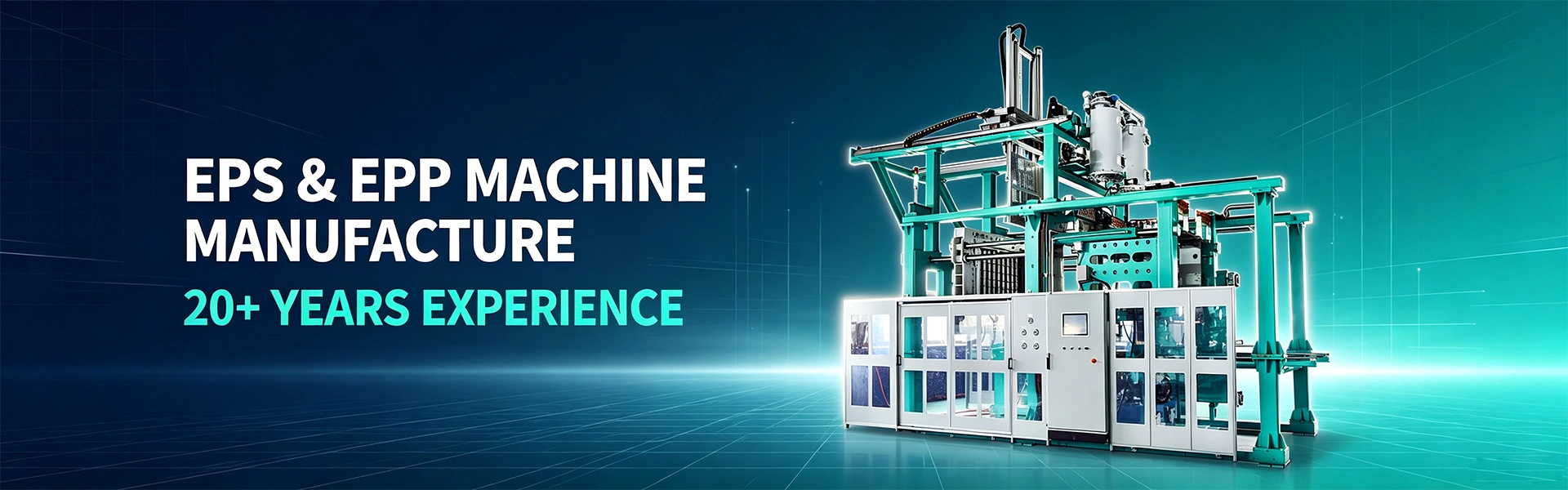
Introduction: The Sustainability Imperative in Modern Manufacturing
In an era defined by climate consciousness and circular economy principles, the foam manufacturing industry stands at a critical crossroads. For decades, Expanded Polystyrene (EPS) has faced scrutiny over its environmental footprint despite its exceptional functional properties. Today, a profound transformation is underway-not in abandoning this versatile material, but in revolutionizing how it's produced, used, and reincarnated.
This green revolution extends far beyond mere marketing claims. It represents a fundamental reengineering of the entire EPS production ecosystem, with advanced machinery serving as the catalyst for change. Modern EPS equipment now addresses the full lifecycle: optimizing resource consumption during production, enabling the use of recycled materials, and contributing to end-products that themselves support broader sustainability goals like energy efficiency.
This article explores how cutting-edge EPS machinery is driving sustainability across three critical dimensions: energy and resource efficiency, circular material integration, and design for a decarbonized future.
Part 1: The Efficiency Equation: Reducing the Environmental Cost of Production
The most direct path to sustainability begins with reducing the energy and resource inputs required for manufacturing. Next-generation EPS machinery employs multiple strategies to minimize its operational footprint.
Advanced Steam and Energy Management Systems
Traditional EPS molding has been notoriously energy-intensive, relying on substantial steam generation for the expansion and fusion process. Modern machinery counters this through:
Intelligent Steam Recycling: Closed-loop systems capture and repurpose condensate and residual steam, reducing fresh water consumption by up to 40% and cutting thermal energy demands significantly. Heat exchangers transfer waste heat from cooling phases to pre-heat water for subsequent cycles.
Precision Steam Injection: Unlike older systems that flood molds with steam, advanced machines use targeted, pulsed injection. Computer-controlled valves deliver steam only where and when needed, optimizing expansion while reducing consumption by 25-35%.
Alternative Heating Technologies: Leading manufacturers are developing hybrid and fully electric systems that use infrared, microwave, or conduction heating instead of steam. These technologies offer faster cycle times and eliminate boiler-related energy losses entirely, with some pilot systems showing 50% reductions in energy use per kilogram produced.
Water Conservation and Closed-Loop Systems
Water scarcity concerns have transformed cooling system design:
Advanced Dry-Ejection Systems: While traditional molds often used water-assisted ejection, newer designs employ precisely timed air bursts and mechanical actuators, eliminating water consumption in this phase.
Intelligent Cooling Circuits: Modern cooling systems feature multiple independent zones with flow sensors and variable-speed pumps. These systems circulate the minimum necessary water volume at optimized temperatures, reducing both water and pumping energy consumption.
Smart Automation for Material Optimization
Beyond energy, material efficiency represents another crucial sustainability frontier:
Precision Bead Metering: Loss-in-weight feeders and gravimetric dosing systems ensure the exact required bead quantity enters each mold cavity, eliminating overfill waste that was common in volumetric systems.
In-Cycle Process Adjustment: Real-time sensors monitor fusion and can adjust steam parameters mid-cycle if irregularities are detected, preventing batches of defective parts that would become waste.
Table: Resource Efficiency Gains in Modern EPS Machinery
| Parameter | Traditional Machine | Advanced Sustainable Machine | Improvement |
|---|---|---|---|
| Steam Consumption | 200-250 kg/ton product | 120-150 kg/ton product | 40% reduction |
| Water Usage (Cooling/Ejection) | 8-10 m³/ton product | 3-4 m³/ton product | 60% reduction |
| Electrical Energy | 350-400 kWh/ton product | 220-260 kWh/ton product | 35% reduction |
| Material Yield (Defect Rate) | 4-6% | 1-2% | 70% reduction |
Part 2: Closing the Loop: Machinery Designed for Circular Materials
The true sustainability breakthrough in EPS lies in creating effective circular material flows. Modern machinery is now engineered not just for virgin materials, but specifically to handle recycled content effectively.
Engineering Challenges of Post-Consumer Recycled (PCR) EPS
Processing recycled EPS presents unique technical hurdles that standard machines cannot adequately address:
Variable Particle Size and Density: Unlike uniform virgin beads, recycled EPS flakes have inconsistent dimensions and densities, requiring flexible handling systems.
Contaminant Tolerance: While pre-washed, PCR material may contain residual impurities that can clog standard feed systems or affect steam penetration.
Different Thermal Properties: Recycled material often has altered expansion ratios and fusion characteristics due to previous processing and potential degradation.
Machine Innovations Enabling High PCR Utilization
Leading equipment manufacturers have developed specific technologies to overcome these challenges:
Adaptive Feed Systems: Dual-compartment hoppers with auger feeders can precisely blend virgin and PCR materials in customizable ratios, with agitation systems that prevent bridging of irregular flakes.
Enhanced Steam Penetration Design: Molds for PCR processing feature optimized venting patterns and strategically placed steam ports to ensure complete fusion of materials with potentially lower expansion potential.
Advanced Filtration and Protection: In-line screens and magnetic separators in material feed lines protect sensitive valves and nozzles from contaminants, while hardened components in high-wear areas extend machine life.
Industry Case Study: The 100% PCR Milestone
The feasibility of high-PCR EPS production is no longer theoretical. In 2022, a major electronics manufacturer collaborated with material scientists and machinery engineers to develop protective packaging using 100% post-consumer EPS. The breakthrough required:
Specialized Pre-Expansion: Modified pre-expanders that gently process delicate recycled flakes without degrading them further
Customized Molding Parameters: Extended cycle times and modified steam profiles to accommodate the material's characteristics
Precision Temperature Control: Multi-zone mold heating to ensure even fusion throughout complex geometries
The resulting machinery configuration now serves as a template for high-PCR applications across industries, proving that with properly engineered equipment, EPS can achieve genuine circularity.
Part 3: Sustainable by Design: How Advanced EPS Products Enable Broader Environmental Goals
The sustainability impact of modern EPS extends beyond the factory, as the materials produced enable environmental benefits across multiple sectors.
Building Efficiency: Insulation for a Lower-Carbon Future
The construction sector accounts for approximately 40% of global energy consumption. EPS insulation plays a critical role in reducing this footprint:
High-Performance Insulation Panels: Modern molding machines produce graphite-enhanced EPS panels with R-values up to R-5 per inch-significantly higher than standard EPS. These panels enable building envelopes that reduce heating and cooling energy demands by 30-50%.
Precision-Engineered Shapes: Advanced machines mold complex interlocking shapes for insulated concrete forms (ICFs) and structural insulated panels (SIPs), creating airtight building envelopes that minimize thermal bridging.
Longevity and Stability: Properly manufactured EPS insulation maintains its R-value for the life of a building-unlike some materials that degrade over time-providing decades of consistent energy savings.
Lightweighting Transportation for Reduced Emissions
The transportation sector benefits significantly from EPS advancements:
Automotive Applications: EPS components in vehicles provide exceptional energy absorption in safety systems while reducing weight. Every kilogram reduced in vehicle weight translates to approximately 20 kilograms of CO₂ savings over the vehicle's lifetime.
Aerospace Innovations: Molded EPS forms for aircraft interior components and cargo systems contribute to the aviation industry's aggressive weight-reduction targets, directly lowering fuel consumption.
Agricultural and Food System Efficiency
EPS supports sustainability in unexpected sectors:
Insulated Food Transport: Precision-molded EPS containers maintain temperature integrity during perishable food transport, reducing spoilage in global food supply chains where up to 30% of food is currently lost.
Hydroponic Farming Systems: Lightweight, inert EPS floats and panels serve as sustainable growing mediums in controlled-environment agriculture, increasing yields while reducing water consumption.
Part 4: The Future Horizon: Emerging Sustainable Technologies
The sustainability journey in EPS manufacturing continues to evolve with several promising developments:
Bio-Based and Alternative Feedstocks
Machinery manufacturers are already preparing for the next material transition:
Polylactic Acid (PLA) and Other Biopolymers: Experimental systems are being developed to process emerging bio-based foams. These require different temperature profiles and often operate at lower thermal ranges than traditional EPS.
Hybrid Material Systems: New machines with quick-change components and adaptable control systems can switch between conventional EPS and alternative materials, providing manufacturers with flexibility as material technologies evolve.
Digital Integration for Sustainability Management
The Industry 4.0 revolution enhances sustainability through data:
Carbon Footprint Tracking: Integrated sensors measure real-time energy and material consumption, automatically calculating carbon emissions per batch or product unit.
Predictive Sustainability Analytics: Machine learning algorithms analyze production data to recommend parameter adjustments that optimize both quality and environmental performance.
Blockchain-Enabled Material Tracing: Some advanced systems can generate digital certificates tracing PCR content from source to finished product, providing verifiable sustainability credentials.
Modular and Upgradeable Machine Design
To combat equipment obsolescence and extend lifecycle:
Component-Based Architecture: New machines feature modular designs where individual components (steam systems, controls, hydraulic units) can be upgraded independently as more efficient technologies emerge.
Retrofit Packages: Manufacturers offer sustainability upgrade kits for existing machines, allowing older equipment to achieve near-new efficiency standards without complete replacement.
Conclusion: Engineering a Sustainable Future
The transformation of EPS from an environmental concern to a sustainability solution represents one of the most significant material science stories of our time. This change is fundamentally enabled by machinery innovation-equipment that consumes less, accommodates recycled materials, and produces components that themselves drive broader environmental benefits.
For manufacturers, this presents both a responsibility and an opportunity. The choice of production equipment now directly influences a company's environmental credentials, regulatory compliance, and market positioning. Sustainable machinery is no longer a niche preference but a business imperative that delivers both ecological and economic returns through reduced operating costs, access to green markets, and future-proofing against increasingly stringent regulations.
At Hangzhou Epsole Machinery, our two-decade commitment to innovation has increasingly focused on this green revolution. We engineer machinery that doesn't just shape foam but shapes a more sustainable future-balancing performance, productivity, and planetary responsibility. Our solutions provide the technological foundation for manufacturers to not only meet today's sustainability standards but to lead in tomorrow's circular economy.
The future of EPS is not less-it's smarter, cleaner, and more circular. And it begins with the machines that bring this remarkable material to life.
Ready to transform your EPS production with sustainable technology?
Contact Hangzhou Epsole Machinery to schedule a consultation with our sustainability engineering specialists and discover how our green technology solutions can enhance your environmental and economic performance.